Passerina ciris
Painted Bunting
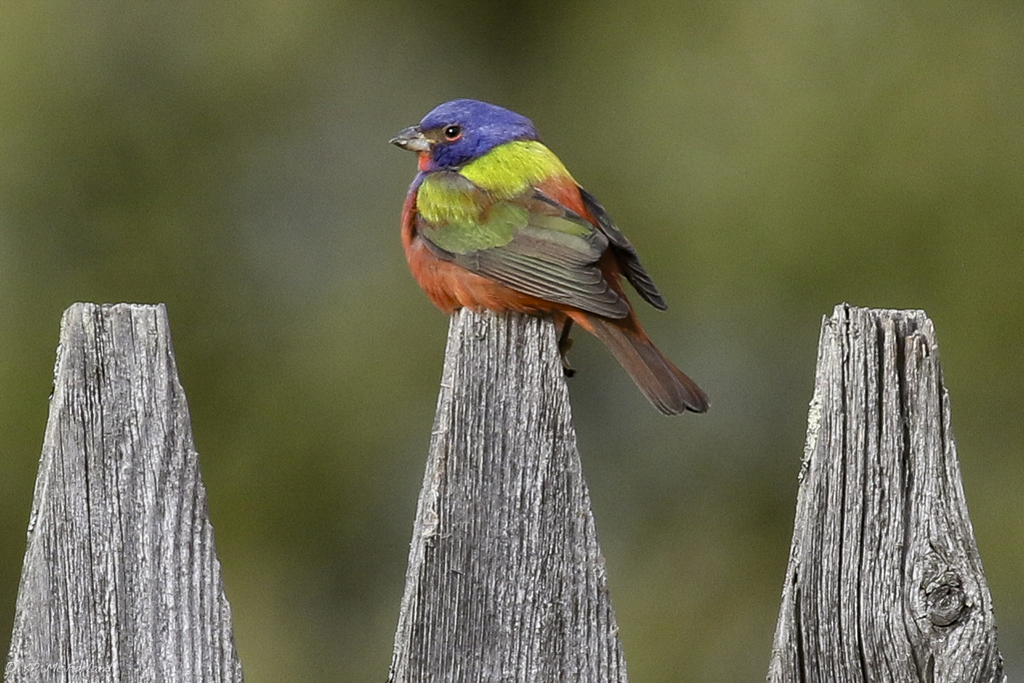
no rights reserved · CC0
Family: Cardinalidae · Class: Aves · Order: Passeriformes
Passerina ciris (Painted Bunting) is a California animal in the Cardinalidae family.
The Painted Bunting is a medium-sized songbird measuring 12-14 centimeters (4.7-5.5 inches) in length with a wingspan of 21-23 centimeters (8.3-9.1 inches). Adult males display vibrant plumage with a bright blue head and nape, red underparts and rump, and green back and wings. Females and juveniles are predominantly green above with yellowish-green underparts, lacking the distinctive coloration of breeding males. Both sexes have a conical seed-eating bill typical of the cardinal family. Males acquire their full breeding plumage by their second year. The species breeds across two distinct populations in North America. The eastern population ranges from North Carolina south to northern Florida and west to Louisiana and eastern Texas. The western population occurs from southern Kansas through Oklahoma, Texas, New Mexico, and Arizona, extending into northwestern Mexico. California supports only vagrant occurrences, primarily during fall migration along the coast and in desert regions near the Arizona border. Most California records occur between August and November, with occasional spring sightings. Painted Buntings inhabit dense, low shrubland and woodland edges, including riparian thickets, brushy fields, hedgerows, and suburban areas with adequate cover. The species favors habitats with a combination of dense nesting cover and open areas for foraging. In their breeding range, they utilize early successional habitats, forest edges, and areas with scattered trees and thick understory vegetation at elevations typically below 1,200 meters (3,900 feet). These birds are primarily granivorous, feeding on seeds of grasses, forbs, and trees. During breeding season, they supplement their diet with insects, particularly caterpillars, beetles, and flies, which provide essential protein for growing nestlings. Painted Buntings are secretive and often remain hidden in dense vegetation. Males sing from exposed perches during territory establishment and courtship. The breeding season extends from April through August, with females constructing cup-shaped nests in dense shrubs or low trees. Clutch size typically ranges from three to four eggs, with an incubation period of 11-12 days. Females may produce two broods per season in favorable conditions. Painted Buntings are not federally or state listed but face population pressures throughout their range. The North American Breeding Bird Survey indicates declining trends in both eastern and western populations over recent decades. Primary threats include habitat loss due to agricultural intensification, urban development, and suppression of natural fire cycles that maintain suitable shrubland habitat. The species is also vulnerable to nest parasitism by Brown-headed Cowbirds and mortality from collisions with communication towers during migration. Climate change may further impact suitable habitat availability. In California, the species remains a rare vagrant, with most observations documented by birders along the Colorado River and in desert areas during fall migration periods.
Classification
Class: Aves · Order: Passeriformes · Family: Cardinalidae
Frequently asked questions
How is Passerina ciris classified?
Passerina ciris belongs to class Aves, order Passeriformes, family Cardinalidae.
What family does Passerina ciris belong to?
Passerina ciris is in the Cardinalidae family.
What is Passerina ciris?
The Painted Bunting is a medium-sized songbird measuring 12-14 centimeters (4.7-5.5 inches) in length with a wingspan of 21-23 centimeters (8.3-9.1 inches).
Is Passerina ciris found in California?
Yes. Passerina ciris is recorded in California in The California Species Project's catalogue.
Related species
Other California species in the same genus, family, or bioregion.
Data from The California Species Project — 14,000+ California species with verified data from CNPS, CDFW, USFWS, and more.