Patiria miniata
Bat Star
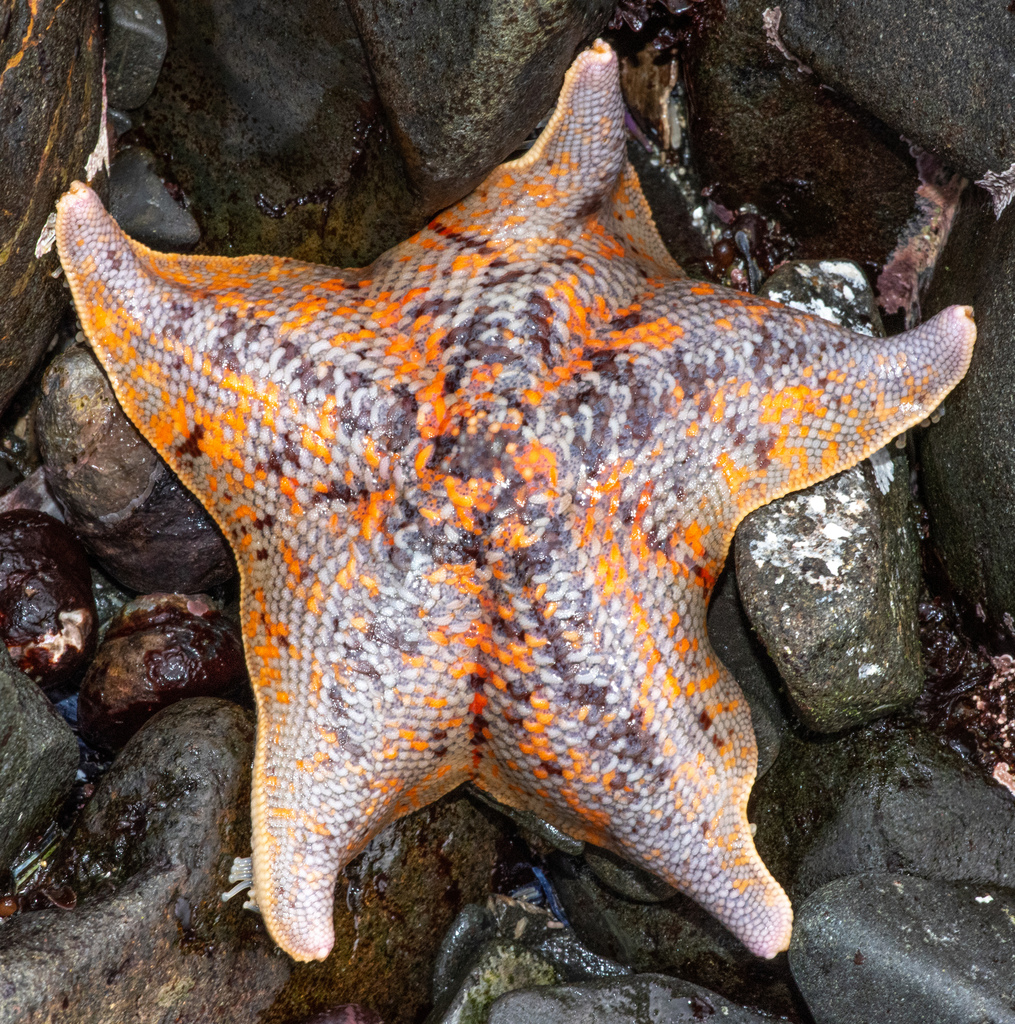
(c) Don Loarie, some rights reserved (CC BY) · licence
Family: Asterinidae · Class: Asteroidea · Order: Valvatida
Patiria miniata (Bat Star) is a California animal in the Asterinidae family.
The bat star is a medium-sized sea star with a distinctive flattened, pentagonal body plan and broad, short arms. Adults typically measure 10 to 20 centimeters (4 to 8 inches) in diameter, though some individuals can reach up to 30 centimeters (12 inches). The species displays extensive color variation, ranging from red, orange, and purple to yellow, brown, and mottled patterns. The aboral (upper) surface is covered with small spines and paxillae, while the oral (lower) surface features numerous tube feet used for locomotion and feeding. The body texture is relatively smooth compared to other sea stars, giving it a leathery appearance. Patiria miniata occurs along the Pacific coast from Alaska to Baja California, Mexico. In California, the species is found in marine protected areas including Cat Harbor State Marine Conservation Area, Stewart's Point State Marine Reserve, Point Sur State Marine Reserve, Pacific Grove Marine Gardens, and Edward F. Ricketts State Marine Conservation Area. The bat star inhabits rocky intertidal zones, kelp forests, and sandy or muddy substrates from the low intertidal zone to depths exceeding 180 feet. Bat stars occupy diverse marine habitats including rocky shorelines, eelgrass beds, kelp forests, and sandy seafloors. They are commonly found among rocks that provide substrate for attachment and shelter, often associating with other invertebrates such as limpets, turban snails, chitons, and various crab species. The species demonstrates broad habitat tolerance, thriving in both exposed coastal areas and protected bays. In kelp forest ecosystems, bat stars play important ecological roles at multiple depths, from shallow nearshore waters to deeper offshore environments. As opportunistic omnivores and detritivores, bat stars consume a varied diet including algae, dead organic matter, small invertebrates, and microscopic organisms. They feed on kelp gametophytes and microscopic sporophytes, contributing to kelp forest dynamics (VanMeter and Edwards 2013). The species employs external digestion, everting its stomach outside the body to digest prey. Reproduction occurs through broadcast spawning, with separate sexes releasing gametes into the water column. Bat stars can also reproduce asexually through fission, splitting their body to create new individuals. They exhibit considerable regenerative ability, capable of regrowing lost arms. Patiria miniata currently has no federal or state conservation listing status. The species appears to maintain stable populations throughout its range and faces no immediate conservation threats. Bat stars benefit from protection within California's network of marine protected areas, where they contribute to healthy kelp forest and rocky intertidal ecosystems. Their role as detritivores makes them important for nutrient cycling in marine environments. The species' broad habitat tolerance and reproductive flexibility suggest resilience to environmental changes, though long-term impacts of ocean warming and acidification on echinoderm populations remain subjects of ongoing research.
Classification
Class: Asteroidea · Order: Valvatida · Family: Asterinidae
Frequently asked questions
How is Patiria miniata classified?
Patiria miniata belongs to class Asteroidea, order Valvatida, family Asterinidae.
What family does Patiria miniata belong to?
Patiria miniata is in the Asterinidae family.
What is Patiria miniata?
The bat star is a medium-sized sea star with a distinctive flattened, pentagonal body plan and broad, short arms.
Is Patiria miniata found in California?
Yes. Patiria miniata is recorded in California in The California Species Project's catalogue.
More California species
This species has no close relatives in our California data — here are other species to explore.
Data from The California Species Project — 14,000+ California species with verified data from CNPS, CDFW, USFWS, and more.