Pavo cristatus
Indian Peafowl
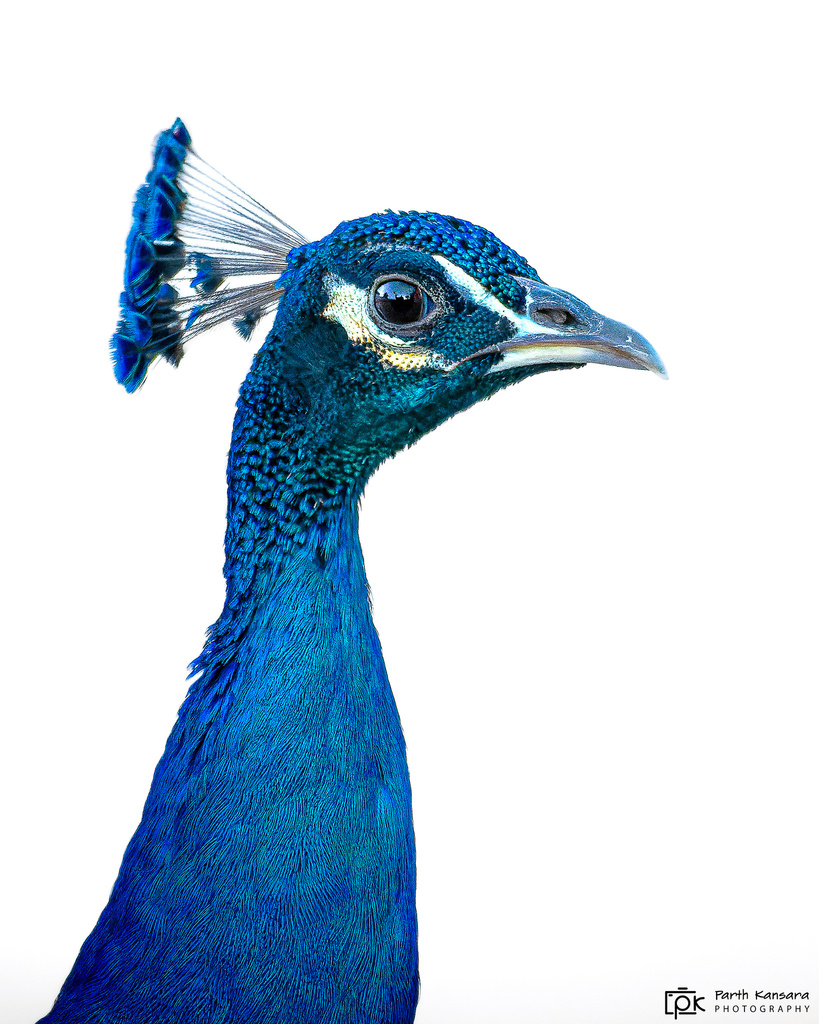
(c) Parth Kansara, some rights reserved (CC BY) · licence
Family: Phasianidae · Class: Aves · Order: Galliformes
Pavo cristatus (Indian Peafowl) is a California animal in the Phasianidae family.
The Indian Peafowl is a large, terrestrial bird native to the Indian subcontinent that has established non-native populations in California. Males (peacocks) measure 100 to 115 cm (39 to 45 inches) in body length with an elongated train of upper tail coverts reaching 140 to 160 cm (55 to 63 inches). Females (peahens) are smaller at 86 to 100 cm (34 to 39 inches) in total length. Males weigh 4 to 6 kg (8.8 to 13.2 pounds), while females weigh 2.75 to 4 kg (6 to 8.8 pounds). Adult males display iridescent blue and green plumage on the head, neck, and breast, with an ornate tail train featuring numerous eye-spots or ocelli. The distinctive crest consists of 24 feathers with webbed tips. Females exhibit muted brown and gray plumage with subtle barring, providing camouflage during nesting. Native to India, Pakistan, Sri Lanka, and eastern Afghanistan, Indian Peafowl have been introduced to numerous locations worldwide, including California. Established populations occur in several California counties, particularly in urban and suburban areas of Los Angeles, Riverside, and San Bernardino counties. The largest known population inhabits the Palos Verdes Peninsula, where birds roam residential neighborhoods and parks. Smaller populations exist in Arcadia, San Gabriel Valley, and parts of Orange County. In their native range, Indian Peafowl inhabit deciduous forests, grasslands, and agricultural areas from sea level to 2,000 meters elevation. In California, they adapt to suburban environments, parks, golf courses, and areas with scattered trees and open lawns. They require roosting sites such as large trees or structures and access to water sources. The species tolerates various vegetation types but prefers areas with both open ground for foraging and elevated perches for safety. Indian Peafowl are omnivorous, consuming insects, small reptiles, amphibians, seeds, fruits, and green vegetation. They forage primarily on the ground, using their strong feet to scratch through leaf litter and soil. Breeding occurs from April through September in California. Males establish territories and perform elaborate courtship displays, fanning their trains and producing loud calls. Females construct shallow ground nests in dense vegetation, laying 3 to 6 buff-colored eggs with brown spots. Incubation lasts 28 days, and chicks are precocial, leaving the nest within 24 hours. Indian Peafowl are not federally or state-listed in California, as they are a non-native species. Their global conservation status is Least Concern according to the International Union for Conservation of Nature, with stable populations in their native range. In California, local populations face threats from vehicle strikes, predation by domestic animals, and occasional human persecution due to noise complaints and property damage. Some municipalities have implemented management programs to address conflicts between peafowl and residents while maintaining viable populations.
Classification
Class: Aves · Order: Galliformes · Family: Phasianidae
Frequently asked questions
How is Pavo cristatus classified?
Pavo cristatus belongs to class Aves, order Galliformes, family Phasianidae.
What family does Pavo cristatus belong to?
Pavo cristatus is in the Phasianidae family.
What is Pavo cristatus?
The Indian Peafowl is a large, terrestrial bird native to the Indian subcontinent that has established non-native populations in California.
Is Pavo cristatus found in California?
Yes. Pavo cristatus is recorded in California in The California Species Project's catalogue.
Related species
Other California species in the same genus, family, or bioregion.
Data from The California Species Project — 14,000+ California species with verified data from CNPS, CDFW, USFWS, and more.