Pediasia dorsipunctellus
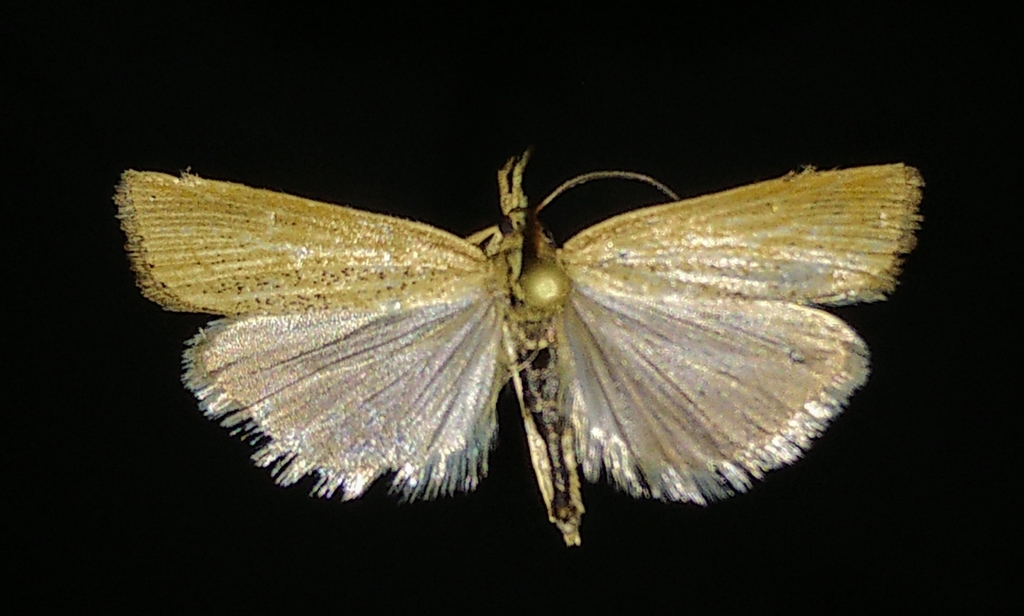
(c) Doug Macaulay, some rights reserved (CC BY) · licence
Family: Crambidae · Class: Insecta · Order: Lepidoptera
Pediasia dorsipunctellus is a California animal in the Crambidae family.
Pediasia dorsipunctellus is a small moth in the family Crambidae, commonly known as grass moths or snout moths. This species belongs to a diverse group of microlepidoptera that are often overlooked despite their ecological importance. Adults typically measure 12-18 mm in wingspan, with forewings displaying a characteristic pattern of light brown to tan coloration marked by distinct dorsal punctations that give the species its scientific name. The hindwings are typically paler, often whitish or light gray, with reduced markings. Like other Crambidae, the species exhibits relatively narrow wings and prominent labial palps that project forward from the head. The distribution and range of Pediasia dorsipunctellus in California remains poorly documented in available literature. The genus Pediasia is represented by several species across North America, with many showing restricted or specialized habitat requirements. Without comprehensive survey data, the specific counties and elevational ranges occupied by this species in California cannot be definitively stated. This represents a significant knowledge gap for this microlepidopteran species. Habitat preferences for Pediasia dorsipunctellus likely follow patterns typical of the genus, which generally associates with grassland environments. Crambidae larvae, including those in the genus Pediasia, typically develop in grass tussocks and feed on various graminoid plants. The species may occur in native grasslands, coastal prairies, or other areas supporting appropriate host plant communities. Specific microhabitat requirements, elevation preferences, and substrate associations require further investigation through targeted field surveys. The life cycle of Pediasia dorsipunctellus follows the typical lepidopteran pattern of complete metamorphosis. Larvae likely feed within grass stems or root systems, creating characteristic feeding galleries or tunnels. Adult flight periods, mating behaviors, and reproductive ecology remain undocumented for this species in California. Like many grass moths, adults may be active during evening hours and attracted to artificial light sources. The number of generations per year, overwintering stage, and specific host plant relationships have not been established through published research. The conservation status of Pediasia dorsipunctellus cannot be adequately assessed due to insufficient data on population trends, distribution, and threats. This species lacks federal or state listing status, and no global conservation rank has been assigned. The absence of comprehensive survey data represents a common challenge for many microlepidopteran species, which are often underrepresented in biodiversity assessments despite potentially facing significant conservation pressures. Potential threats may include habitat loss from urban development, agricultural conversion, invasive plant species, and altered fire regimes affecting native grassland communities. Climate change may also impact this species through shifts in precipitation patterns and temperature regimes that affect host plant availability and distribution. Establishing baseline population data and habitat requirements represents a critical research need for effective conservation planning.
Classification
Class: Insecta · Order: Lepidoptera · Family: Crambidae
Frequently asked questions
How is Pediasia dorsipunctellus classified?
Pediasia dorsipunctellus belongs to class Insecta, order Lepidoptera, family Crambidae.
What family does Pediasia dorsipunctellus belong to?
Pediasia dorsipunctellus is in the Crambidae family.
What is Pediasia dorsipunctellus?
Pediasia dorsipunctellus is a small moth in the family Crambidae, commonly known as grass moths or snout moths.
Is Pediasia dorsipunctellus found in California?
Yes. Pediasia dorsipunctellus is recorded in California in The California Species Project's catalogue.
Related species
Other California species in the same genus, family, or bioregion.
Data from The California Species Project — 14,000+ California species with verified data from CNPS, CDFW, USFWS, and more.