Pelecanus occidentalis
Brown Pelican
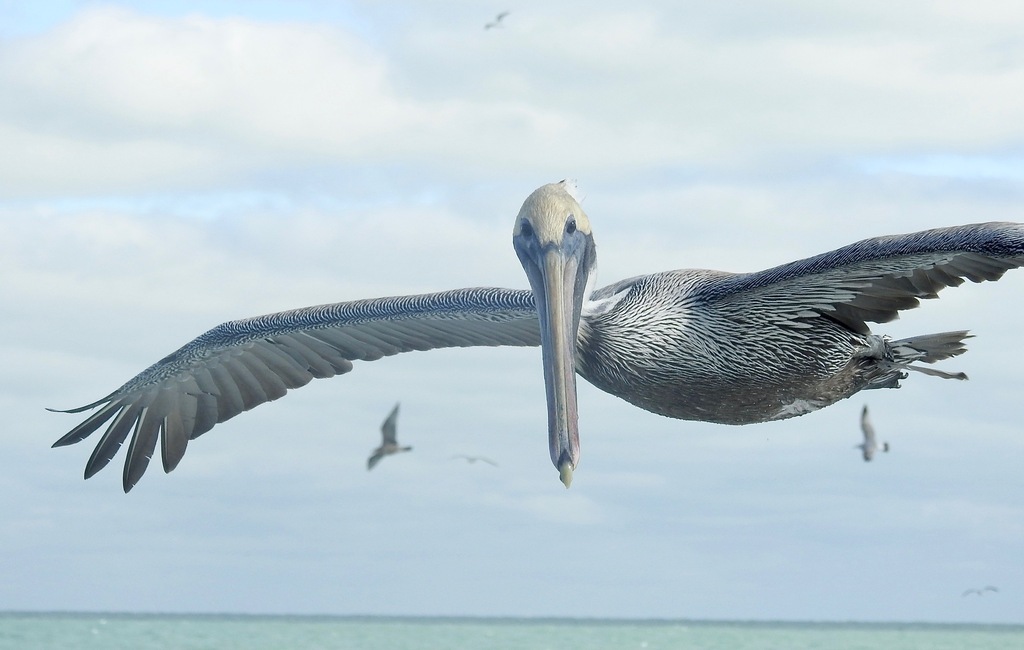
(c) Laura Gaudette, some rights reserved (CC BY) · licence
Family: Pelecanidae · Class: Aves · Order: Pelecaniformes
Conservation status: SD · Delisted
Pelecanus occidentalis (Brown Pelican) is a California animal in the Pelecanidae family.
The Brown Pelican is a large waterbird measuring 106 to 137 centimeters (42 to 54 inches) in length with a wingspan of 203 to 228 centimeters (80 to 90 inches). Adults weigh 2.75 to 5.5 kilograms (6 to 12 pounds). The species exhibits distinct seasonal plumage variations. During breeding season, adults display a white head and neck with a yellowish wash on the crown, dark brown body plumage, and a distinctive gular pouch that becomes bright red in males. Non-breeding adults have a white head and neck, grayish-brown upperparts, and lighter underparts. The massive bill measures 28 to 35 centimeters (11 to 14 inches) in length and features the characteristic expandable throat pouch used for fishing. Brown Pelicans range along the Pacific Coast from British Columbia to Chile and along the Atlantic and Gulf coasts from Nova Scotia to northern South America. The California population occurs along the entire coastline, with major breeding colonies on offshore islands including the Channel Islands, particularly Anacapa, Santa Cruz, and San Miguel islands. Smaller colonies exist on nearshore rocks and coastal cliffs from the Oregon border south to Baja California. The species inhabits marine and estuarine environments, preferring shallow coastal waters, bays, harbors, and nearshore areas where fish concentrate. Brown Pelicans nest colonially on islands, rocky outcrops, and occasionally in mangrove trees. Nesting sites are typically located on flat areas or gentle slopes with minimal vegetation, often on clifftops or terraces 3 to 30 meters above sea level. Brown Pelicans are primarily piscivorous, feeding almost exclusively on small schooling fish including anchovies, sardines, mackerel, and herring. They employ a distinctive plunge-diving hunting technique, diving headfirst from heights of 6 to 20 meters into the water to capture prey. The breeding season in California extends from February through August, with peak activity from March to June. Females typically lay 2 to 4 chalky white eggs in stick nests lined with feathers and debris. Incubation lasts 28 to 30 days, and chicks fledge after 71 to 88 days. The Brown Pelican was federally listed as endangered in 1970 due to severe population declines caused primarily by DDT pesticide contamination, which caused eggshell thinning and reproductive failure. Following the DDT ban in 1972 and intensive conservation efforts including habitat protection and captive breeding programs, populations recovered substantially. The U.S. Fish and Wildlife Service removed the species from the Endangered Species List in 2009. Current population estimates for the California breeding population exceed 150,000 individuals as of 2020 surveys. The species maintains a status of "Species of Special Concern" in California, indicating continued monitoring needs despite recovery success. Modern threats include oil spills, coastal development, human disturbance at nesting sites, climate change impacts on prey availability, and pollution from plastics and other marine debris.
Classification
Class: Aves · Order: Pelecaniformes · Family: Pelecanidae
Conservation status
SD · Delisted
Frequently asked questions
How is Pelecanus occidentalis classified?
Pelecanus occidentalis belongs to class Aves, order Pelecaniformes, family Pelecanidae.
What family does Pelecanus occidentalis belong to?
Pelecanus occidentalis is in the Pelecanidae family.
Is Pelecanus occidentalis protected or of conservation concern?
Pelecanus occidentalis carries the following status: SD · Delisted.
What is Pelecanus occidentalis?
The Brown Pelican is a large waterbird measuring 106 to 137 centimeters (42 to 54 inches) in length with a wingspan of 203 to 228 centimeters (80 to 90 inches).
Is Pelecanus occidentalis found in California?
Yes. Pelecanus occidentalis is recorded in California in The California Species Project's catalogue.
Related species
Other California species in the same genus, family, or bioregion.
Data from The California Species Project — 14,000+ California species with verified data from CNPS, CDFW, USFWS, and more.