Pelecanus occidentalis californicus
California brown pelican
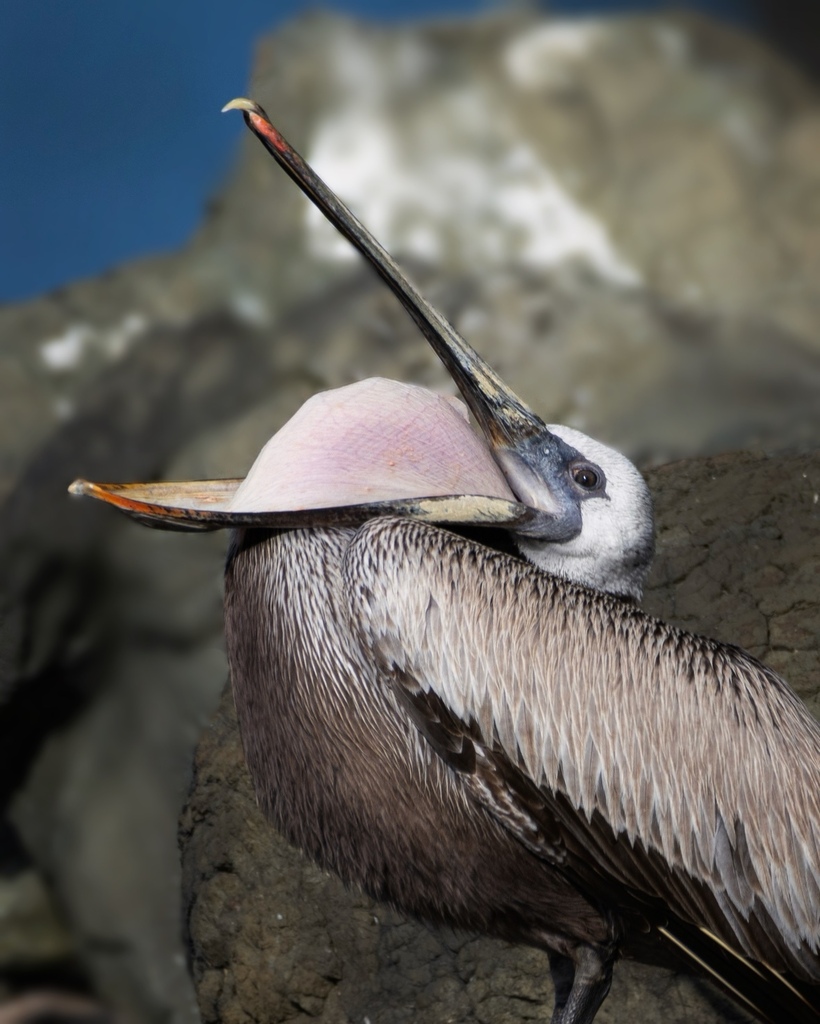
(c) Brooke J., some rights reserved (CC BY) · licence
Family: Pelecanidae · Class: Aves · Order: Pelecaniformes
Conservation status: SDR SE · G4T3T4 S3
Pelecanus occidentalis californicus (California brown pelican) is a California animal in the Pelecanidae family.
The California brown pelican (Pelecanus occidentalis californicus) is a large seabird and subspecies of the brown pelican found along the Pacific Coast. Adults measure 106 to 137 cm (42 to 54 inches) in length with a wingspan reaching 2.03 to 2.28 meters (6.7 to 7.5 feet). The species displays distinctive plumage that varies seasonally, with breeding adults developing a white or yellowish head and neck, dark brown body, and a large gular pouch that turns bright red during courtship. Non-breeding adults and juveniles are predominantly brown with lighter underparts. Historically, the California brown pelican ranged along the entire Pacific Coast from British Columbia to the southern tip of Baja California, Mexico, including the Gulf of California. The subspecies nests on offshore islands including the Channel Islands of California and islands off the Mexican Pacific coast. Current populations in California are concentrated at major breeding colonies on Anacapa, Santa Barbara, Santa Catalina, and San Clemente islands, with smaller colonies on the Farallon Islands and other coastal sites. California brown pelicans inhabit coastal marine environments, preferring areas with abundant fish populations and suitable nesting sites. They nest colonially on rocky islands, typically on cliff faces, flat terraces, or in low shrubs. The species requires undisturbed nesting areas with proximity to productive marine feeding grounds. Outside the breeding season, pelicans utilize harbors, bays, beaches, and nearshore waters along the coast. These pelicans are piscivorous, feeding primarily on anchovies, sardines, mackerel, and other schooling fish. They employ dramatic plunge-diving behavior, diving from heights of 6 to 20 meters (20 to 65 feet) into the water to capture prey. Breeding typically occurs from March through August, with peak activity in spring. Females construct nests of sticks, grass, and debris, laying 2 to 3 chalky white eggs that incubate for approximately 28 to 30 days. Both parents share incubation duties and feed chicks by regurgitation. The California brown pelican represents one of conservation's notable recovery stories. The subspecies was federally listed as endangered in 1970 due to severe population declines caused primarily by DDT contamination, which caused eggshell thinning and reproductive failure (USFWS 2009). Following the ban on DDT in 1972 and intensive management efforts, populations recovered substantially. According to the U.S. Fish and Wildlife Service, while the brown pelican species was removed from the federal Endangered Species List in 2009, the specific status of Pacific Coast populations requires verification as sources indicate potential ongoing federal protection. Current population estimates suggest the species has recovered significantly from historical lows, with California populations considered stable. Ongoing monitoring continues to track population trends and assess potential threats including climate change impacts on marine food webs and coastal development pressure on nesting sites.
Classification
Class: Aves · Order: Pelecaniformes · Family: Pelecanidae
Conservation status
SDR SE · G4T3T4 S3
Frequently asked questions
How is Pelecanus occidentalis californicus classified?
Pelecanus occidentalis californicus belongs to class Aves, order Pelecaniformes, family Pelecanidae.
What family does Pelecanus occidentalis californicus belong to?
Pelecanus occidentalis californicus is in the Pelecanidae family.
Is Pelecanus occidentalis californicus protected or of conservation concern?
Pelecanus occidentalis californicus carries the following status: SDR SE · G4T3T4 S3.
What is Pelecanus occidentalis californicus?
The California brown pelican (Pelecanus occidentalis californicus) is a large seabird and subspecies of the brown pelican found along the Pacific Coast.
Is Pelecanus occidentalis californicus found in California?
Yes. Pelecanus occidentalis californicus is recorded in California in The California Species Project's catalogue.
Related species
Other California species in the same genus, family, or bioregion.
Data from The California Species Project — 14,000+ California species with verified data from CNPS, CDFW, USFWS, and more.