Pelochrista crambitana
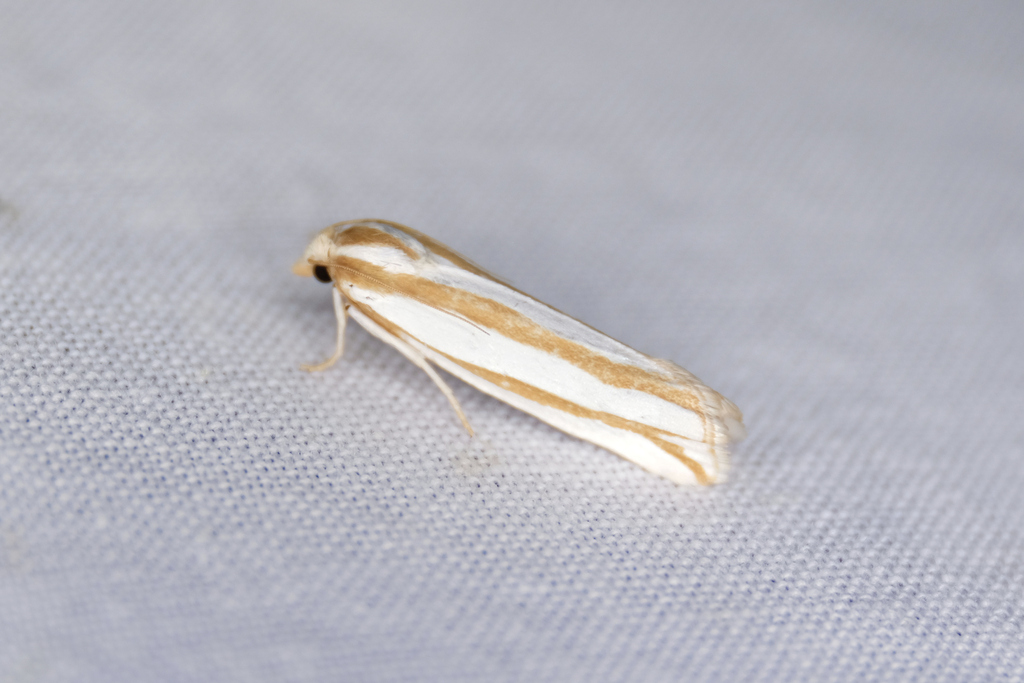
(c) Chris Ratzlaff, some rights reserved (CC BY) · licence
Family: Tortricidae · Class: Insecta · Order: Lepidoptera
Pelochrista crambitana is a California animal in the Tortricidae family.
Pelochrista crambitana is a small moth in the family Tortricidae, part of the diverse leafroller moth complex. As with most tortricid species, adults typically measure 10-15 mm in wingspan, though specific morphological details for this species have not been extensively documented in the scientific literature. This species exhibits a broad distribution across the Great Basin region, extending from eastern Washington southward through Oregon and Idaho to Colorado and Arizona. Within this range, P. crambitana represents one of numerous Pelochrista species that have adapted to the arid and semi-arid conditions characteristic of the intermountain West. The genus Pelochrista comprises over 100 described species in North America, many of which show restricted distributions tied to specific host plant associations. Pelochrista crambitana inhabits Great Basin shrublands, sagebrush steppe, and associated montane environments. These ecosystems are characterized by artemisia species, saltbush communities, and scattered pinyon-juniper woodlands at higher elevations. The Great Basin's distinctive climate, with hot, dry summers and cold winters, has shaped the evolution of specialized moth communities adapted to these conditions. Elevation ranges likely span from valley floors around 1,200 meters to montane zones exceeding 2,400 meters, though specific altitudinal preferences for this species require further documentation. Like other tortricid moths, P. crambitana larvae likely develop as internal feeders within plant tissues, possibly boring into stems, roots, or developing seeds of their host plants. Many Pelochrista species demonstrate narrow host plant specificity, often associating with particular genera or even individual species within plant families such as Asteraceae, Rosaceae, or Chenopodiaceae. Adult flight periods for Great Basin tortricids typically occur during spring and early summer months when host plants are actively growing and conditions are favorable for reproduction. Reproductive behavior follows typical tortricid patterns, with females depositing eggs on or near host plants where larvae will develop. The species likely completes one generation per year, as is common among tortricids in temperate regions with pronounced seasonal variation. Overwintering probably occurs in the larval stage within host plant tissues, providing protection from harsh winter conditions characteristic of Great Basin environments. The conservation status of Pelochrista crambitana has not been formally evaluated by state or federal agencies. As with many microlepidoptera species, limited research attention has resulted in significant knowledge gaps regarding population trends, specific habitat requirements, and potential threats. Great Basin ecosystems face increasing pressure from livestock grazing, invasive plant species, urban development, and climate change impacts that could affect specialized moth communities. The species' broad geographic range across multiple states suggests some resilience, though local populations may face varying degrees of habitat degradation. Detailed ecological studies of this species are lacking. The above information synthesizes available data from regional lepidopteran surveys and Great Basin ecosystem research. We welcome contributions of verified scientific data, photographs, or field observations to enhance this species account.
Classification
Class: Insecta · Order: Lepidoptera · Family: Tortricidae
Frequently asked questions
How is Pelochrista crambitana classified?
Pelochrista crambitana belongs to class Insecta, order Lepidoptera, family Tortricidae.
What family does Pelochrista crambitana belong to?
Pelochrista crambitana is in the Tortricidae family.
What is Pelochrista crambitana?
Pelochrista crambitana is a small moth in the family Tortricidae, part of the diverse leafroller moth complex.
Is Pelochrista crambitana found in California?
Yes. Pelochrista crambitana is recorded in California in The California Species Project's catalogue.
Related species
Other California species in the same genus, family, or bioregion.
Data from The California Species Project — 14,000+ California species with verified data from CNPS, CDFW, USFWS, and more.