Pelochrista curlewensis
Curlew Pelochrista
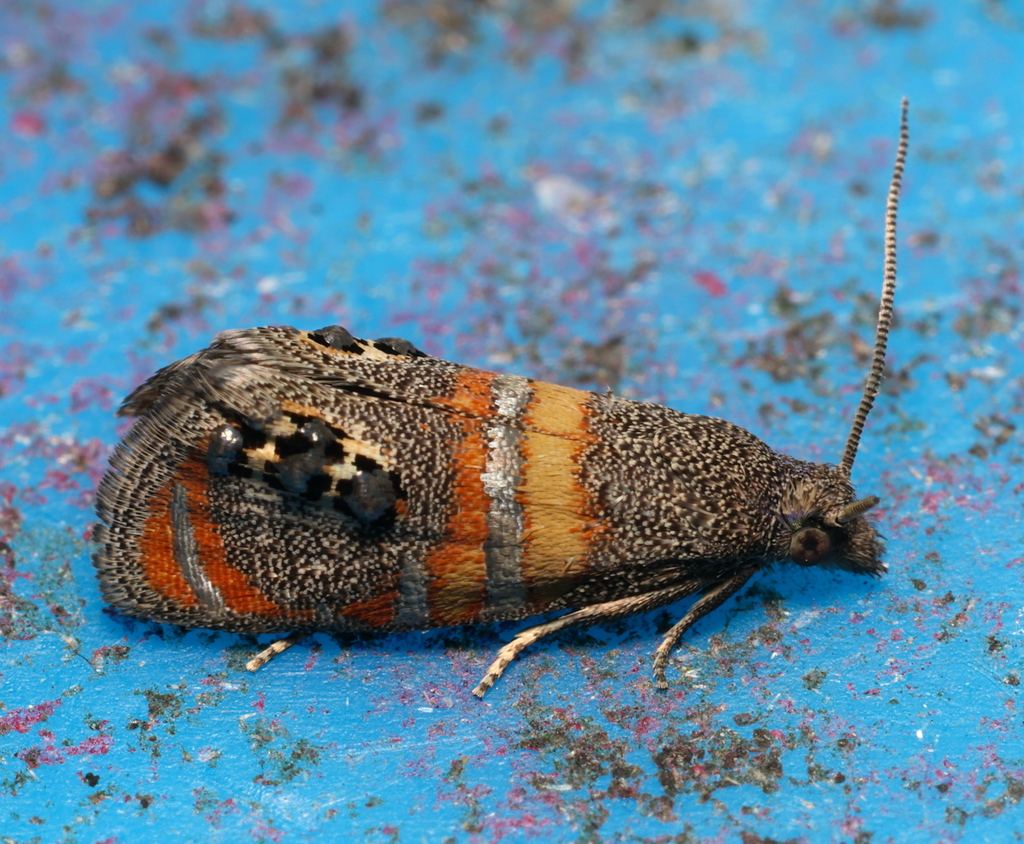
(c) David George, some rights reserved (CC BY) · licence
Family: Tortricidae · Class: Insecta · Order: Lepidoptera
Pelochrista curlewensis (Curlew Pelochrista) is a California animal in the Tortricidae family.
Pelochrista curlewensis is a small moth in the family Tortricidae, subfamily Olethreutinae. Originally described as Eucosma curlewensis by Wright in 2007, the species was subsequently transferred to the genus Pelochrista by Gilligan and Wright in 2013 (Gilligan & Wright 2013). The moth is assigned Hodges number 3061.1 in the standard North American Lepidoptera classification system. Physical characteristics and size specifications have not been well documented in the scientific literature. This species occurs across the western United States, with a range extending from California and Nevada eastward to Utah. Within California, specific county-level distribution data remains limited, though the species appears to be associated with the state's eastern regions based on its broader geographic range pattern. The Nevada and Utah portions of its range suggest adaptation to Great Basin desert and montane environments. Habitat requirements for P. curlewensis have not been thoroughly studied or documented. Given its placement in the genus Pelochrista and the geographic range spanning diverse western ecosystems, the species likely inhabits arid to semi-arid environments characteristic of the Great Basin region. Many Pelochrista species are associated with specific plant communities, but the particular vegetation types or elevation ranges preferred by this species remain unknown. Ecological details including host plant relationships, feeding behavior, and life cycle timing are poorly documented. Most tortricid moths in the subfamily Olethreutinae are herbivorous as larvae, typically feeding within plant tissues as leaf miners, stem borers, or seed feeders. Adult flight periods and seasonal activity patterns for P. curlewensis have not been established through systematic surveys. The species' reproductive biology, including mating behavior, egg-laying preferences, and larval development timeline, requires further research. Pelochrista curlewensis does not appear on federal or state endangered species lists as of December 2025. The species lacks formal conservation status designations, though this may reflect limited survey effort rather than actual abundance. Many microlepidoptera species in the western United States remain poorly studied, with population trends and conservation needs largely unknown. The absence of comprehensive distribution data makes it difficult to assess potential threats or population stability. Current knowledge gaps for this species are substantial, encompassing basic biological and ecological information. Research priorities should include systematic surveys to map current distribution, identification of larval host plants, documentation of habitat requirements, and assessment of population trends. Climate change impacts on western arid ecosystems may affect this species, but specific vulnerabilities cannot be evaluated without baseline ecological data. Scientific documentation for P. curlewensis remains extremely limited despite its formal description in 2007. The information presented here synthesizes available taxonomic sources including BugGuide and the original species descriptions. Additional field studies and taxonomic research are needed to develop a comprehensive understanding of this moth's biology, distribution patterns, and conservation status. We welcome contributions of verified scientific data, photographs, or field observations to enhance this species account.
Classification
Class: Insecta · Order: Lepidoptera · Family: Tortricidae
Frequently asked questions
How is Pelochrista curlewensis classified?
Pelochrista curlewensis belongs to class Insecta, order Lepidoptera, family Tortricidae.
What family does Pelochrista curlewensis belong to?
Pelochrista curlewensis is in the Tortricidae family.
What is Pelochrista curlewensis?
Pelochrista curlewensis is a small moth in the family Tortricidae, subfamily Olethreutinae.
Is Pelochrista curlewensis found in California?
Yes. Pelochrista curlewensis is recorded in California in The California Species Project's catalogue.
Related species
Other California species in the same genus, family, or bioregion.
Data from The California Species Project — 14,000+ California species with verified data from CNPS, CDFW, USFWS, and more.