Pelochrista eburata
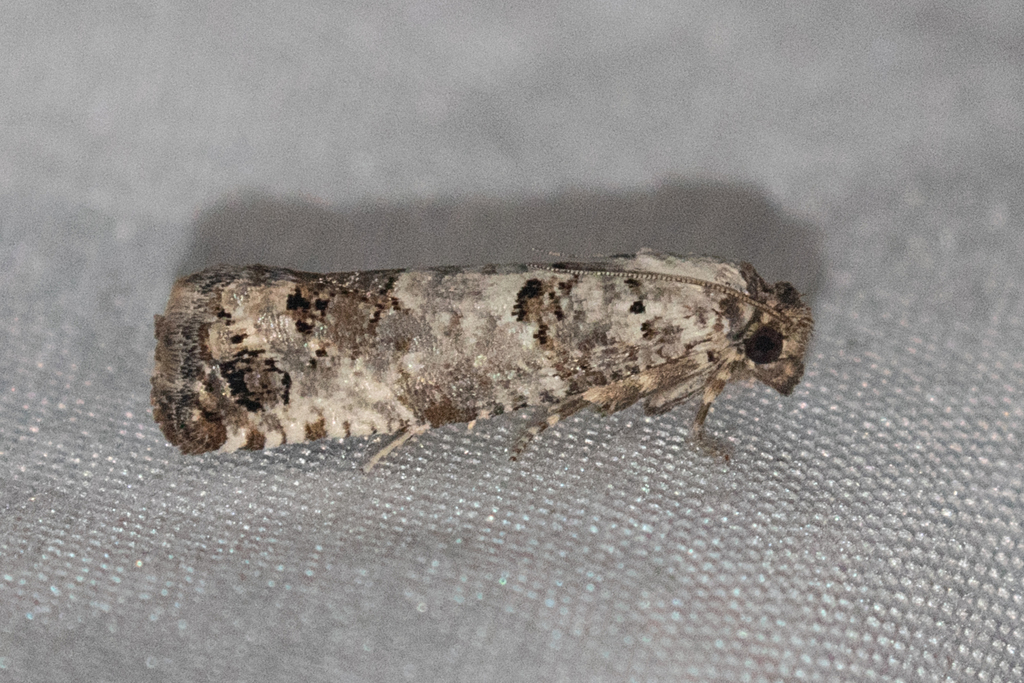
(c) Ryan F. Mandelbaum, some rights reserved (CC BY) · licence
Family: Tortricidae · Class: Insecta · Order: Lepidoptera
Pelochrista eburata is a California animal in the Tortricidae family.
Pelochrista eburata is a small moth in the family Tortricidae, commonly known as tortrix moths or leafroller moths. This species belongs to a diverse family of microlepidoptera that includes numerous economically important pest species, though specific morphological details for P. eburata remain poorly documented in the scientific literature. Pelochrista eburata occurs throughout California, with its range extending from the northern coastal regions to San Diego County in the south. This distribution pattern suggests the species is well-adapted to California's Mediterranean climate zones and associated vegetation communities. The extensive north-south range indicates tolerance for varied climatic conditions across the state's diverse biogeographic regions. Like other Tortricidae species, P. eburata likely inhabits areas with suitable host plants, though specific habitat preferences and elevation ranges have not been well documented. Members of the genus Pelochrista typically occur in areas with shrublands, chaparral, and oak woodlands, which are prevalent throughout California's Mediterranean climate zones. The species may be associated with native plant communities that provide larval food sources and adult nectar resources. The life history and ecological requirements of P. eburata remain largely unstudied. Tortricidae moths generally exhibit complete metamorphosis, with larvae that feed internally within plant tissues as leaf miners, stem borers, or within rolled leaves that give the family its common name. Adult moths are typically crepuscular or nocturnal, active during evening hours when they seek mates and nectar sources. Larval host plant relationships for this species have not been identified, representing a significant knowledge gap that limits understanding of its ecological role and habitat requirements. Breeding behavior, flight periods, and voltinism patterns for P. eburata are not documented in available literature. Many California Tortricidae species are multivoltine, producing multiple generations per year, with flight activity extending from spring through fall depending on local climate conditions and host plant phenology. Pelochrista eburata does not appear on federal or state endangered species lists, and its conservation status has not been formally assessed. The lack of listing status may reflect either stable populations or, more likely, insufficient survey data to determine population trends. California supports exceptional biodiversity, with the state ranking highest nationally for total species richness, but many invertebrate species remain poorly studied. Primary threats to California moth species generally include habitat loss from urban development, agricultural conversion, altered fire regimes, and climate change impacts on plant communities. Without specific ecological data for P. eburata, it is difficult to assess vulnerability to these stressors or identify specific conservation needs. Detailed ecological studies of this species are lacking. The above information synthesizes available taxonomic and distributional data from BugGuide and other entomological sources. We welcome contributions of verified scientific data, photographs, or field observations to enhance this species account. Researchers studying California Tortricidae are encouraged to document host plant relationships, habitat preferences, and life history characteristics for this understudied species.
Classification
Class: Insecta · Order: Lepidoptera · Family: Tortricidae
Frequently asked questions
How is Pelochrista eburata classified?
Pelochrista eburata belongs to class Insecta, order Lepidoptera, family Tortricidae.
What family does Pelochrista eburata belong to?
Pelochrista eburata is in the Tortricidae family.
What is Pelochrista eburata?
Pelochrista eburata is a small moth in the family Tortricidae, commonly known as tortrix moths or leafroller moths.
Is Pelochrista eburata found in California?
Yes. Pelochrista eburata is recorded in California in The California Species Project's catalogue.
Related species
Other California species in the same genus, family, or bioregion.
Data from The California Species Project — 14,000+ California species with verified data from CNPS, CDFW, USFWS, and more.