Peltodoris nobilis
Noble Dorid
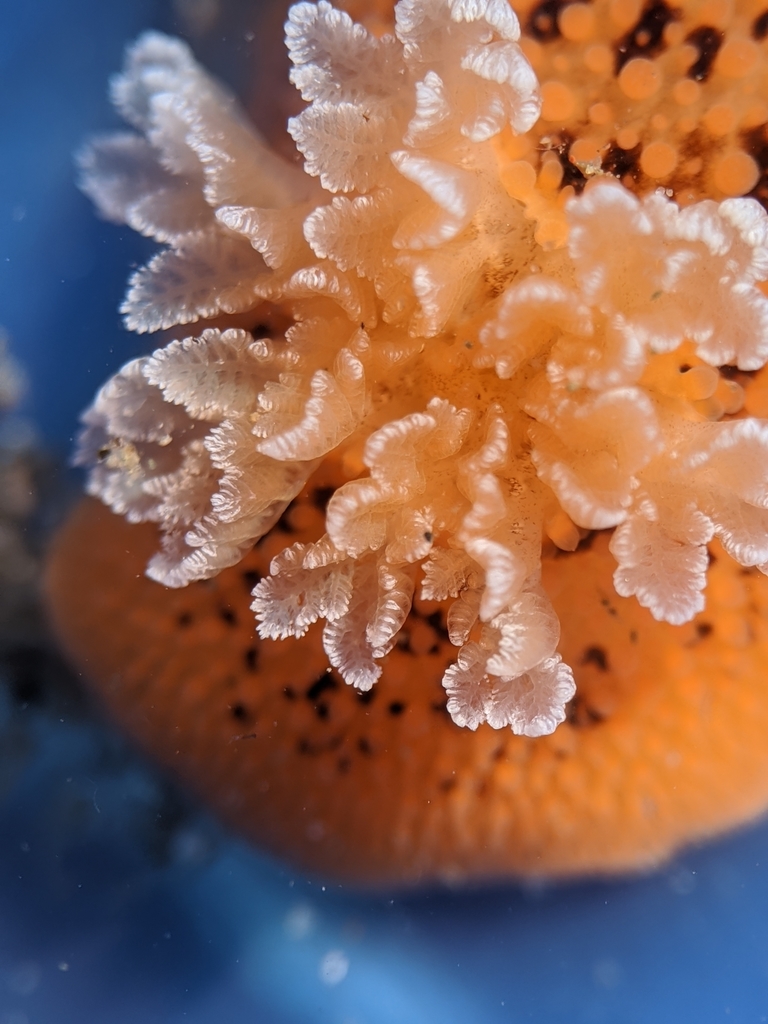
no rights reserved · CC0
Family: Discodorididae · Class: Gastropoda · Order: Nudibranchia
Peltodoris nobilis (Noble Dorid) is a California animal in the Discodorididae family.
Peltodoris nobilis is a large dorid nudibranch, a shell-less marine gastropod mollusk in the family Discodorididae. Adults typically measure 30 to 80 mm in length, with some individuals reaching up to 100 mm. The body is oval and flattened dorsally, with a distinctive pale yellow to cream coloration. The dorsal surface is covered with small, rounded tubercles that give the animal a characteristically bumpy texture. The rhinophores (sensory tentacles) are retractable and club-shaped, while the gill plume consists of 6 to 9 tripinnate branchial leaves arranged in a circle around the anal opening on the posterior dorsal surface. This species occurs along the Pacific coast of North America, with confirmed records from British Columbia south to Baja California, Mexico. In California, Peltodoris nobilis has been documented from intertidal and subtidal rocky habitats along the entire coastline, including the Channel Islands. The species appears to be most abundant in central and northern California waters. Peltodoris nobilis inhabits rocky intertidal and shallow subtidal environments, typically found on or beneath rocks, in crevices, and among algal holdfasts. The species occurs from the low intertidal zone to depths of approximately 40 meters. It shows a preference for areas with moderate to strong wave action and is often associated with encrusting sponge communities. The nudibranch is commonly found in kelp forests and rocky reef habitats where its sponge prey is abundant. This nudibranch is a specialized predator that feeds almost exclusively on encrusting sponges, particularly species in the genus Halichondria and other demosponges. The radula (feeding structure) is adapted for rasping sponge tissue from rocky surfaces. Reproduction occurs through hermaphroditic mating, with individuals capable of both male and female reproductive functions. Spawning typically occurs during spring and summer months, when adults deposit characteristic white, ribbon-like egg masses in spiral coils attached to rocks or other hard surfaces. The eggs develop into planktonic veliger larvae that eventually settle and metamorphose into juvenile nudibranchs. Peltodoris nobilis is not federally or state listed as threatened or endangered, and no specific conservation status has been assigned to this species. Current population trends are not well documented, though the species appears to maintain stable populations throughout much of its range. As with many marine invertebrates, potential threats include habitat degradation from coastal development, water quality impacts, and climate change effects on ocean chemistry and temperature. The species' dependence on healthy sponge communities makes it potentially vulnerable to factors that affect these prey organisms, including pollution and ocean acidification. Limited scientific research exists on the specific conservation needs or population dynamics of this nudibranch species.
Classification
Class: Gastropoda · Order: Nudibranchia · Family: Discodorididae
Frequently asked questions
How is Peltodoris nobilis classified?
Peltodoris nobilis belongs to class Gastropoda, order Nudibranchia, family Discodorididae.
What family does Peltodoris nobilis belong to?
Peltodoris nobilis is in the Discodorididae family.
What is Peltodoris nobilis?
Peltodoris nobilis is a large dorid nudibranch, a shell-less marine gastropod mollusk in the family Discodorididae.
Is Peltodoris nobilis found in California?
Yes. Peltodoris nobilis is recorded in California in The California Species Project's catalogue.
Related species
Other California species in the same genus, family, or bioregion.
Data from The California Species Project — 14,000+ California species with verified data from CNPS, CDFW, USFWS, and more.