Pemphigus obesinymphae
Cherubic Poplar Petiole-gall Aphid
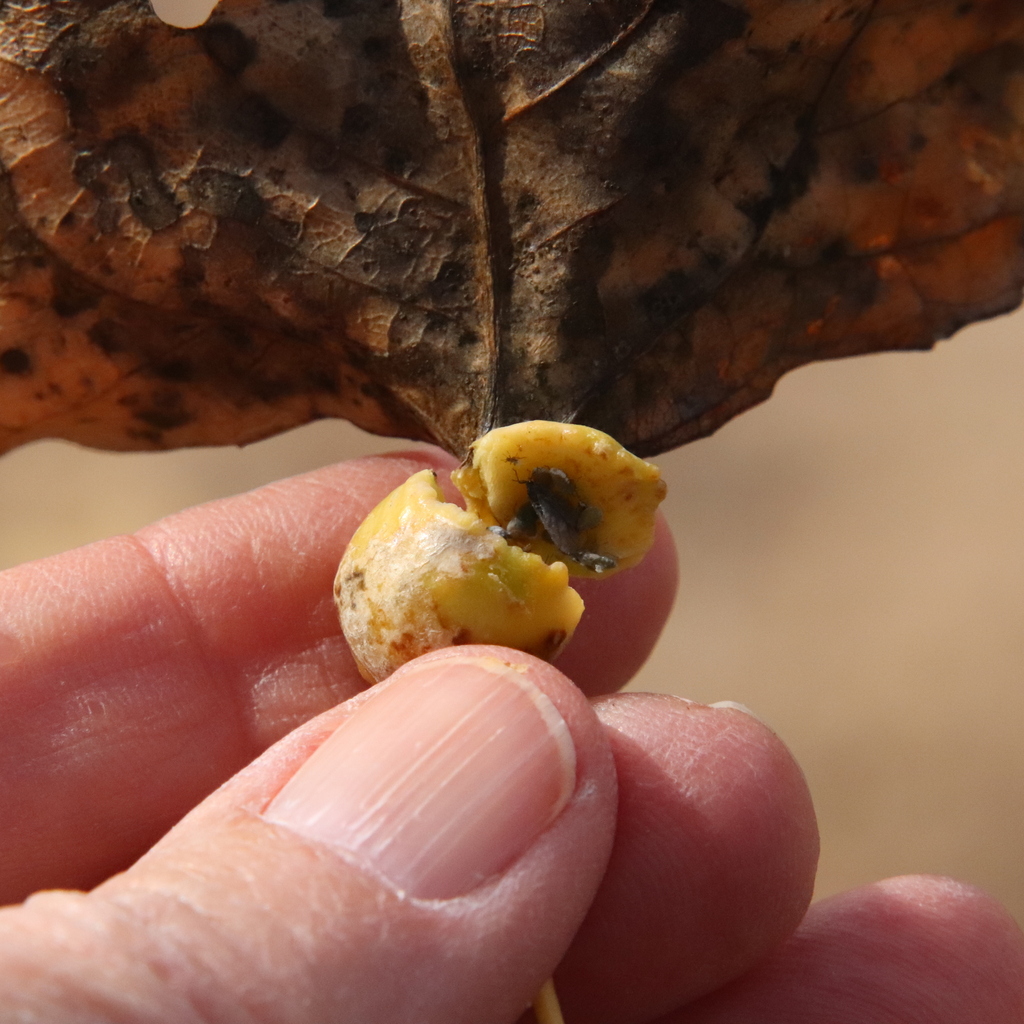
(c) Millie Basden, some rights reserved (CC BY) · licence
Family: Aphididae · Class: Insecta · Order: Hemiptera
Pemphigus obesinymphae (Cherubic Poplar Petiole-gall Aphid) is a California animal in the Aphididae family.
Pemphigus obesinymphae is a small, gall-forming aphid in the family Aphididae that exhibits unique social behaviors among North American aphids. This species creates distinctive galls on the leaves of Fremont cottonwood (Populus fremontii), forming enclosed colonies within these plant structures. The aphids are small, soft-bodied insects typical of their family, with adults measuring several millimeters in length. The species occurs in western North America, primarily associated with the natural range of its host plant, Fremont cottonwood. This distribution includes riparian areas throughout California, Arizona, Nevada, Utah, Colorado, and New Mexico, where Populus fremontii grows along streams, washes, and other water sources in arid and semi-arid regions. Pemphigus obesinymphae inhabits riparian woodland and desert wash environments where Fremont cottonwood trees are present. The species shows strict host specificity, creating galls exclusively on P. fremontii leaves. These galls form on leaf petioles and provide both shelter and nutrition for developing aphid colonies. The species thrives in elevations ranging from desert floors to montane riparian zones where cottonwoods occur. This species exhibits a complex life cycle involving both sexual and asexual reproduction phases typical of aphids. What distinguishes P. obesinymphae is that it represents the only North American aphid known to produce soldiers - specialized first instar nymphs that defend the colony from predators and parasites (Wikipedia; NCBI). These soldier aphids possess enlarged forelegs and engage in defensive behaviors to protect their genetically related colony members. The gall-dwelling colonies are not pure clones but can be invaded by unrelated individuals, creating potential genetic conflicts within colonies (NCBI). Reproduction involves both parthenogenetic phases within galls and sexual reproduction that produces overwintering eggs. The species creates galls through chemical manipulation of host plant tissue, inducing abnormal growth that forms hollow chambers. Female aphids initiate gall formation by inserting eggs into leaf petioles, and the developing larvae stimulate continued gall growth. Colonies can contain hundreds of individuals in various developmental stages, with soldiers comprising a subset of the first instar population. No specific conservation concerns have been documented for Pemphigus obesinymphae, and it lacks formal conservation status designations. However, like other riparian-dependent species, populations may face pressure from habitat loss due to water diversions, urban development, and alterations to natural flow regimes that affect cottonwood forests. The species' specialized relationship with Fremont cottonwood makes it vulnerable to factors affecting host plant populations, including drought, invasive species competition, and riparian habitat degradation. Scientific documentation for this species remains limited compared to more studied insects. The information presented here is based on available sources including Wikipedia, NCBI publications, and citizen science observations. If you have additional verified information about this species' biology, distribution, or ecology, please contact us to help improve this species account.
Classification
Class: Insecta · Order: Hemiptera · Family: Aphididae
Frequently asked questions
How is Pemphigus obesinymphae classified?
Pemphigus obesinymphae belongs to class Insecta, order Hemiptera, family Aphididae.
What family does Pemphigus obesinymphae belong to?
Pemphigus obesinymphae is in the Aphididae family.
What is Pemphigus obesinymphae?
Pemphigus obesinymphae is a small, gall-forming aphid in the family Aphididae that exhibits unique social behaviors among North American aphids.
Is Pemphigus obesinymphae found in California?
Yes. Pemphigus obesinymphae is recorded in California in The California Species Project's catalogue.
Related species
Other California species in the same genus, family, or bioregion.
Data from The California Species Project — 14,000+ California species with verified data from CNPS, CDFW, USFWS, and more.