Pepsis thisbe
Thisbe's Tarantula-hawk Wasp
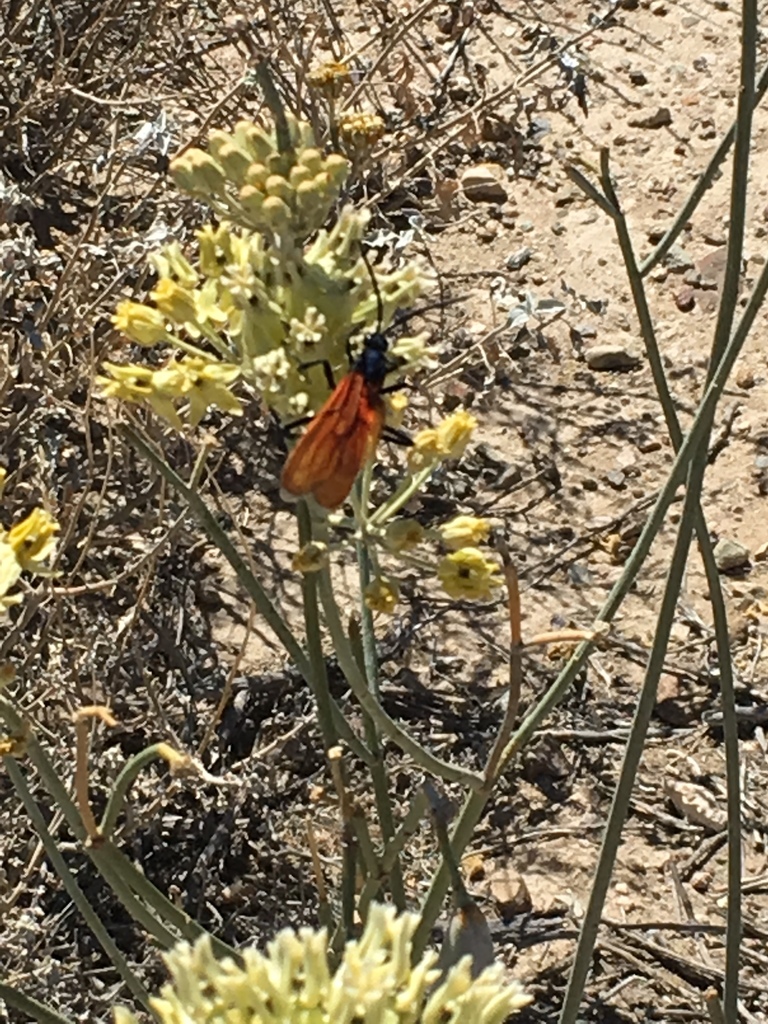
(c) James M. Maley, some rights reserved (CC BY) · licence
Family: Pompilidae · Class: Insecta · Order: Hymenoptera
Pepsis thisbe (Thisbe's Tarantula-hawk Wasp) is a California animal in the Pompilidae family.
Pepsis thisbe is a large solitary wasp in the family Pompilidae, commonly known as a tarantula-hawk wasp. Females measure 15-25 mm in length with robust, dark metallic bodies that typically appear black with blue or greenish iridescence. The wings are distinctively colored with dark smoky bases and clear hyaline margins distal to the dark submarginal band, a key distinguishing feature from the closely related P. pallidolimbata (BugGuide). Males are smaller than females and possess straight, relatively thick antennae, while females have more curved antennae. This species occurs across much of the southwestern United States, with its range extending from California eastward through Nevada, Arizona, New Mexico, and into parts of Colorado and Texas. In California, P. thisbe has been documented in the foothills of the southwestern Sierra Nevada and other arid regions of the state (BugGuide). The species appears to have a relatively broad distribution within suitable habitat, with NatureServe assigning it a global conservation rank of G4 (Apparently Secure). Pepsis thisbe inhabits arid and semi-arid environments including desert scrublands, chaparral, grasslands, and oak woodlands. The species is commonly found in foothill regions where it can access both nectaring resources and suitable prey. Adults are frequently observed visiting flowers, particularly milkweeds such as Asclepias erosa, where they feed on nectar (BugGuide). The species typically occurs at low to moderate elevations in areas with scattered vegetation and exposed ground suitable for nesting. Like other tarantula hawks, P. thisbe exhibits specialized predatory behavior targeting tarantulas and other large spiders. Females hunt by locating tarantula burrows, engaging in combat with the spider, and delivering a paralyzing sting. The immobilized spider is then dragged to a prepared burrow where the wasp deposits a single egg on the spider's abdomen. The developing larva feeds on the paralyzed but living spider, ensuring fresh food throughout its development. Males do not hunt spiders and focus primarily on seeking mates and feeding on nectar. Adults are most active during warm months, with peak activity typically occurring in late spring through early fall. Currently, P. thisbe does not hold any special conservation status at federal or state levels. The species appears to maintain stable populations across its range, though like many desert-adapted insects, it may face localized pressures from habitat loss due to urban development and agricultural conversion in some areas. Climate change could potentially affect the species through alterations in precipitation patterns and temperature regimes that influence both the wasp and its spider prey. The species' apparent ecological flexibility and broad range suggest it is not immediately threatened, consistent with its NatureServe ranking of Apparently Secure as of December 2025.
Classification
Class: Insecta · Order: Hymenoptera · Family: Pompilidae
Frequently asked questions
How is Pepsis thisbe classified?
Pepsis thisbe belongs to class Insecta, order Hymenoptera, family Pompilidae.
What family does Pepsis thisbe belong to?
Pepsis thisbe is in the Pompilidae family.
What is Pepsis thisbe?
Pepsis thisbe is a large solitary wasp in the family Pompilidae, commonly known as a tarantula-hawk wasp.
Is Pepsis thisbe found in California?
Yes. Pepsis thisbe is recorded in California in The California Species Project's catalogue.
Related species
Other California species in the same genus, family, or bioregion.
Data from The California Species Project — 14,000+ California species with verified data from CNPS, CDFW, USFWS, and more.