Perca flavescens
Yellow perch
(c) Quinn, some rights reserved (CC BY) · licence
Family: Percidae · Class: Actinopterygii · Order: Perciformes
Perca flavescens (Yellow perch) is a California animal in the Percidae family.
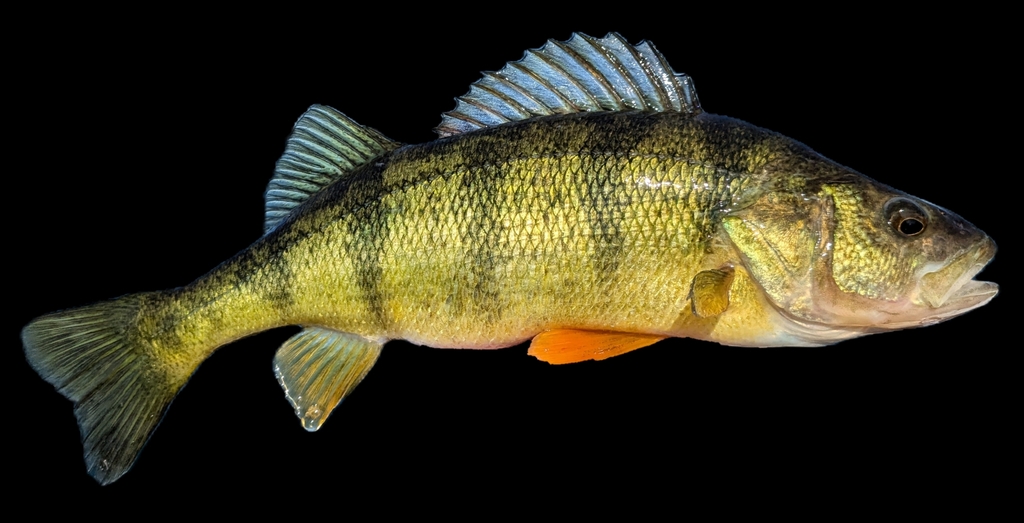
The yellow perch is a medium-sized freshwater fish native to North America, characterized by its distinctive golden-yellow coloration and prominent dark vertical bars. Adults typically measure 15 to 25 cm (6 to 10 inches) in length and weigh 110 to 230 grams (0.25 to 0.5 pounds), though some individuals may reach 35 cm (14 inches). The body is laterally compressed and elongated, with a slightly humped back. Six to eight dark olive or black vertical bars extend from the dorsal surface to below the lateral line. The dorsal fin is divided into two distinct sections: an anterior spiny portion with 13 to 15 sharp spines, and a posterior soft-rayed section. The pelvic and anal fins display an orange to bright red coloration, particularly pronounced during breeding season. Yellow perch are not native to California but have been introduced to various water bodies throughout the state. According to the California Department of Fish and Wildlife, established populations occur in several reservoirs and lakes, including Clear Lake in Lake County, Lake Almanor in Plumas County, and various waters in the Sierra Nevada foothills. The species has also been documented in the Colorado River system along California's southeastern border. Natural populations extend across much of northern and central North America, from the Atlantic coast west to the Great Plains and from southern Canada south to South Carolina and Kansas. This species inhabits cool, clear lakes, ponds, and slow-moving streams with abundant vegetation. Yellow perch prefer depths of 4.5 to 10.5 meters (15 to 35 feet) but may occupy shallower areas during spawning and feeding. They require water temperatures below 25°C (77°F) for optimal survival and are typically found near structural features such as fallen logs, weed beds, and rocky outcrops. The species tolerates a wide range of pH levels but prefers slightly alkaline conditions. Yellow perch are opportunistic carnivores that feed primarily on aquatic insects, small crustaceans, fish eggs, and juvenile fish. Adults consume larger prey including crayfish, leeches, and small fish such as minnows and young-of-year bass. The species exhibits schooling behavior, particularly among juveniles and non-breeding adults. Spawning occurs in early spring when water temperatures reach 7 to 12°C (45 to 54°F). Females deposit long, gelatinous egg strings containing 10,000 to 40,000 eggs over submerged vegetation or woody debris. Males fertilize the eggs externally and provide no parental care. Sexual maturity is reached at 2 to 4 years of age. Yellow perch are not listed under federal or California endangered species legislation. As a non-native species in California, populations are managed as part of general fisheries regulations rather than conservation programs. The species supports recreational fishing in some California waters, though it may compete with native fish species for resources. Water temperature increases due to climate change may limit suitable habitat in California, as the species requires cooler water conditions than many native warm-water fish.
Classification
Class: Actinopterygii · Order: Perciformes · Family: Percidae
Frequently asked questions
How is Perca flavescens classified?
Perca flavescens belongs to class Actinopterygii, order Perciformes, family Percidae.
What family does Perca flavescens belong to?
Perca flavescens is in the Percidae family.
What is Perca flavescens?
The yellow perch is a medium-sized freshwater fish native to North America, characterized by its distinctive golden-yellow coloration and prominent dark vertical bars.
Is Perca flavescens found in California?
Yes. Perca flavescens is recorded in California in The California Species Project's catalogue.
Related species
Other California species in the same genus, family, or bioregion.
Data from The California Species Project — 14,000+ California species with verified data from CNPS, CDFW, USFWS, and more.