Perdita algodones
Algodones Perdita
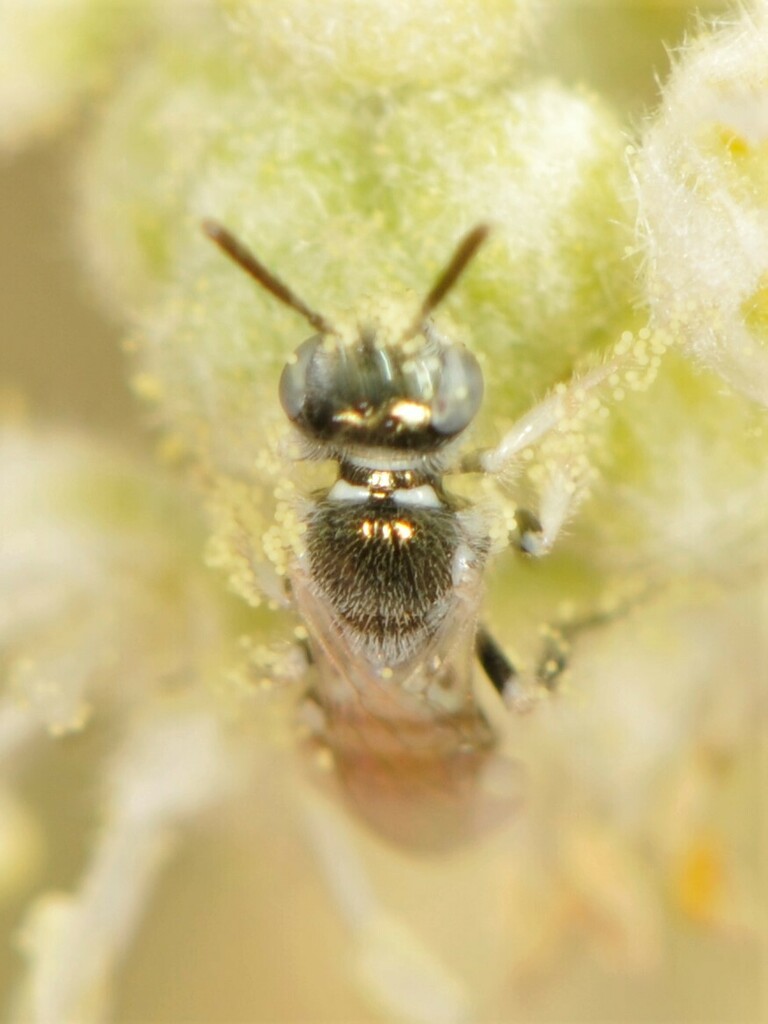
(c) Elliott Gordon, some rights reserved (CC BY) · licence
Family: Andrenidae · Class: Insecta · Order: Hymenoptera
Conservation status: G1 S1
Perdita algodones (Algodones Perdita) is a California animal in the Andrenidae family.
Perdita algodones is a small, solitary bee in the family Andrenidae endemic to California's Imperial County. Adults measure 4.3 to 4.5 mm (0.17 to 0.18 inches) in length, making this one of the smaller members of the Perdita genus (Timberlake 1980). The species exhibits the typical characteristics of perdita bees, with a slender build and relatively sparse body hair compared to other native bee genera. This species is known exclusively from the Algodones Dunes system in Imperial County, California (Bohart 1982). The Algodones Dunes represent one of the largest sand dune complexes in North America, extending approximately 45 miles north-south along the California-Mexico border. All documented collections of P. algodones have occurred within this unique ecosystem, suggesting the species may be a habitat specialist adapted to the specific conditions of these active sand dunes. Perdita algodones inhabits the dynamic sand dune environment of the Algodones system, where constant wind action creates shifting sand formations and specialized plant communities. This ecosystem is characterized by extreme temperature fluctuations, low moisture availability, and sparse vegetation adapted to sandy substrates. The dunes support specialized plant species including desert willow, ghost plant, and various ephemeral wildflowers that likely serve as nectar sources for the bee. As a member of the Andrenidae family, P. algodones is presumably a ground-nesting species, with females excavating burrows in sandy substrate for reproduction. Like other Perdita species, this bee is likely active during specific seasons when host plants are flowering, though detailed behavioral and ecological studies are lacking. The species' small size and specialized habitat requirements suggest it may be oligolectic, collecting pollen from a limited range of plant species adapted to the dune environment. Perdita algodones holds a conservation status of G1 S1, indicating it is critically imperiled both globally and within California. The species was included in a 2004 petition to the U.S. Fish and Wildlife Service for federal listing consideration, submitted by the Center for Biological Diversity, Public Employees for Environmental Responsibility, and the Sierra Club. Current USFWS records list the species as a "Candidate Taxon" as of December 2025, though no formal listing determination has been made. The primary threat to P.algodones appears to be habitat disturbance from off-road vehicle (ORV) activity within the Algodones Dunes. Studies have documented significant impacts from recreational vehicle use on dune ecosystems, including soil compaction, vegetation destruction, and disruption of natural sand movement patterns. Given the species' apparent endemism to a single dune system and its small body size, P. algodones may be particularly vulnerable to habitat fragmentation and disturbance. Climate change poses additional long-term threats through altered precipitation patterns and increased temperatures in an already extreme environment.
Classification
Class: Insecta · Order: Hymenoptera · Family: Andrenidae
Conservation status
G1 S1
Frequently asked questions
How is Perdita algodones classified?
Perdita algodones belongs to class Insecta, order Hymenoptera, family Andrenidae.
What family does Perdita algodones belong to?
Perdita algodones is in the Andrenidae family.
Is Perdita algodones protected or of conservation concern?
Perdita algodones carries the following status: G1 S1.
What is Perdita algodones?
Perdita algodones is a small, solitary bee in the family Andrenidae endemic to California's Imperial County.
Is Perdita algodones found in California?
Yes. Perdita algodones is recorded in California in The California Species Project's catalogue.
Related species
Other California species in the same genus, family, or bioregion.
Data from The California Species Project — 14,000+ California species with verified data from CNPS, CDFW, USFWS, and more.