Perdita californica
California Fairy Bee
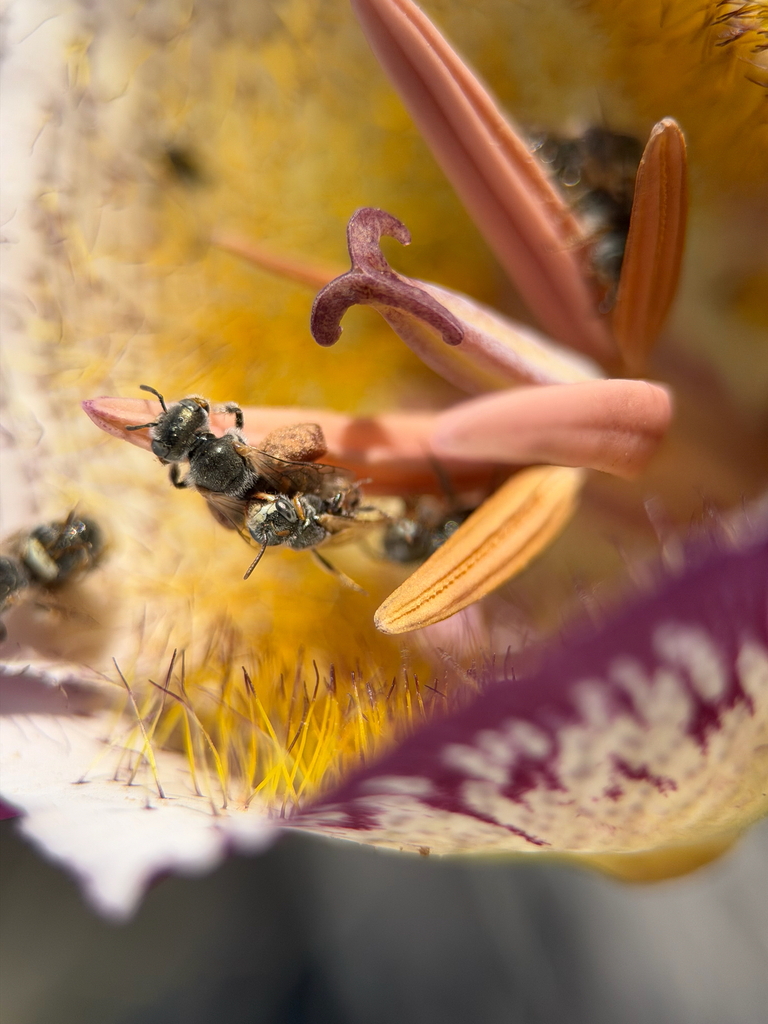
(c) klicklo, some rights reserved (CC BY) · licence
Family: Andrenidae · Class: Insecta · Order: Hymenoptera
Perdita californica (California Fairy Bee) is a California animal in the Andrenidae family.
Perdita californica is a small solitary bee in the family Andrenidae, commonly known as the California fairy bee. This diminutive species measures approximately 4 millimeters in length, making it one of the smaller members of the Perdita genus. Females display yellow coloration with distinctive black markings, while males typically exhibit similar size and coloration patterns characteristic of fairy bees. The compact body structure and relatively short flight range are typical adaptations for this group of specialized ground-nesting bees. The California fairy bee occurs in California, with documented observations from Orange County and San Diego County. Based on available records, the species appears to have a limited distribution within the state, primarily in southern California regions. The full extent of its historical and current range remains poorly documented, as is common with many small, specialized bee species that may be overlooked during general surveys. This species inhabits desert and semi-arid environments, as evidenced by observations in Anza-Borrego Desert State Park. The California fairy bee appears to favor areas with suitable host plants and appropriate nesting substrates. Like other Perdita species, P. californica likely requires sandy or loose soil conditions for ground nesting. The species has been observed at elevations consistent with desert scrub and chaparral habitats in southern California. Limited behavioral observations suggest that California fairy bees are active during spring months, with documented sightings in April and June. Females have been observed visiting flowers for nectar, including honey mesquite (Prosopis glandulosa), indicating opportunistic foraging behavior typical of many Perdita species. As ground-nesting solitary bees, females likely excavate individual nest burrows in sandy soil where they provision brood cells with pollen and nectar. The species demonstrates the docile behavior characteristic of fairy bees, with one individual recorded landing on a researcher's finger during field observations (BugGuide 2024). The conservation status of Perdita californica has not been formally assessed by state or federal agencies. The species lacks federal or state listing status, and no comprehensive population surveys have been conducted. Like many small, specialized bees, P. californica may face threats from habitat loss due to urban development, agricultural conversion, and climate change effects on desert ecosystems. The limited distribution records suggest either a naturally restricted range or potential under-detection due to the species' small size and specialized habitat requirements. Scientific documentation for this species remains limited, with most available information derived from citizen science observations and taxonomic databases. The species was originally described in the scientific literature, but detailed ecological studies are lacking. Additional research is needed to determine population status, specific habitat requirements, host plant relationships, and potential conservation needs. Field surveys targeting small bee species in southern California desert habitats may reveal additional populations and provide crucial data for assessing the species' conservation status.
Classification
Class: Insecta · Order: Hymenoptera · Family: Andrenidae
Frequently asked questions
How is Perdita californica classified?
Perdita californica belongs to class Insecta, order Hymenoptera, family Andrenidae.
What family does Perdita californica belong to?
Perdita californica is in the Andrenidae family.
What is Perdita californica?
Perdita californica is a small solitary bee in the family Andrenidae, commonly known as the California fairy bee.
Is Perdita californica found in California?
Yes. Perdita californica is recorded in California in The California Species Project's catalogue.
Related species
Other California species in the same genus, family, or bioregion.
Data from The California Species Project — 14,000+ California species with verified data from CNPS, CDFW, USFWS, and more.