Perdita hirticeps
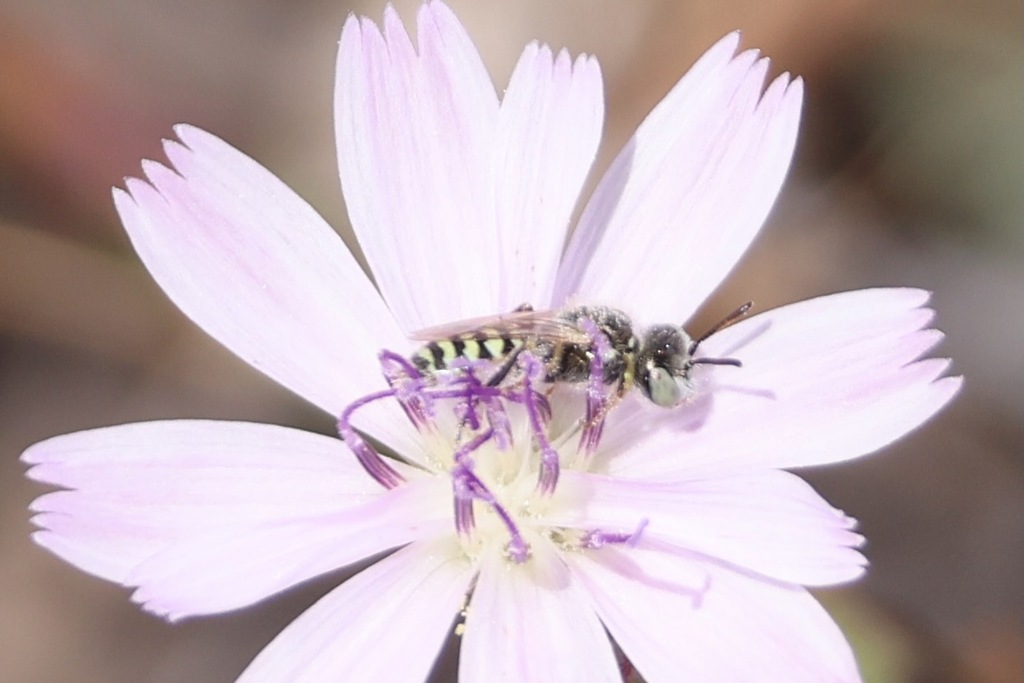
(c) Rachel Lee Harper, some rights reserved (CC BY) · licence
Family: Andrenidae · Class: Insecta · Order: Hymenoptera
Perdita hirticeps is a California animal in the Andrenidae family.
Perdita hirticeps is a small solitary bee in the family Andrenidae, part of a diverse genus of specialist bees native to western North America. This species represents one of numerous Perdita taxa that have evolved highly specific relationships with particular host plants and specialized habitat requirements. Detailed morphological descriptions for P. hirticeps are limited in available literature, though members of the genus Perdita are typically small, slender bees ranging from 4-8 mm in length. Like other Perdita species, P. hirticeps likely exhibits the characteristic features of the genus including a relatively hairless body compared to other andrenid bees, pale integument, and specialized pollen-collecting structures adapted to their oligolectic foraging behavior. The geographic range of Perdita hirticeps includes areas of California, though specific distributional data remain poorly documented. The subspecies P. hirticeps luteocincta has been documented in association with sandy habitat requirements typical of many Perdita species (USFWS ECOS). According to petition documents, related Perdita species including P. hirticeps apicata occur in sandy soil environments associated with river drainages and sand dunes in regions such as the San Joaquin Valley, suggesting similar habitat preferences for the nominate subspecies. Habitat requirements for P. hirticeps center on sandy soils and specialized nesting substrates. Like other members of the genus, this species likely requires loose, well-drained sandy areas for ground-nesting behavior. The association with sandy environments such as those found in valley floors and alluvial deposits reflects the specialized excavation requirements of female bees that construct underground brood cells for their offspring. As a member of the genus Perdita, P. hirticeps is presumed to be oligolectic, meaning females collect pollen from a narrow range of host plant species. This specialization is characteristic of the genus and represents a key ecological constraint that influences population distribution and abundance. Specific host plant relationships for P. hirticeps have not been well documented in available literature. Nesting behavior likely follows the typical Perdita pattern of females excavating individual burrows in sandy substrate where they provision cells with collected pollen and nectar before depositing eggs. Conservation status information for Perdita hirticeps is extremely limited. The species does not appear on current federal or state endangered species lists, and population trends remain undocumented. However, like many specialist bees dependent on specific habitat types and host plant relationships, P. hirticeps may face conservation challenges from habitat modification and fragmentation of sandy soil environments in California's valleys and lowlands. Scientific documentation for this species remains limited. The information presented here synthesizes available data from federal databases and taxonomic references. Detailed ecological studies, population assessments, and comprehensive distributional surveys are needed to better understand the biology and conservation needs of this specialist bee species.
Classification
Class: Insecta · Order: Hymenoptera · Family: Andrenidae
Frequently asked questions
How is Perdita hirticeps classified?
Perdita hirticeps belongs to class Insecta, order Hymenoptera, family Andrenidae.
What family does Perdita hirticeps belong to?
Perdita hirticeps is in the Andrenidae family.
What is Perdita hirticeps?
Perdita hirticeps is a small solitary bee in the family Andrenidae, part of a diverse genus of specialist bees native to western North America.
Is Perdita hirticeps found in California?
Yes. Perdita hirticeps is recorded in California in The California Species Project's catalogue.
Related species
Other California species in the same genus, family, or bioregion.
Data from The California Species Project — 14,000+ California species with verified data from CNPS, CDFW, USFWS, and more.