Perdita hirticeps luteocincta
Yellow-banded Andrenid Bee
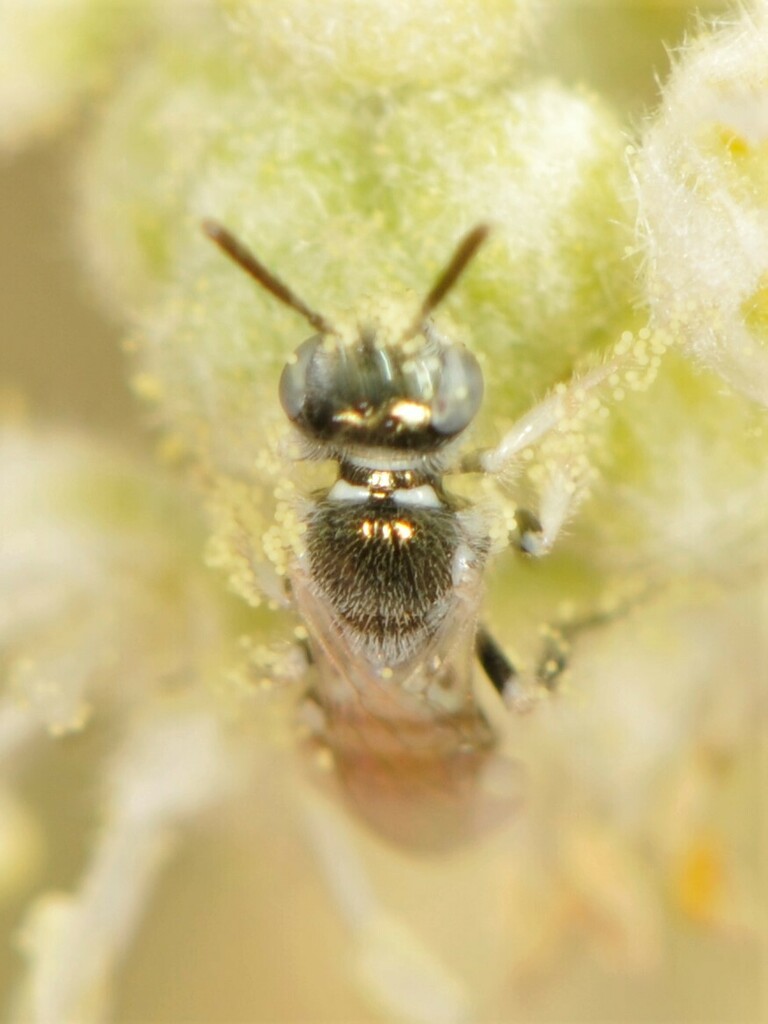
(c) Elliott Gordon, some rights reserved (CC BY) · licence
Family: Andrenidae · Class: Insecta · Order: Hymenoptera
Conservation status: GNRTX SX
Perdita hirticeps luteocincta (Yellow-banded Andrenid Bee) is a California animal in the Andrenidae family.
The Yellow-banded Andrenid Bee is a subspecies of Perdita hirticeps, belonging to the family Andrenidae. This small solitary bee is distinguished by its yellow banding pattern, which gives the subspecies its common name. Like other members of the genus Perdita, this bee likely measures between 3-8 mm in length, though specific morphometric data for this subspecies has not been well documented. Historically, Perdita hirticeps luteocincta was endemic to California's San Joaquin Valley, where it inhabited areas characterized by sandy soils associated with river drainages and sand dunes. According to USFWS records, this subspecies was known to occur in California, though the precise historical range and specific localities remain poorly documented in available literature. The species' habitat requirements appear to have been closely tied to sandy soil environments typical of the San Joaquin Valley's alluvial systems. These areas provided the loose, well-drained substrates preferred by many Perdita species for ground-nesting activities. The association with river drainages and sand dune systems suggests the subspecies required specific geological conditions that may have become increasingly rare due to agricultural conversion and urban development throughout the Central Valley. As a member of the genus Perdita, this bee was likely oligolectic, specializing on a narrow range of host plants for pollen collection. Many Perdita species are known to be highly specialized on particular plant families or genera, often showing strong fidelity to specific flowering periods. The nesting behavior would have involved excavating burrows in sandy soil, with females provisioning individual brood cells with pollen and nectar collected from their preferred host plants. The flight period for most Perdita species is typically synchronized with the blooming period of their host plants, suggesting this subspecies had specific seasonal activity patterns. Perdita hirticeps luteocincta carries a conservation status of GNRTX SX, indicating it is presumed extirpated from California and possibly extinct globally. The 'SX' designation reflects the lack of recent observations despite targeted surveys in historically occupied habitat. This subspecies represents one of numerous native bee taxa that have experienced severe population declines or extirpation in California's Central Valley due to widespread habitat conversion for agriculture and urban development. The San Joaquin Valley has undergone extensive transformation since the early 20th century, with over 95% of native habitats converted to other land uses. The specialized sandy soil habitats required by this subspecies have been particularly impacted by agricultural development, water diversions, and urbanization. The apparent extirpation of Perdita hirticeps luteocincta highlights the vulnerability of highly specialized native pollinators to landscape-level habitat modifications and underscores the conservation challenges facing endemic insects with narrow habitat requirements in California's most heavily modified ecosystems.
Classification
Class: Insecta · Order: Hymenoptera · Family: Andrenidae
Conservation status
GNRTX SX
Frequently asked questions
How is Perdita hirticeps luteocincta classified?
Perdita hirticeps luteocincta belongs to class Insecta, order Hymenoptera, family Andrenidae.
What family does Perdita hirticeps luteocincta belong to?
Perdita hirticeps luteocincta is in the Andrenidae family.
Is Perdita hirticeps luteocincta protected or of conservation concern?
Perdita hirticeps luteocincta carries the following status: GNRTX SX.
What is Perdita hirticeps luteocincta?
The Yellow-banded Andrenid Bee is a subspecies of Perdita hirticeps, belonging to the family Andrenidae.
Is Perdita hirticeps luteocincta found in California?
Yes. Perdita hirticeps luteocincta is recorded in California in The California Species Project's catalogue.
Related species
Other California species in the same genus, family, or bioregion.
Data from The California Species Project — 14,000+ California species with verified data from CNPS, CDFW, USFWS, and more.