Perdita interrupta
California Poppy Fairy Bee
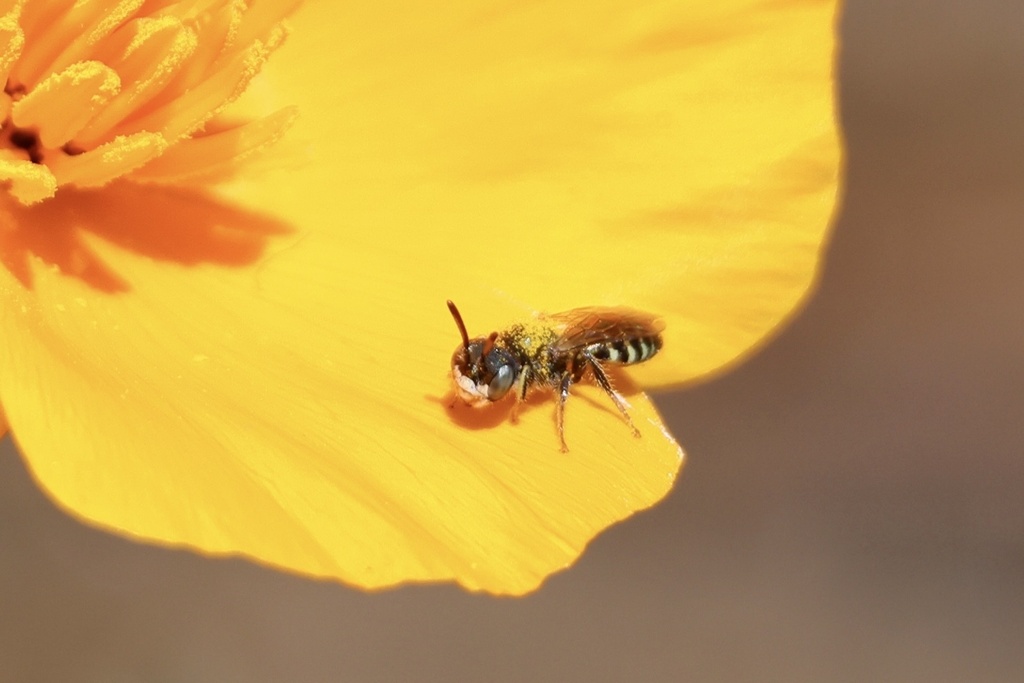
(c) Rachel Lee Harper, some rights reserved (CC BY) · licence
Family: Andrenidae · Class: Insecta · Order: Hymenoptera
Perdita interrupta (California Poppy Fairy Bee) is a California animal in the Andrenidae family.
The California Poppy Fairy Bee is a small solitary bee in the family Andrenidae, genus Perdita. This species belongs to a diverse group of desert specialist bees, many of which have evolved close associations with specific flowering plants. The California Poppy Fairy Bee represents one of the numerous Perdita species found across the southwestern United States, though detailed morphological descriptions for this particular species remain limited in the scientific literature. The range of Perdita interrupta appears to be centered in California, though specific distributional data for this species is not well documented in current taxonomic databases. The genus Perdita is particularly diverse in desert regions of the American Southwest, with many species showing restricted ranges tied to the distribution of their preferred host plants. Related species in the genus, such as the Mojave poppy bee (Perdita meconis), occur across Arizona, California, Nevada, and Utah, suggesting that P. interrupta may have a similar southwestern distribution pattern. Habitat requirements for this species have not been thoroughly studied, though the common name suggests a potential association with California poppy (Eschscholzia californica) or related members of the Papaveraceae family. California poppies bloom from May through June in many areas and provide both nectar and pollen resources for various native bee species (CNPS 2020). If this association exists, the California Poppy Fairy Bee would likely inhabit areas where poppies naturally occur, including grasslands, chaparral margins, and disturbed sites throughout California's Mediterranean climate zones. Like other members of the genus Perdita, this species is presumably a ground-nesting solitary bee. Perdita bees typically construct their nests in sandy or loose soil, creating branched tunnels where females provision individual brood cells with pollen and nectar. The timing of adult emergence and flight activity would correspond with the blooming period of their preferred host plants. Female bees collect pollen and nectar to create protein-rich provisions for developing larvae, while males typically emerge earlier and patrol areas where females are likely to appear for mating. The conservation status of Perdita interrupta has not been formally assessed by federal or state wildlife agencies. The species does not appear on current listings for endangered, threatened, or species of concern designations. However, like many native bee species with potential host plant specializations, the California Poppy Fairy Bee could face threats from habitat loss, pesticide use, and changes in plant community composition. Urban development and agricultural conversion of natural habitats may impact populations if they depend on specific flowering plants or soil types for nesting. Detailed ecological studies of this species are lacking. The information presented here synthesizes available taxonomic records and inferences based on related Perdita species. Enhanced documentation of this bee's distribution, host plant relationships, nesting biology, and population status would contribute valuable information for understanding California's native bee diversity and potential conservation needs.
Classification
Class: Insecta · Order: Hymenoptera · Family: Andrenidae
Frequently asked questions
How is Perdita interrupta classified?
Perdita interrupta belongs to class Insecta, order Hymenoptera, family Andrenidae.
What family does Perdita interrupta belong to?
Perdita interrupta is in the Andrenidae family.
What is Perdita interrupta?
The California Poppy Fairy Bee is a small solitary bee in the family Andrenidae, genus Perdita.
Is Perdita interrupta found in California?
Yes. Perdita interrupta is recorded in California in The California Species Project's catalogue.
Related species
Other California species in the same genus, family, or bioregion.
Data from The California Species Project — 14,000+ California species with verified data from CNPS, CDFW, USFWS, and more.