Perdita rhois
Rhus Fairy Bee
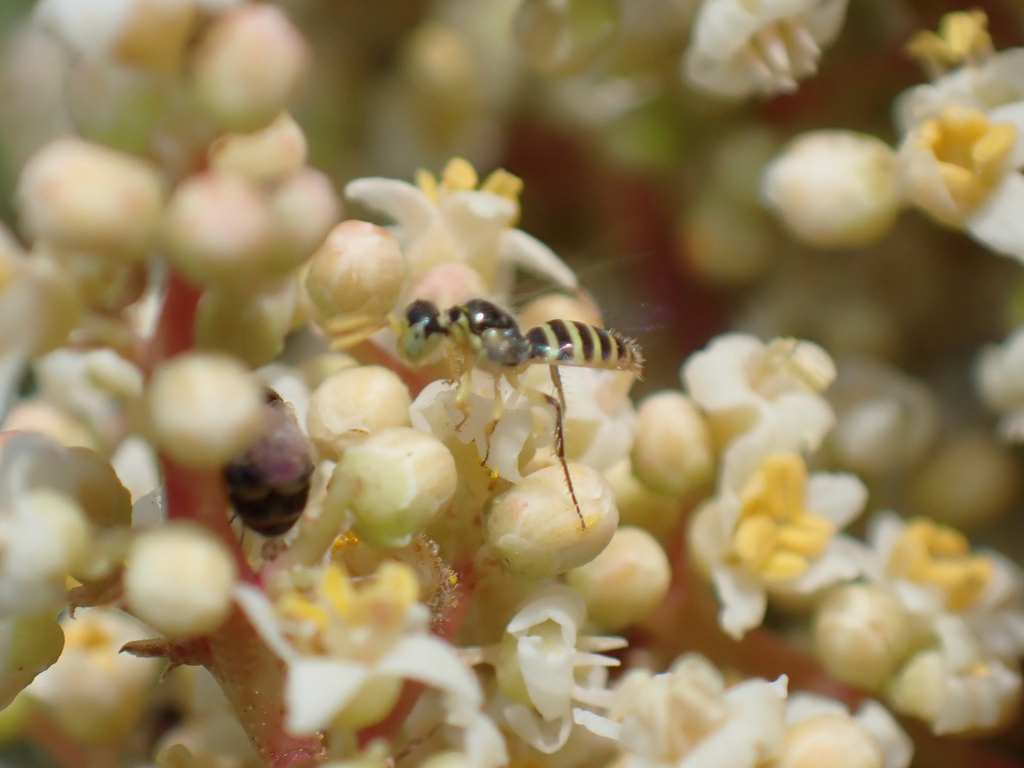
(c) Rachel Lee Harper, some rights reserved (CC BY) · licence
Family: Andrenidae · Class: Insecta · Order: Hymenoptera
Perdita rhois (Rhus Fairy Bee) is a California animal in the Andrenidae family.
Perdita rhois is a small solitary bee in the family Andrenidae, commonly known as the Rhus Fairy Bee. Adults measure approximately 4-5 mm in length, making them among the smaller members of the fairy bee genus (BugGuide 2014). Like other Perdita species, they have a slender build with relatively sparse body hair compared to other native bees. The species belongs to the ventralis species group within the subgenus Perdita. This species occurs in California, with documented records from Los Angeles County including observations at Santa Fe Dam Recreation Area in Baldwin Park and Claremont (BugGuide 2024, 2014). The species has also been documented in other western states, appearing on species of greatest conservation need lists for Arkansas and New York, suggesting a broader but potentially fragmented distribution pattern across North America. Perdita rhois inhabits areas where its host plants occur, particularly in chaparral and scrubland communities. California's chaparral ecosystem supports the highest diversity of bees per unit area of any ecosystem type, providing ideal conditions for specialist pollinators like fairy bees (Xerces Society 2011). The species appears to favor areas with diverse native shrub communities that support its preferred flowering plants. This bee is a polylectic species, gathering pollen from multiple plant families rather than specializing on a single host. According to Dr. John S. Ascher, documented floral associations include Adenostoma from the rose family (Rosaceae) (BugGuide 2014). Field observations have recorded large aggregations feeding on Malosma laurina (laurel sumac) blooms, with hundreds of individuals observed on a single flowering tree in June 2024. During these feeding events, wing fanning behavior has been observed, which appears to be associated with courtship activities (BugGuide 2024). The species shows peak activity during late spring and early summer when preferred shrubs are in bloom. Like most fairy bees, P. rhois is likely a ground-nesting species, with females excavating shallow tunnels in patches of bare soil near foraging areas. Approximately 70% of native bee species nest in the ground, and this nesting strategy is typical for the Andrenidae family (Xerces Society 2011). Males likely emerge first and establish territories around flowering plants where they wait for females. The conservation status of Perdita rhois has not been formally assessed at federal or state levels. However, its inclusion on species of greatest conservation need lists in multiple states suggests potential concerns about population stability or data deficiency regarding its status. As a specialist pollinator dependent on native shrubland habitats, the species may be vulnerable to habitat loss from urban development and altered fire regimes in chaparral communities. The species' small size and specific habitat requirements make population monitoring challenging, contributing to uncertainty about its conservation needs.
Classification
Class: Insecta · Order: Hymenoptera · Family: Andrenidae
Frequently asked questions
How is Perdita rhois classified?
Perdita rhois belongs to class Insecta, order Hymenoptera, family Andrenidae.
What family does Perdita rhois belong to?
Perdita rhois is in the Andrenidae family.
What is Perdita rhois?
Perdita rhois is a small solitary bee in the family Andrenidae, commonly known as the Rhus Fairy Bee.
Is Perdita rhois found in California?
Yes. Perdita rhois is recorded in California in The California Species Project's catalogue.
Related species
Other California species in the same genus, family, or bioregion.
Data from The California Species Project — 14,000+ California species with verified data from CNPS, CDFW, USFWS, and more.