Perdita scitula antiochensis
Antioch Andrenid Bee
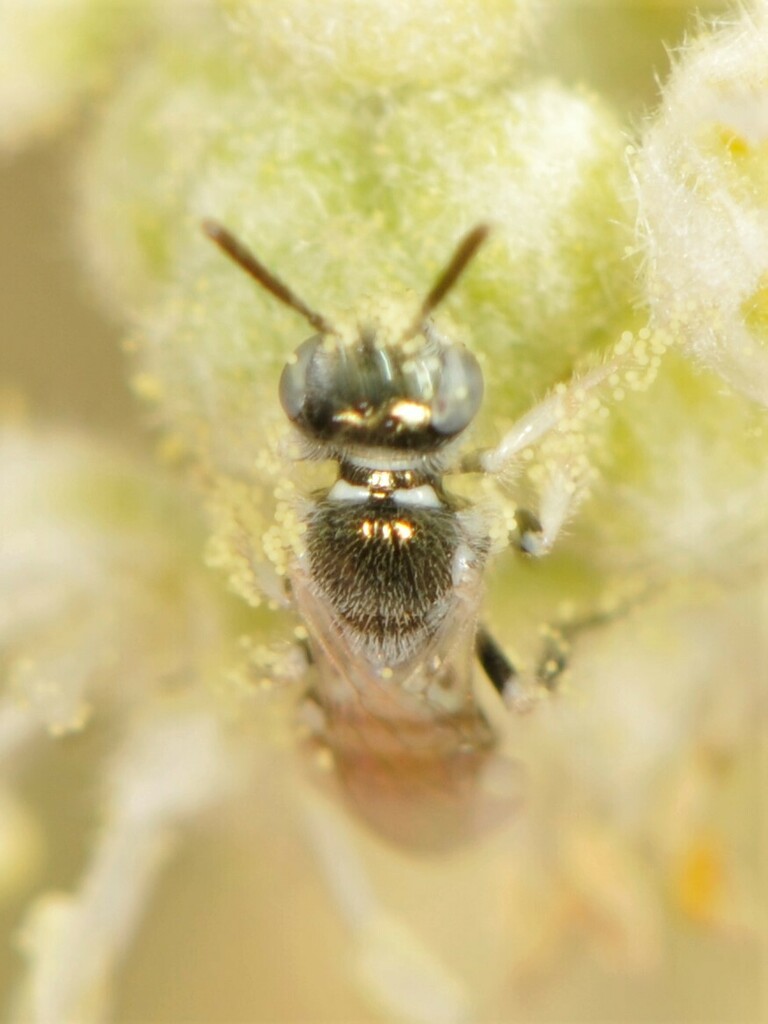
(c) Elliott Gordon, some rights reserved (CC BY) · licence
Family: Andrenidae · Class: Insecta · Order: Hymenoptera
Conservation status: G1T1 S2
Perdita scitula antiochensis (Antioch Andrenid Bee) is a California animal in the Andrenidae family.
The Antioch andrenid bee is a small solitary bee subspecies endemic to sandy habitats in the northern San Francisco Bay region of California. This subspecies belongs to the genus Perdita, which comprises some of North America's smallest bees. Adults are typically less than 6 mm in length with pale yellowish coloration and minimal body hair, characteristic of the andrenid bee family. The Antioch andrenid bee occurs exclusively in Contra Costa County, California, with its range centered around the Antioch Dunes area near the confluence of the Sacramento and San Joaquin Rivers. According to the U.S. Fish and Wildlife Service, this subspecies is found only in sandy soil habitats associated with river drainages and sand dunes in the northern San Joaquin Valley region. The species' extremely limited distribution makes it one of California's most geographically restricted bee subspecies. This subspecies inhabits areas of loose, sandy soils typical of coastal and interior sand dune systems. The bees require open sandy areas for nesting, where females excavate shallow burrows in which to provision their brood cells. The substrate preference appears closely tied to the specific sand composition and drainage characteristics of the Antioch Dunes ecosystem, which supports a unique assemblage of endemic species. Antioch andrenid bees are ground-nesting solitary bees that follow the typical Perdita life cycle. Females construct individual nests in sandy soil, creating branched tunnels with terminal brood cells. Each cell is provisioned with a pollen ball mixed with nectar before a single egg is deposited. The species likely has one generation per year, with adults active during spring months when host plants bloom. Males emerge slightly earlier than females and patrol nesting areas for mating opportunities. Like other Perdita species, adults are specialized pollen collectors, though specific host plant relationships for this subspecies have not been well documented. The Antioch andrenid bee currently holds a global rank of G1T1, indicating it is critically imperiled as a subspecies with very high risk of extinction. The subspecies is listed as a Species of Concern by the U.S. Fish and Wildlife Service, recognizing its conservation need but lacking full Endangered Species Act protection. Primary threats include habitat loss and degradation from urban development, recreational activities, and invasive plant species that alter the native dune ecosystem. The Antioch Dunes area has experienced significant habitat modification since European settlement, with much of the original dune system converted to industrial and residential uses. Sand mining operations historically removed substantial portions of suitable nesting habitat. Current conservation efforts focus on protecting remaining dune habitat and controlling invasive vegetation that can stabilize sand movement essential to maintaining the dynamic dune environment this subspecies requires. Climate change may pose additional threats through altered precipitation patterns and increased temperatures affecting both the subspecies and its habitat requirements.
Classification
Class: Insecta · Order: Hymenoptera · Family: Andrenidae
Conservation status
G1T1 S2
Frequently asked questions
How is Perdita scitula antiochensis classified?
Perdita scitula antiochensis belongs to class Insecta, order Hymenoptera, family Andrenidae.
What family does Perdita scitula antiochensis belong to?
Perdita scitula antiochensis is in the Andrenidae family.
Is Perdita scitula antiochensis protected or of conservation concern?
Perdita scitula antiochensis carries the following status: G1T1 S2.
What is Perdita scitula antiochensis?
The Antioch andrenid bee is a small solitary bee subspecies endemic to sandy habitats in the northern San Francisco Bay region of California.
Is Perdita scitula antiochensis found in California?
Yes. Perdita scitula antiochensis is recorded in California in The California Species Project's catalogue.
Related species
Other California species in the same genus, family, or bioregion.
Data from The California Species Project — 14,000+ California species with verified data from CNPS, CDFW, USFWS, and more.