Peridea ferruginea
Chocolate Prominent
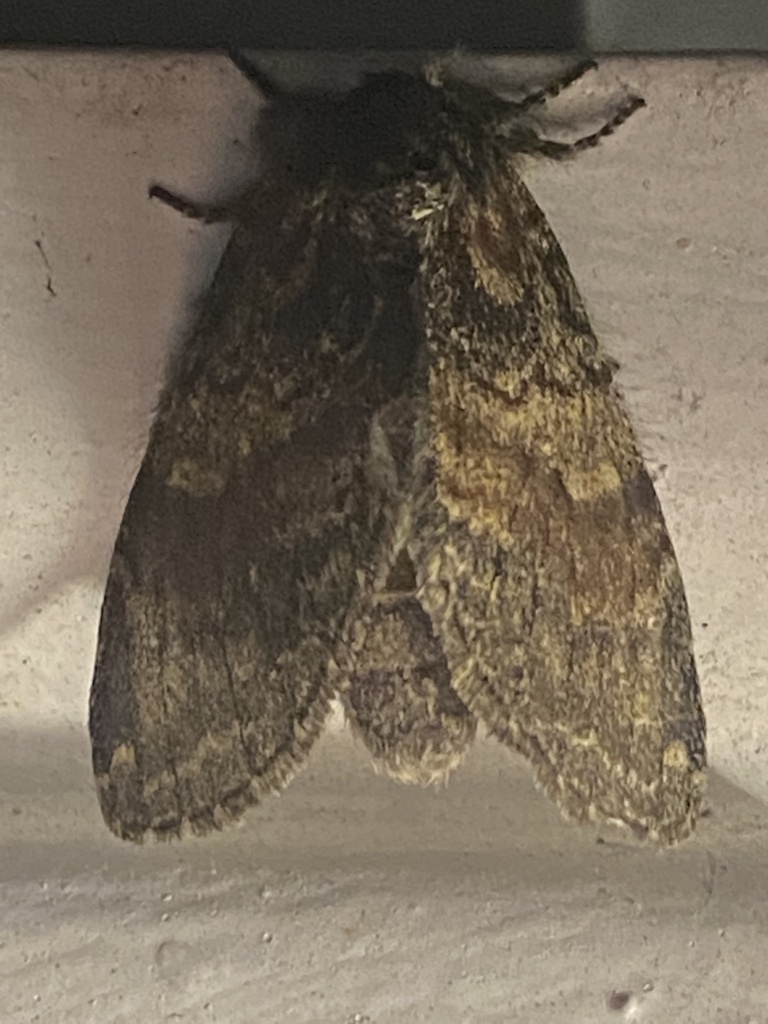
(c) David George, some rights reserved (CC BY) · licence
Family: Notodontidae · Class: Insecta · Order: Lepidoptera
Peridea ferruginea (Chocolate Prominent) is a California animal in the Notodontidae family.
The Chocolate Prominent is a medium-sized moth in the family Notodontidae, characterized by its distinctive chocolate-brown coloration that gives the species its common name. Adults typically measure 35-45 mm (1.4-1.8 inches) in wingspan, with forewings displaying rich brown tones intermixed with darker chocolate and lighter tan markings. The forewings feature subtle cross-lines and a prominent reniform spot, while the hindwings are generally paler brown with reduced markings. The thorax is densely covered in brown scales matching the forewing coloration, and the antennae are simple in both sexes. Peridea ferruginea occurs across much of eastern and central North America, with populations documented from southeastern Canada south to Florida and west to the Great Plains. In California, the species reaches the western edge of its continental range, though specific distribution data within the state remains limited. The moth's presence in California likely represents isolated populations or occasional vagrants from more established eastern populations. This species inhabits deciduous and mixed forests, particularly areas dominated by hardwood trees. Adults are typically found in woodland environments from sea level to moderate elevations, though specific elevation ranges in California have not been thoroughly documented. The species shows a preference for mature forest habitats with diverse canopy structure and understory vegetation. Chocolate Prominent larvae are leaf feeders, with documented host plants including various hardwood species, particularly in the families Betulaceae and Salicaceae. Primary hosts include birches, poplars, and willows, though the specific host plant associations in California populations require further study. Adults are nocturnal and are attracted to artificial lights during their flight period. The species typically produces one generation per year in most of its range, with adults emerging in late spring to early summer, generally from May through July. Mating occurs shortly after emergence, and females deposit eggs singly or in small clusters on host plant foliage. Larvae undergo five instars before pupating in soil or leaf litter, where they overwinter as pupae. The caterpillars are notable for their defensive posturing behavior when disturbed, raising both ends of their body in a characteristic prominent moth family display. The conservation status of Peridea ferruginea has not been formally assessed at federal or state levels, and the species does not appear on any official conservation lists. Population trends are largely unknown due to limited systematic monitoring, though the species appears to be stable throughout most of its eastern range. In California, the rarity of records suggests either naturally low population levels or potential habitat limitations at the western edge of the species' range. Climate change and habitat modification represent potential long-term threats, particularly for isolated western populations that may have limited genetic connectivity with core populations. Additional research is needed to better understand the species' status, distribution, and ecological requirements in California.
Classification
Class: Insecta · Order: Lepidoptera · Family: Notodontidae
Frequently asked questions
How is Peridea ferruginea classified?
Peridea ferruginea belongs to class Insecta, order Lepidoptera, family Notodontidae.
What family does Peridea ferruginea belong to?
Peridea ferruginea is in the Notodontidae family.
What is Peridea ferruginea?
The Chocolate Prominent is a medium-sized moth in the family Notodontidae, characterized by its distinctive chocolate-brown coloration that gives the species its common name.
Is Peridea ferruginea found in California?
Yes. Peridea ferruginea is recorded in California in The California Species Project's catalogue.
Related species
Other California species in the same genus, family, or bioregion.
Data from The California Species Project — 14,000+ California species with verified data from CNPS, CDFW, USFWS, and more.