Peridroma saucia
Variegated Cutworm Moth
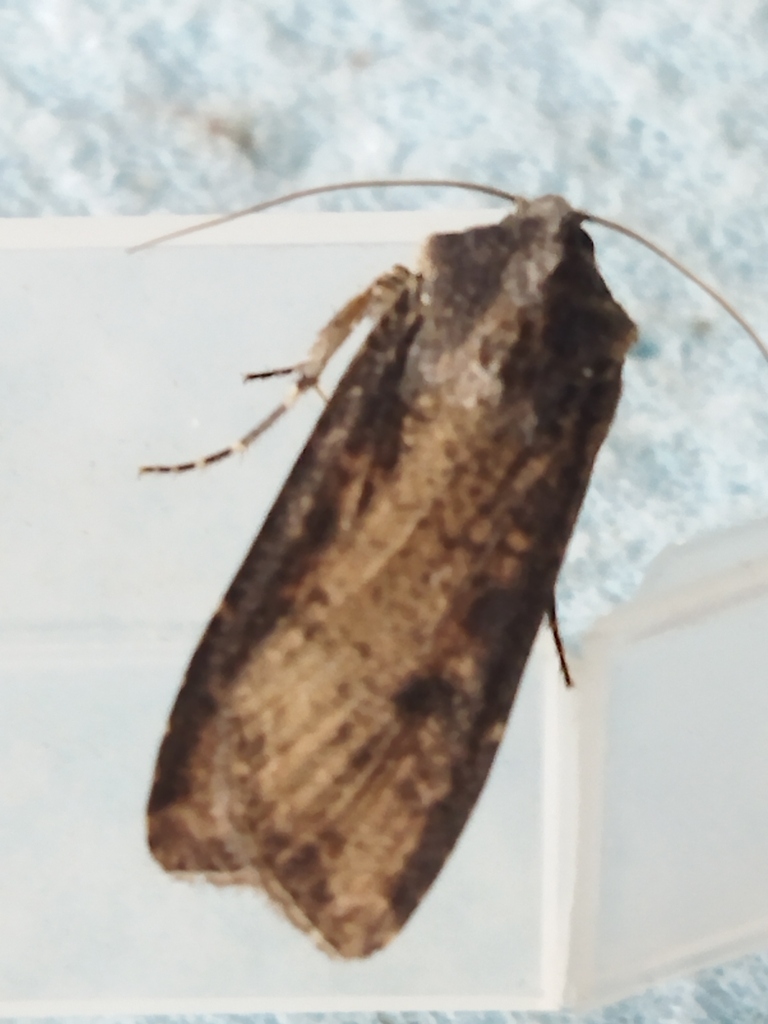
(c) SteveM4560, some rights reserved (CC BY) · licence
Family: Noctuidae · Class: Insecta · Order: Lepidoptera
Peridroma saucia (Variegated Cutworm Moth) is a California animal in the Noctuidae family.
The Variegated Cutworm Moth (Peridroma saucia) is a medium-sized noctuid moth with distinctive mottled wing patterns. Adults have forewings measuring 18 to 22 mm in length, with a wingspan reaching 35 to 45 mm. The forewings display a complex pattern of brown, gray, and buff coloration with darker transverse lines and pale kidney-shaped reniform spots. The hindwings are pale gray to whitish with darker marginal bands. Males can be distinguished from females by their more feathered antennae and slightly smaller size. This species has an exceptionally broad distribution, occurring across North America from southern Canada to Mexico, and extending into South America. In California, the Variegated Cutworm Moth is found throughout the state from coastal areas to inland valleys and mountainous regions, with records from sea level to elevations exceeding 2,000 meters (6,560 feet). The species also occurs across Europe, Asia, Africa, and Australia, making it one of the most cosmopolitan moth species. The Variegated Cutworm Moth inhabits diverse environments including agricultural areas, grasslands, gardens, waste ground, and disturbed habitats. Adults are attracted to artificial lights and can be found in urban and suburban environments. The species demonstrates broad adaptability to various climatic conditions, from Mediterranean coastal zones to arid inland regions and temperate mountain areas. Adults are nocturnal and most active during warm evenings from spring through fall. The species is multivoltine, producing two to three generations per year in favorable climates. Females deposit eggs singly on host plant foliage or nearby soil. The larval stage, known as the variegated cutworm, is highly polyphagous, feeding on over 40 plant families including vegetables, field crops, ornamental plants, and weeds. Common host plants include tomatoes, beans, corn, lettuce, cabbage, and various grasses. Larvae are cylindrical, reaching 40 to 50 mm in length when mature, and display variable coloration from pale gray to dark brown with distinctive dorsal markings. Larvae exhibit typical cutworm behavior, cutting through stems of young plants at or near soil level, hence their common name. They are primarily nocturnal feeders and hide in soil or plant debris during daylight hours. Pupation occurs in earthen cells 5 to 10 cm below the soil surface. The Variegated Cutworm Moth is not listed under federal or California endangered species legislation. The species is considered secure globally due to its wide distribution and adaptability to human-modified environments. Population trends appear stable, with the moth actually benefiting from agricultural practices that provide abundant host plants. In some regions, the larvae are considered agricultural pests due to their feeding damage to crops and garden plants. The species' ability to disperse over long distances and colonize new habitats suggests continued population stability across its range.
Classification
Class: Insecta · Order: Lepidoptera · Family: Noctuidae
Frequently asked questions
How is Peridroma saucia classified?
Peridroma saucia belongs to class Insecta, order Lepidoptera, family Noctuidae.
What family does Peridroma saucia belong to?
Peridroma saucia is in the Noctuidae family.
What is Peridroma saucia?
The Variegated Cutworm Moth (Peridroma saucia) is a medium-sized noctuid moth with distinctive mottled wing patterns.
Is Peridroma saucia found in California?
Yes. Peridroma saucia is recorded in California in The California Species Project's catalogue.
Related species
Other California species in the same genus, family, or bioregion.
Data from The California Species Project — 14,000+ California species with verified data from CNPS, CDFW, USFWS, and more.