Perigonica pectinata
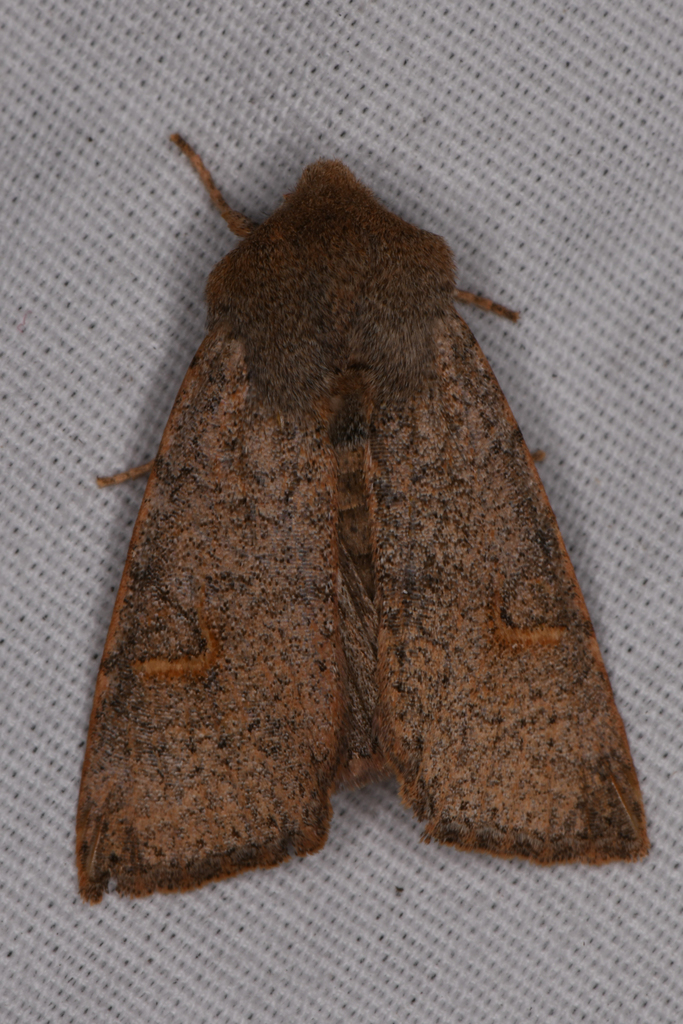
(c) Trevor Van Loon, some rights reserved (CC BY) · licence
Family: Noctuidae · Class: Insecta · Order: Lepidoptera
Perigonica pectinata is a California animal in the Noctuidae family.
Perigonica pectinata is a moth species in the family Noctuidae, commonly known as owlet moths or cutworm moths. This species belongs to a diverse family of nocturnal lepidopterans that includes over 11,000 described species worldwide. As a member of the Noctuidae, P. pectinata likely exhibits the characteristic features of this family, including forewings that are typically narrow and elongated, with cryptic coloration patterns that provide camouflage during daylight hours when the moths rest on bark, leaves, or other surfaces. The range and distribution of Perigonica pectinata remain poorly documented in the scientific literature. Limited taxonomic records suggest this species occurs in North America, though specific geographic boundaries and population centers have not been comprehensively mapped. The lack of detailed distributional data reflects the broader challenge of documenting many nocturnal moth species, which are often overlooked in biodiversity surveys due to their secretive behavior and identification difficulties. Habitat requirements for P. pectinata are not well-established in current literature. Like many Noctuidae species, this moth likely inhabits areas that support its larval host plants and provide suitable microhabitats for adult activity. Noctuidae moths typically occupy diverse habitats ranging from forests and woodlands to grasslands and agricultural areas, depending on their specific ecological requirements and host plant associations. The life cycle and behavioral ecology of Perigonica pectinata follow the typical pattern of Noctuidae moths. Adults are presumed to be nocturnal, with peak activity occurring during evening and nighttime hours. Females likely deposit eggs on or near larval host plants, though the specific plants utilized by P. pectinata larvae have not been definitively identified. The larval stage, commonly referred to as cutworms in this family, typically feed on plant material and may complete development over several weeks to months, depending on environmental conditions and food availability. Adult flight periods and voltinism patterns remain undocumented for this species. The conservation status of Perigonica pectinata has not been formally assessed by major conservation organizations. This species lacks federal or state listing status and has not been evaluated by the International Union for Conservation of Nature. The absence of conservation assessments likely reflects limited knowledge about the species' distribution, population size, and ecological requirements rather than an indication of conservation security. Many Noctuidae species face potential threats from habitat loss, agricultural intensification, light pollution, and climate change, though specific threats to P. pectinata cannot be determined without additional research. The paucity of biological and ecological information for this species highlights the need for targeted surveys and taxonomic research to better understand its status and conservation needs.
Classification
Class: Insecta · Order: Lepidoptera · Family: Noctuidae
Frequently asked questions
How is Perigonica pectinata classified?
Perigonica pectinata belongs to class Insecta, order Lepidoptera, family Noctuidae.
What family does Perigonica pectinata belong to?
Perigonica pectinata is in the Noctuidae family.
What is Perigonica pectinata?
Perigonica pectinata is a moth species in the family Noctuidae, commonly known as owlet moths or cutworm moths.
Is Perigonica pectinata found in California?
Yes. Perigonica pectinata is recorded in California in The California Species Project's catalogue.
Related species
Other California species in the same genus, family, or bioregion.
Data from The California Species Project — 14,000+ California species with verified data from CNPS, CDFW, USFWS, and more.