Periplaneta americana
American Cockroach
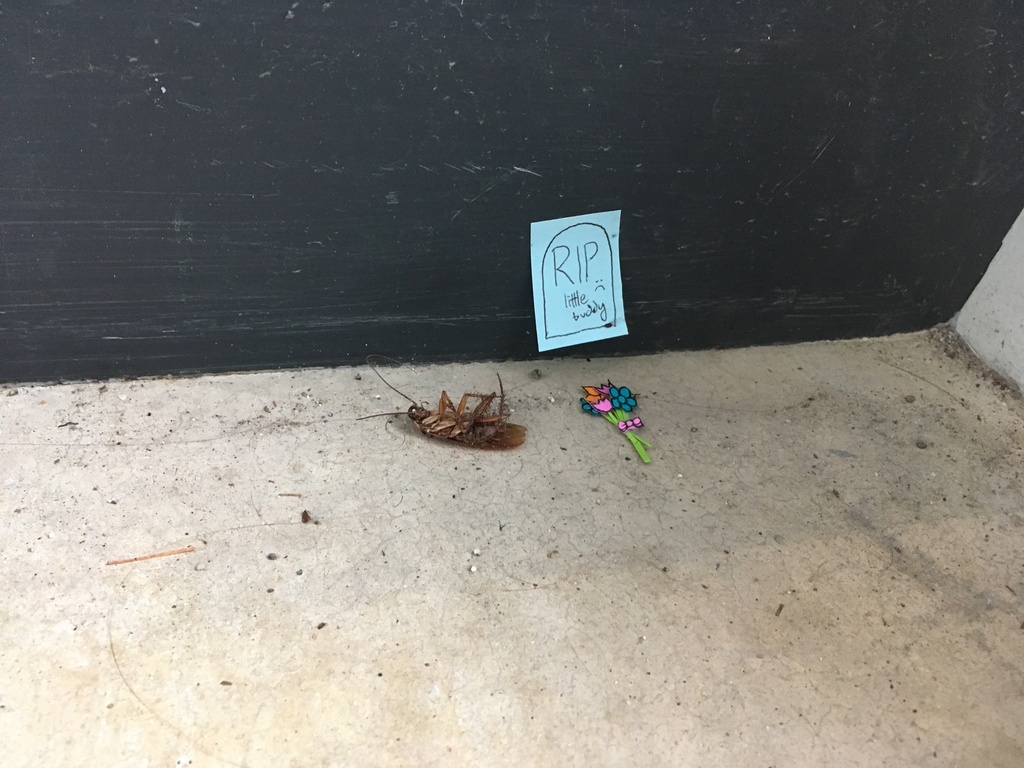
(c) Christina S. Baer, some rights reserved (CC BY) · licence
Family: Blattidae · Class: Insecta · Order: Blattodea
Periplaneta americana (American Cockroach) is a California animal in the Blattidae family.
The American cockroach is one of the largest cockroach species found in North America, measuring 28 to 43 mm (1.1 to 1.7 inches) in length. Adults display a reddish-brown coloration with a distinctive yellowish figure-eight pattern on the back of the head. Both sexes possess well-developed wings that extend beyond the abdomen, with males capable of sustained flight while females can only glide short distances. The antennae are long and filiform, often exceeding body length. Originally native to Africa, Periplaneta americana has established populations worldwide and is now found throughout the United States, including California. According to BugGuide data, the species has been documented in multiple California counties with observations recorded year-round, though activity peaks during warmer months from June through September. The species occurs across diverse climatic zones from coastal areas to inland valleys. American cockroaches inhabit warm, moist environments and are commonly found in sewers, basements, steam tunnels, and commercial buildings. They prefer temperatures between 20 to 29°C (68 to 84°F) and require access to water sources. In natural settings, they occupy areas under bark, in tree holes, and among leaf litter. Urban populations concentrate around food processing facilities, restaurants, and residential areas with poor sanitation. This species exhibits omnivorous feeding behavior, consuming organic matter including food scraps, paper, fabric, and decaying plant material. Adults can survive up to one month without food but require water within one week. Reproduction involves the female producing an ootheca (egg case) containing 14 to 16 eggs, which she carries for approximately two days before depositing it in a protected location. Development from egg to adult takes 6 to 12 months depending on temperature and food availability. Under optimal conditions, females can produce up to eight oothecae during their lifetime, which may extend 14 to 20 months. American cockroaches demonstrate thigmotactic behavior, preferring to remain in contact with surfaces, and exhibit negative phototaxis, avoiding light sources. They are primarily nocturnal, becoming active during nighttime hours to forage. The species can transmit various pathogens including Salmonella, Staphylococcus, and Streptococcus through contamination of food surfaces. This species holds no special conservation status and is not federally or state listed. As an introduced species, Periplaneta americana is considered a pest in urban environments rather than a conservation concern. Population control focuses on integrated pest management strategies including sanitation improvements, exclusion methods, and targeted insecticide applications. In some ecosystems, particularly caves in Hawaii, American cockroaches have been identified as threats to native species through predation and competition (USFWS 1997).
Classification
Class: Insecta · Order: Blattodea · Family: Blattidae
Frequently asked questions
How is Periplaneta americana classified?
Periplaneta americana belongs to class Insecta, order Blattodea, family Blattidae.
What family does Periplaneta americana belong to?
Periplaneta americana is in the Blattidae family.
What is Periplaneta americana?
The American cockroach is one of the largest cockroach species found in North America, measuring 28 to 43 mm (1.1 to 1.7 inches) in length.
Is Periplaneta americana found in California?
Yes. Periplaneta americana is recorded in California in The California Species Project's catalogue.
Related species
Other California species in the same genus, family, or bioregion.
Data from The California Species Project — 14,000+ California species with verified data from CNPS, CDFW, USFWS, and more.