Periplaneta lateralis
Turkestan Cockroach
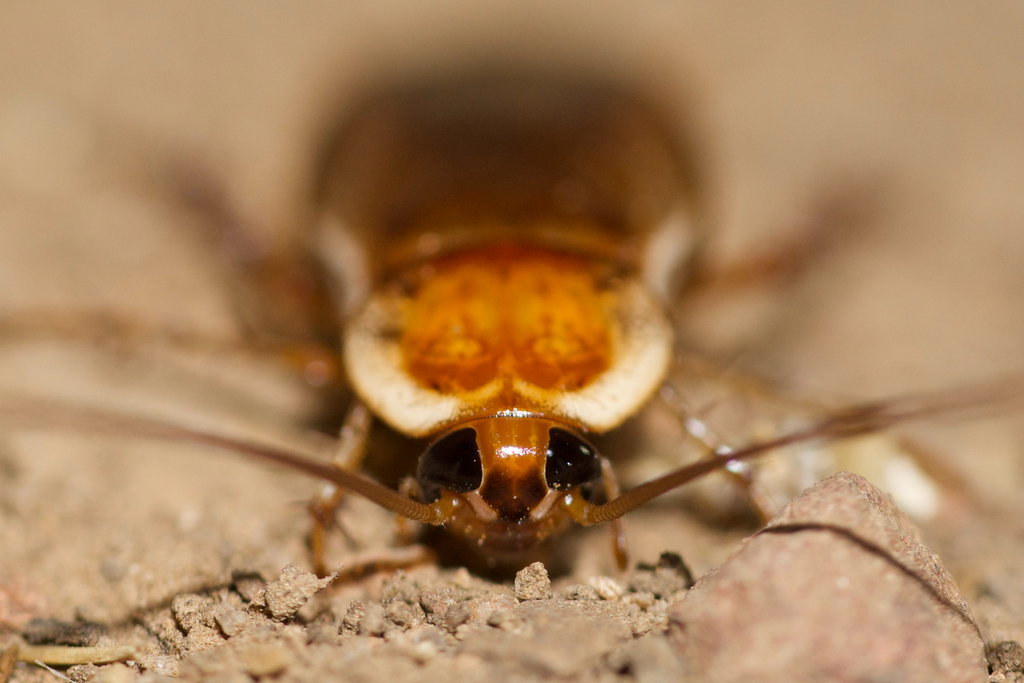
(c) Cory Butterfield, some rights reserved (CC BY) · licence
Family: Blattidae · Class: Insecta · Order: Blattodea
Periplaneta lateralis (Turkestan Cockroach) is a California animal in the Blattidae family.
The Turkestan cockroach (Periplaneta lateralis) is a medium-sized outdoor cockroach species native to regions spanning from northern Africa to Central Asia. Also known by the synonyms Shelfordella lateralis and Blatta lateralis, this species is commonly called the red runner cockroach or rusty red cockroach. Adults measure approximately 30 mm (1.2 inches) in length, making them smaller than the related American cockroach. Adult males display a distinctive brownish-orange to reddish coloration and maintain a slender build with fully developed wings extending beyond the abdomen. Females are darker brown to black with shorter wing pads that do not cover the entire abdomen. Both sexes possess the characteristic flattened body shape and long antennae typical of cockroaches in the family Blattidae. The species can be distinguished from other Periplaneta species by its smaller size and the males' distinctive reddish coloration. The Turkestan cockroach has established populations in various regions outside its native range through human transport and commerce. In North America, the species has been documented in several southwestern states, though specific distribution data for California remains limited in current databases. The species demonstrates adaptability to diverse climatic conditions, which has facilitated its establishment in introduced ranges. This primarily outdoor-dwelling species inhabits areas with adequate moisture and organic matter. Unlike many cockroach species that prefer indoor environments, Turkestan cockroaches typically remain in outdoor habitats including gardens, compost areas, leaf litter, and areas around building foundations. They show preference for areas with decomposing organic material and moderate moisture levels. The species appears more cold-tolerant than many related cockroaches, allowing survival in temperate climates. Turkestan cockroaches are omnivorous scavengers, feeding on decaying plant material, organic debris, and various food scraps. Their outdoor lifestyle makes them important decomposers in their ecosystems. Reproduction follows typical cockroach patterns, with females producing egg cases (oothecae) containing multiple eggs. The species exhibits seasonal activity patterns, with peak activity during warmer months. Adults are primarily nocturnal, becoming active after dark to forage and mate. As a non-native species, the Turkestan cockroach lacks formal conservation status listings. Current populations appear stable in established ranges, and the species shows no signs of decline. However, as an introduced species, it may compete with native arthropods for resources and habitat. The species' impact on native ecosystems requires further study, particularly regarding its role in nutrient cycling and potential effects on indigenous invertebrate communities. Management typically focuses on controlling populations around human habitations rather than conservation efforts, as the species is not considered threatened or of conservation concern.
Classification
Class: Insecta · Order: Blattodea · Family: Blattidae
Frequently asked questions
How is Periplaneta lateralis classified?
Periplaneta lateralis belongs to class Insecta, order Blattodea, family Blattidae.
What family does Periplaneta lateralis belong to?
Periplaneta lateralis is in the Blattidae family.
What is Periplaneta lateralis?
The Turkestan cockroach (Periplaneta lateralis) is a medium-sized outdoor cockroach species native to regions spanning from northern Africa to Central Asia.
Is Periplaneta lateralis found in California?
Yes. Periplaneta lateralis is recorded in California in The California Species Project's catalogue.
Related species
Other California species in the same genus, family, or bioregion.
Data from The California Species Project — 14,000+ California species with verified data from CNPS, CDFW, USFWS, and more.