Perithemis intensa
Mexican Amberwing
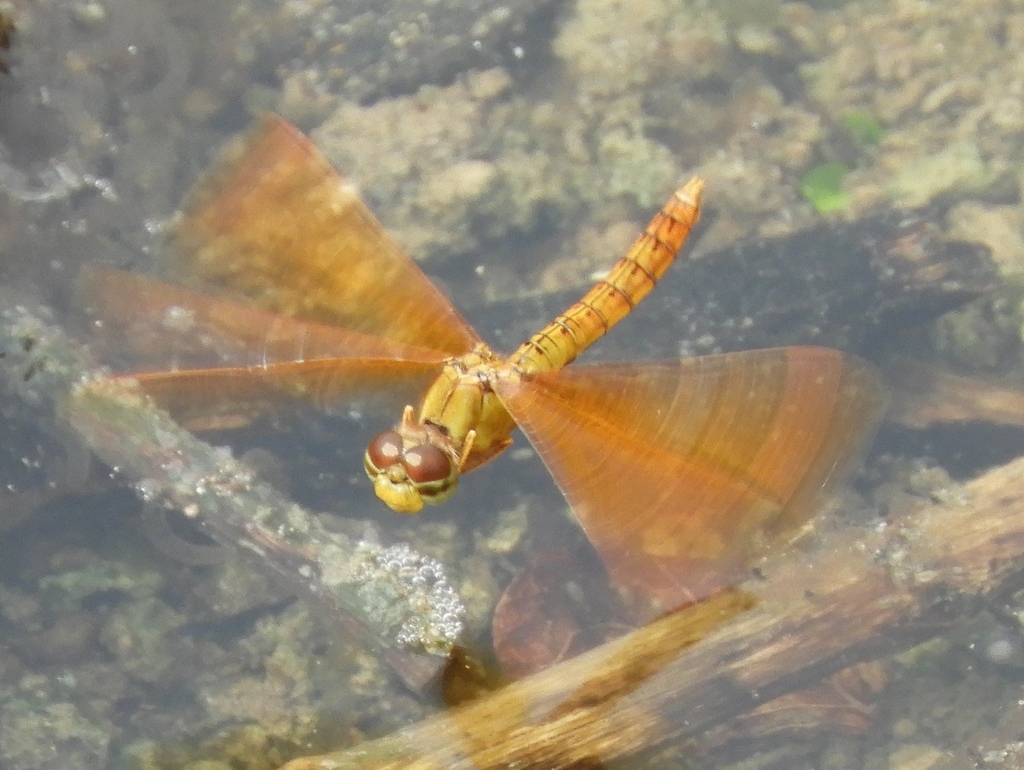
(c) Francisco Farriols Sarabia, some rights reserved (CC BY) · licence
Family: Libellulidae · Class: Insecta · Order: Odonata
Perithemis intensa (Mexican Amberwing) is a California animal in the Libellulidae family.
The Mexican Amberwing is a small dragonfly in the skimmer family Libellulidae. Adult males measure approximately 25-30 mm (1.0-1.2 inches) in body length with a wingspan of 40-45 mm (1.6-1.8 inches). Males display distinctive amber-colored forewings and clear hindwings, while females and juveniles have clear wings with amber patches at the wing bases. The thorax is brown to reddish-brown, and the abdomen is slender with yellow and black markings. Males develop more intense amber wing coloration as they mature, distinguishing them from the similar Eastern Amberwing (Perithemis tenera) which occurs farther east. The Mexican Amberwing ranges from the southwestern United States through Mexico and Central America. In the United States, it occurs primarily in Arizona, New Mexico, Texas, and southern Nevada, with occasional records from southeastern California. According to NatureServe, the species has a global conservation status of G5, indicating it is secure globally (NatureServe 2025). The northern extent of its range appears to be expanding, possibly in response to climate change. This species inhabits warm, shallow aquatic environments including ponds, stock tanks, slow-moving streams, irrigation ditches, and temporary pools. Mexican Amberwings prefer areas with abundant emergent and floating vegetation, which provide perching sites and egg-laying substrates. They are commonly found at elevations from sea level to approximately 1,500 meters (4,900 feet) in desert and semi-desert regions. Adults frequently perch on low vegetation near water sources and are active during the warmest parts of the day. Mexican Amberwings exhibit typical libellulid behavior patterns. Males are territorial, defending small sections of shoreline and chasing away intruders. Mating occurs through the characteristic dragonfly tandem position, with pairs remaining connected during egg-laying. Females deposit eggs directly into water or on floating vegetation. The aquatic nymphs are predatory, feeding on small invertebrates, mosquito larvae, and other aquatic insects. Nymphal development typically takes several months, with emergence occurring primarily during warm months. Adults are active hunters, capturing small flying insects including midges, mosquitoes, and flying ants. They play important roles as both predators and prey in aquatic and terrestrial food webs. The Mexican Amberwing is not federally listed under the Endangered Species Act and appears to maintain stable populations throughout most of its range. Climate change may benefit this warm-adapted species by expanding suitable habitat northward. However, like many aquatic insects, Mexican Amberwings face threats from habitat loss due to water diversions, pollution, and development of riparian areas. Drought conditions can eliminate temporary breeding pools, while agricultural runoff may degrade water quality in permanent habitats. Conservation efforts focus on protecting wetland habitats and maintaining water quality in desert aquatic systems. The species serves as an indicator of healthy freshwater ecosystems in arid regions.
Classification
Class: Insecta · Order: Odonata · Family: Libellulidae
Frequently asked questions
How is Perithemis intensa classified?
Perithemis intensa belongs to class Insecta, order Odonata, family Libellulidae.
What family does Perithemis intensa belong to?
Perithemis intensa is in the Libellulidae family.
What is Perithemis intensa?
The Mexican Amberwing is a small dragonfly in the skimmer family Libellulidae.
Is Perithemis intensa found in California?
Yes. Perithemis intensa is recorded in California in The California Species Project's catalogue.
Related species
Other California species in the same genus, family, or bioregion.
Data from The California Species Project — 14,000+ California species with verified data from CNPS, CDFW, USFWS, and more.