Perittia passula
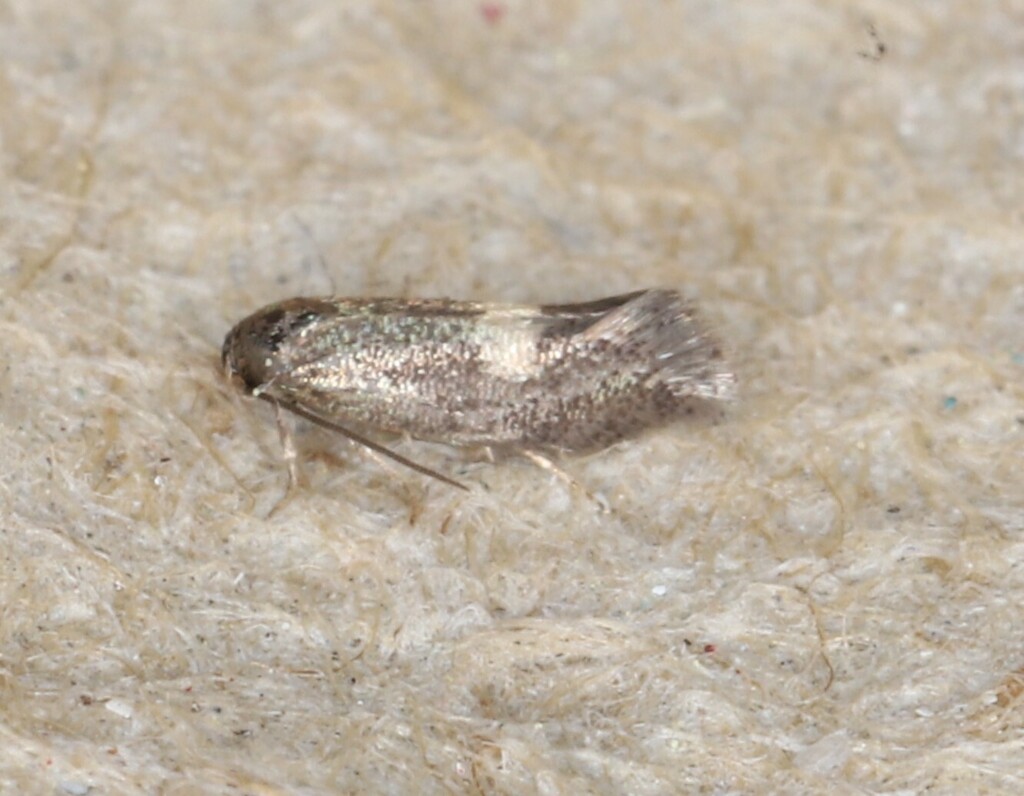
no rights reserved · CC0
Family: Elachistidae · Class: Insecta · Order: Lepidoptera
Perittia passula is a California animal in the Elachistidae family.
Perittia passula is a small moth in the family Elachistidae, one of the microlepidoptera groups characterized by narrow wings and minute size. Adult moths typically measure 8-12 mm in wingspan, with forewings that are elongated and relatively narrow compared to other moth families. The forewings are generally pale gray to brownish in coloration with subtle darker markings along the costa and in the cell area. The hindwings are typically paler and more uniform in color, often with a slight iridescent quality. Like other Elachistidae, the antennae are filiform and the moths have a delicate, slender build. The range and distribution of Perittia passula in California remains poorly documented in the scientific literature. Limited collection records suggest the species may occur in coastal and montane regions of the state, but comprehensive surveys have not been conducted to establish definitive range boundaries. The species appears to have a restricted distribution, though whether this reflects actual rarity or insufficient sampling effort is unclear. Habitat requirements for Perittia passula are not well-characterized, though members of the genus Perittia are typically associated with areas supporting their larval host plants. Based on records of related species in the genus, the moth likely occurs in mixed woodland, chaparral, or shrubland communities where suitable host vegetation is present. Elevation preferences and specific microhabitat requirements have not been documented for this species. The life history and ecological requirements of Perittia passula remain largely unstudied. Like other Elachistidae, the larvae are likely leaf miners, creating characteristic serpentine mines in the leaves of their host plants. The specific host plant relationships for this species have not been definitively established, though other Perittia species are known to utilize various shrubs and herbaceous plants. Adult flight periods, number of generations per year, and overwintering stage are unknown for this species. Males are presumed to locate females through pheromone communication, as is typical for the family. The conservation status of Perittia passula has not been formally evaluated by state or federal agencies. The species does not appear on any endangered species lists, though this may reflect a lack of sufficient data rather than abundance. Given the general decline in insect populations documented across California and the apparent rarity of collection records for this species, its conservation status warrants investigation. Many microlepidoptera face threats from habitat loss, pesticide use, and climate change, but specific threats to P. passula cannot be assessed without better knowledge of its distribution, host plants, and habitat requirements. Comprehensive surveys and taxonomic studies are needed to determine the species' current status and conservation needs.
Classification
Class: Insecta · Order: Lepidoptera · Family: Elachistidae
Frequently asked questions
How is Perittia passula classified?
Perittia passula belongs to class Insecta, order Lepidoptera, family Elachistidae.
What family does Perittia passula belong to?
Perittia passula is in the Elachistidae family.
What is Perittia passula?
Perittia passula is a small moth in the family Elachistidae, one of the microlepidoptera groups characterized by narrow wings and minute size.
Is Perittia passula found in California?
Yes. Perittia passula is recorded in California in The California Species Project's catalogue.
More California species
This species has no close relatives in our California data — here are other species to explore.
Data from The California Species Project — 14,000+ California species with verified data from CNPS, CDFW, USFWS, and more.