Perizoma costiguttata
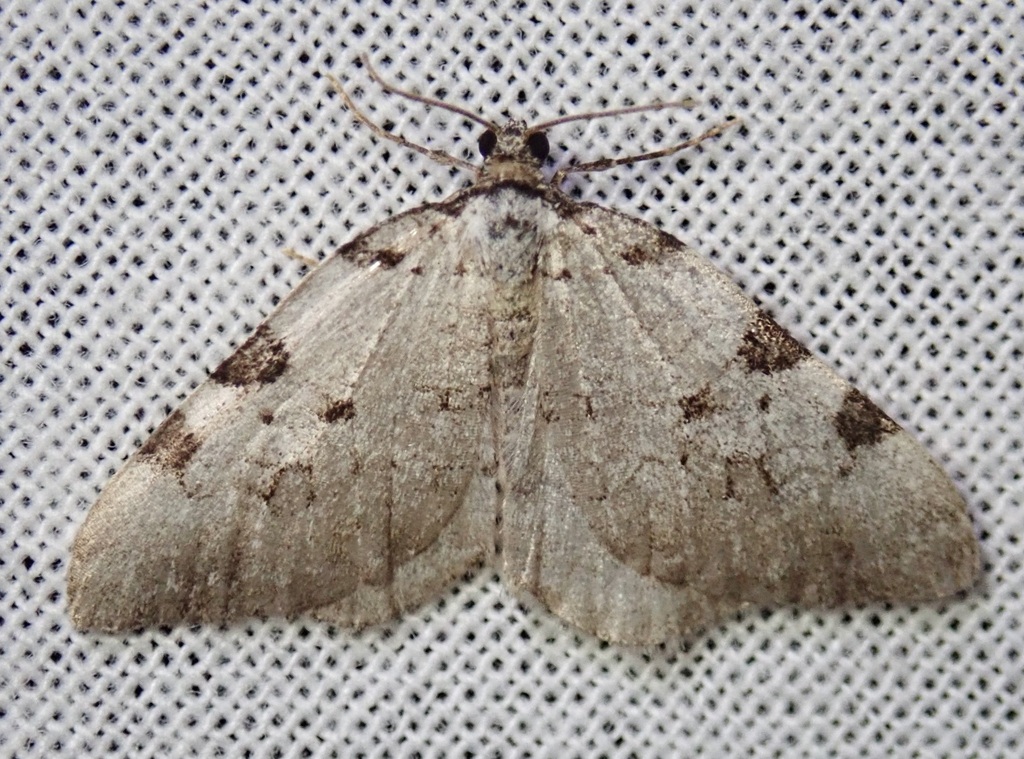
(c) Cricket Raspet, some rights reserved (CC BY) · licence
Family: Geometridae · Class: Insecta · Order: Lepidoptera
Perizoma costiguttata is a California animal in the Geometridae family.
Perizoma costiguttata is a geometrid moth in the subfamily Larentiinae, originally described by Hulst in 1896 and initially placed in the genus Hydriomena. The species name derives from Latin "costa" (rib) and "guttate" (spotted), referring to the distinctive large dark spots along the forewing costa. Adults exhibit a forewing length of approximately 16 mm, with characteristic dark spots along the anterior wing margin that distinguish this species from other Perizoma moths (BugGuide). The species occurs across western North America, with documented populations extending from the southwestern United States into higher elevation montane regions. Verified records include locations in Arizona's Chiricahua Mountains at elevations around 8,200 feet, and observations from Washington state, indicating a broad latitudinal distribution across the western cordillera (BugGuide). The species appears to have a disjunct distribution pattern typical of many montane Lepidoptera. Perizoma costiguttata inhabits mountainous terrain and appears associated with higher elevation ecosystems. Collection records from Arizona's Chiricahua Mountains suggest the species occupies montane forest habitats above 8,000 feet elevation. The temporal distribution of observations, including records from May through August, indicates the species is active during the warmer months when suitable host plants are available (BugGuide). Like other members of the genus Perizoma, this species likely has a univoltine life cycle with larvae feeding on specific herbaceous plants. Geometridae moths in this subfamily typically have caterpillars that feed on flowers and developing seeds of their host plants, though specific host plant relationships for P. costiguttata have not been definitively documented. Adult flight period appears to span late spring through summer, with peak activity varying by elevation and latitude. The species exhibits typical geometrid moth behavior, with adults attracted to lights during nocturnal activity periods. NatureServe assigns Perizoma costiguttata a global conservation status of G4G5, indicating the species is apparently secure to secure across its range (NatureServe Explorer). This ranking suggests stable populations without immediate conservation concerns, though the species' apparent restriction to higher elevation habitats may make it vulnerable to climate-driven habitat shifts. The scattered nature of collection records may reflect either genuine rarity, limited survey effort in appropriate habitats, or the cryptic nature of many geometrid moths. No federal or state listing status has been assigned, and the species does not appear on conservation watch lists as of December 2025. However, like many montane lepidoptera, populations could be sensitive to climate change effects on high-elevation ecosystems. Additional survey work would help clarify the species' true distribution and abundance patterns across its western North American range.
Classification
Class: Insecta · Order: Lepidoptera · Family: Geometridae
Frequently asked questions
How is Perizoma costiguttata classified?
Perizoma costiguttata belongs to class Insecta, order Lepidoptera, family Geometridae.
What family does Perizoma costiguttata belong to?
Perizoma costiguttata is in the Geometridae family.
What is Perizoma costiguttata?
Perizoma costiguttata is a geometrid moth in the subfamily Larentiinae, originally described by Hulst in 1896 and initially placed in the genus Hydriomena.
Is Perizoma costiguttata found in California?
Yes. Perizoma costiguttata is recorded in California in The California Species Project's catalogue.
Related species
Other California species in the same genus, family, or bioregion.
Data from The California Species Project — 14,000+ California species with verified data from CNPS, CDFW, USFWS, and more.