Perizoma epictata
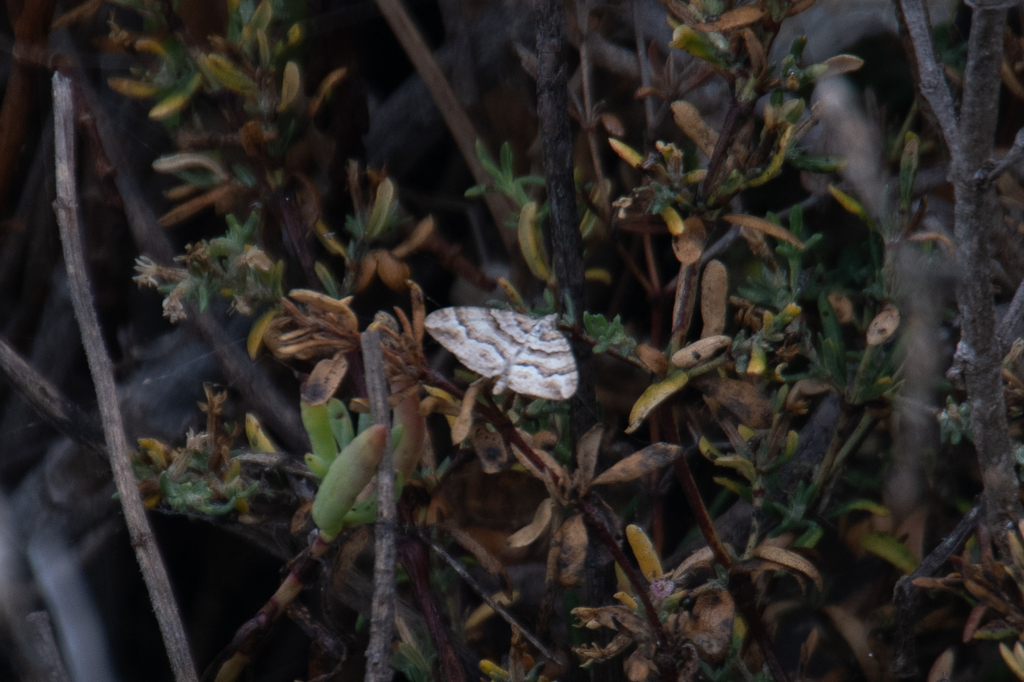
(c) cello caruso-turiello, some rights reserved (CC BY) · licence
Family: Geometridae · Class: Insecta · Order: Lepidoptera
Perizoma epictata is a California animal in the Geometridae family.
Perizoma epictata is a geometrid moth species belonging to the subfamily Larentiinae. This small moth exhibits the characteristic wing pattern typical of the genus Perizoma, with forewings displaying subtle earth-toned coloration and distinctive transverse lines. The wingspan typically measures 18-24 mm (0.7-0.9 inches). The forewings are generally pale brown to grayish-brown with darker crosslines and a discal spot. The hindwings are lighter, often whitish or pale gray with reduced markings. Like other Perizoma species, the antennae are filiform in both sexes. The distribution and range of Perizoma epictata in California requires further documentation, as comprehensive distribution records for this species are limited in available databases. The species appears to have a restricted range within the state, though specific localities and counties of occurrence need additional survey work to establish definitively. Many Perizoma species have localized distributions tied to their host plant requirements. Habitat preferences for Perizoma epictata are closely linked to the presence of its larval host plants. Most Perizoma species are associated with specific plant families, particularly Rosaceae, and their larvae typically feed on flowers and developing seeds. The species likely inhabits areas where suitable host plants occur, which may include chaparral, woodland edges, or montane environments. Elevation range and specific habitat requirements for this species require additional field study to characterize fully. Adult flight period and behavioral patterns for Perizoma epictata need documentation through systematic surveys. Most Perizoma species are univoltine, producing one generation per year, with adults typically active during specific months corresponding to host plant flowering periods. Larvae are generally internal feeders, boring into flower heads, seed pods, or developing fruits of their host plants. Pupation commonly occurs in the soil or leaf litter beneath host plants. Adults are primarily nocturnal and are attracted to artificial light sources. The conservation status of Perizoma epictata has not been formally assessed by state or federal agencies. Like many microlepidoptera species, it may face threats from habitat modification, urban development, and changes in host plant availability. The species' conservation needs cannot be adequately evaluated without better understanding of its distribution, population status, and ecological requirements. Systematic surveys targeting Geometridae species in California would help establish baseline population data and identify conservation priorities for lesser-known species like P. epictata. Climate change effects on host plant phenology and distribution may also impact this species' long-term persistence.
Classification
Class: Insecta · Order: Lepidoptera · Family: Geometridae
Frequently asked questions
How is Perizoma epictata classified?
Perizoma epictata belongs to class Insecta, order Lepidoptera, family Geometridae.
What family does Perizoma epictata belong to?
Perizoma epictata is in the Geometridae family.
What is Perizoma epictata?
Perizoma epictata is a geometrid moth species belonging to the subfamily Larentiinae.
Is Perizoma epictata found in California?
Yes. Perizoma epictata is recorded in California in The California Species Project's catalogue.
Related species
Other California species in the same genus, family, or bioregion.
Data from The California Species Project — 14,000+ California species with verified data from CNPS, CDFW, USFWS, and more.