Pero macdunnoughi
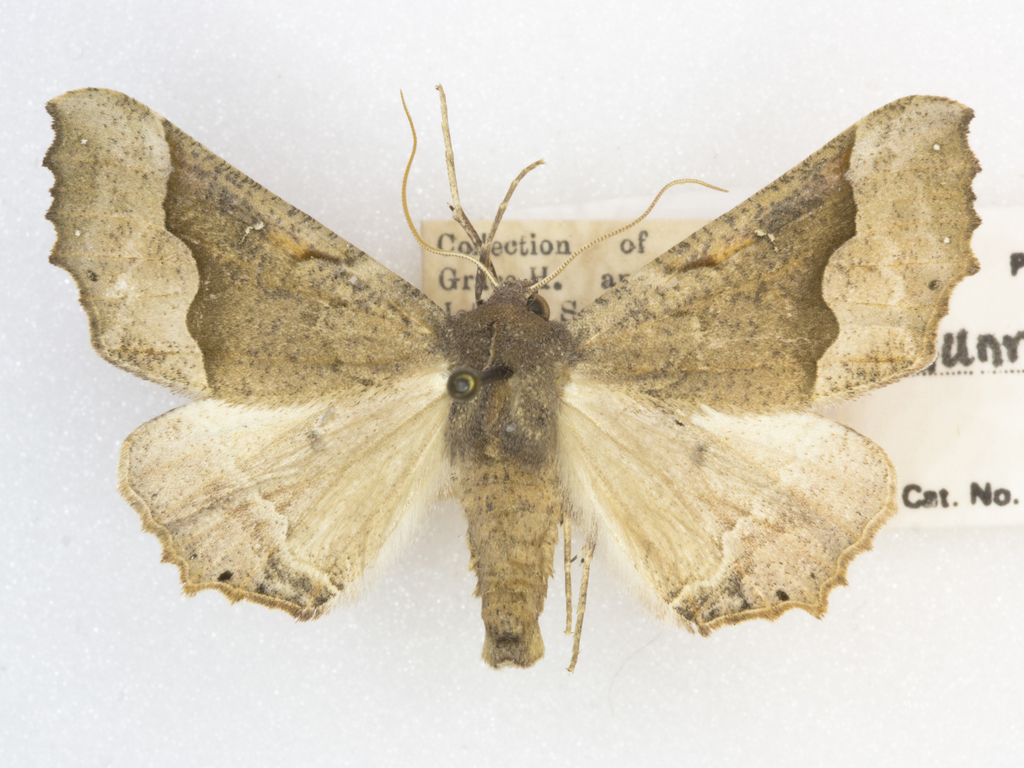
no rights reserved · CC0
Family: Geometridae · Class: Insecta · Order: Lepidoptera
Pero macdunnoughi is a California animal in the Geometridae family.
Pero macdunnoughi is a moth species in the family Geometridae, commonly known as geometrid moths or inchworm moths. This species belongs to the genus Pero, which comprises medium-sized moths characterized by their broad wings and distinctive flight patterns. Adult moths typically display earth-toned coloration patterns that provide effective camouflage against tree bark and forest substrates. Geometrid moths in the genus Pero are generally characterized by their robust build and wingspan ranging from 25 to 40 millimeters (1.0 to 1.6 inches). Wings typically exhibit various shades of brown, gray, and tan with intricate linear patterns and cross-bands that vary among individuals. The forewings are broader than the hindwings, and both wing pairs often display subtle zigzag patterns or wavy lines. Males can be distinguished from females by their more feathered antennae and generally smaller size. The specific distribution range of Pero macdunnoughi requires further documentation, though members of the genus Pero are widely distributed across North America. Geometrid moths of this group typically inhabit forested regions where their larval host plants are present. In California, related species occupy diverse forest ecosystems from coastal ranges to montane environments. Geometrid moths require wooded habitats with appropriate host plants for larval development. The larvae, commonly called inchworms or loopers, are specialized herbivores that feed on various deciduous trees and shrubs. These caterpillars are characterized by their distinctive locomotion, arching their bodies as they move by bringing their posterior prolegs forward to meet their thoracic legs. Adult moths are typically nocturnal and are attracted to artificial lights. Adult Pero macdunnoughi moths likely emerge during specific seasonal periods, with timing varying by geographic location and local climate conditions. Mating occurs through pheromone communication, with females releasing chemical signals to attract males. After mating, females deposit eggs on or near host plant foliage. Larvae undergo several molts before pupating, either in soil or leaf litter, depending on species-specific behaviors. Most geometrid species complete one generation per year, overwintering as pupae. The conservation status of Pero macdunnoughi has not been formally assessed by major conservation organizations. Like many moth species, potential threats include habitat fragmentation, light pollution that disrupts natural behavior patterns, and climate change effects on host plant distributions. Forest management practices that maintain diverse tree species composition support geometrid moth populations. The species' ecological role includes serving as pollinators for night-blooming plants and as prey for bats, spiders, and other nocturnal predators. Many geometrid species face population pressures from urbanization and intensive land use practices that reduce available habitat.
Classification
Class: Insecta · Order: Lepidoptera · Family: Geometridae
Frequently asked questions
How is Pero macdunnoughi classified?
Pero macdunnoughi belongs to class Insecta, order Lepidoptera, family Geometridae.
What family does Pero macdunnoughi belong to?
Pero macdunnoughi is in the Geometridae family.
What is Pero macdunnoughi?
Pero macdunnoughi is a moth species in the family Geometridae, commonly known as geometrid moths or inchworm moths.
Is Pero macdunnoughi found in California?
Yes. Pero macdunnoughi is recorded in California in The California Species Project's catalogue.
Related species
Other California species in the same genus, family, or bioregion.
Data from The California Species Project — 14,000+ California species with verified data from CNPS, CDFW, USFWS, and more.