Pero meskaria
Meske's Pero
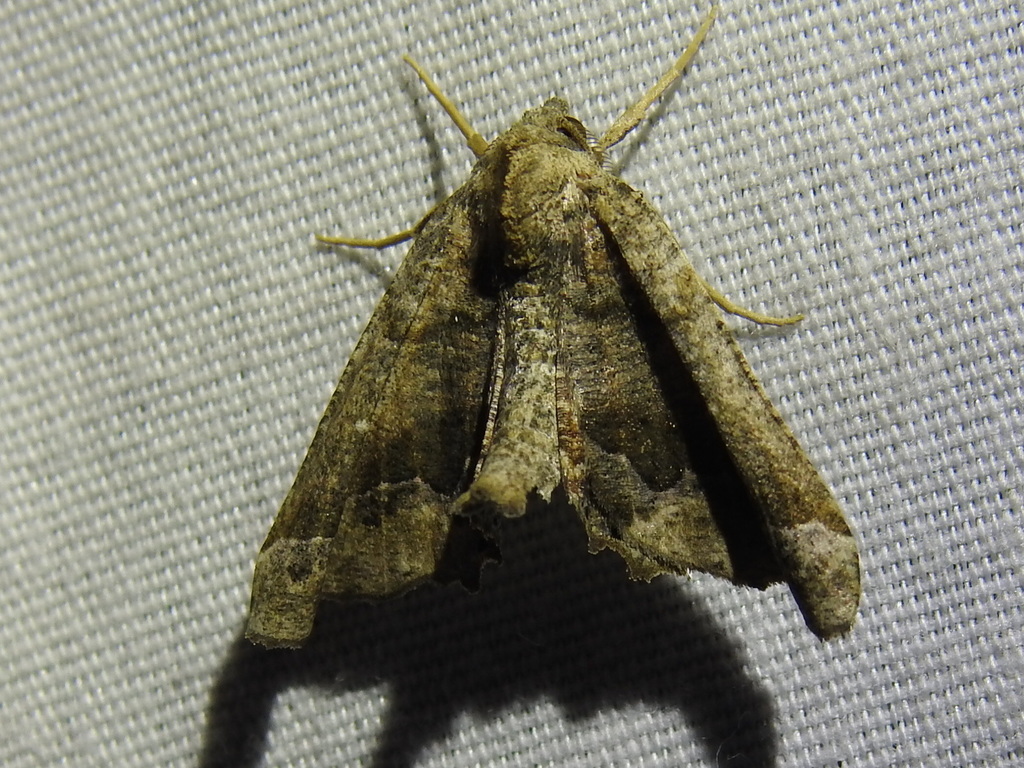
(c) Sam Kieschnick, some rights reserved (CC BY) · licence
Family: Geometridae · Class: Insecta · Order: Lepidoptera
Pero meskaria (Meske's Pero) is a California animal in the Geometridae family.
Meske's Pero (Pero meskaria) is a moth species in the family Geometridae, commonly known as geometrids or inchworm moths. Adult moths typically measure 25 to 35 millimeters (1.0 to 1.4 inches) in wingspan. The forewings display a mottled pattern of gray and brown with darker crosslines and patches that provide effective camouflage against tree bark. The hindwings are generally paler with less distinct markings. Males possess feathery antennae, while females have thread-like antennae. At rest, the moth positions its wings horizontally, creating a triangular silhouette characteristic of many geometrid species. Pero meskaria occurs in western North America, with documented populations in California, Oregon, Washington, and British Columbia. Within California, the species has been recorded from various counties including those in the Sierra Nevada, Coast Ranges, and potentially other mountainous regions. The historical and current distribution appears stable, though comprehensive surveys across the range remain limited. This species inhabits forested environments, particularly coniferous and mixed coniferous-deciduous forests. Meske's Pero shows a preference for areas with mature trees and diverse understory vegetation. Elevational range extends from near sea level in coastal areas to approximately 2,000 meters (6,600 feet) in montane regions. Adults are typically found in areas with Douglas fir, various pine species, and associated forest vegetation that support both adult nectar sources and larval host plants. Adult Meske's Pero moths are nocturnal and are attracted to artificial lights during their flight period, which generally occurs from late spring through early fall, with peak activity varying by elevation and local climate conditions. Larvae, known as inchworms or loopers, feed on foliage of various deciduous and coniferous trees. The caterpillars display the characteristic looping locomotion of geometrid larvae, extending and contracting their bodies as they move along branches and twigs. Pupation typically occurs in soil or leaf litter, with the species likely overwintering in the pupal stage. Pero meskaria currently holds no formal conservation status at federal, state, or international levels. The species does not appear on endangered species lists or conservation concern inventories. Population trends are not well-documented due to limited systematic monitoring of most geometrid moth species. Like many forest-dwelling moths, potential threats may include habitat loss from logging, development, and altered fire regimes. Climate change could affect the species through shifts in forest composition and phenology mismatches between adult emergence and optimal conditions. Light pollution in developed areas may disrupt natural behavior patterns, as artificial lighting can interfere with navigation and mating behaviors in nocturnal moths. The species' dependence on forest ecosystems makes it potentially vulnerable to large-scale habitat modifications, though its apparent broad distribution across western forests may provide some resilience to localized disturbances.
Classification
Class: Insecta · Order: Lepidoptera · Family: Geometridae
Frequently asked questions
How is Pero meskaria classified?
Pero meskaria belongs to class Insecta, order Lepidoptera, family Geometridae.
What family does Pero meskaria belong to?
Pero meskaria is in the Geometridae family.
What is Pero meskaria?
Meske's Pero (Pero meskaria) is a moth species in the family Geometridae, commonly known as geometrids or inchworm moths.
Is Pero meskaria found in California?
Yes. Pero meskaria is recorded in California in The California Species Project's catalogue.
Related species
Other California species in the same genus, family, or bioregion.
Data from The California Species Project — 14,000+ California species with verified data from CNPS, CDFW, USFWS, and more.