Pero mizon
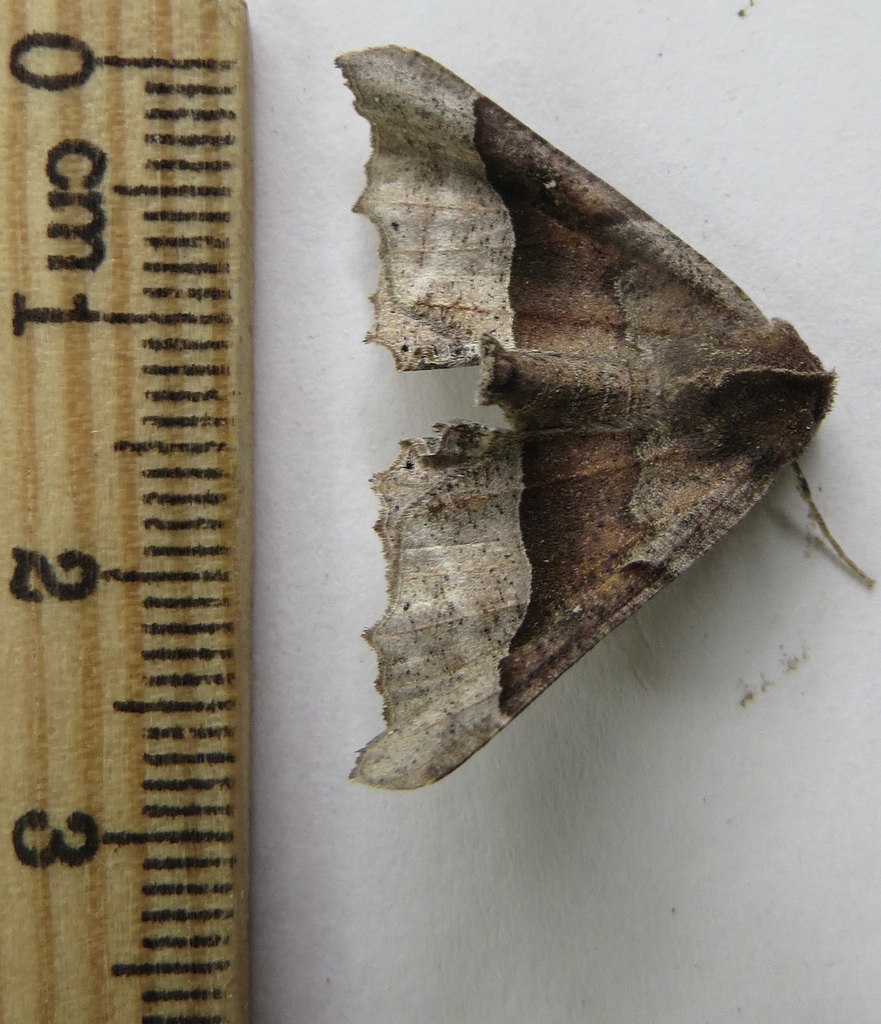
(c) Garth Harwood, some rights reserved (CC BY) · licence
Family: Geometridae · Class: Insecta · Order: Lepidoptera
Pero mizon is a California animal in the Geometridae family.
Pero mizon is a species of geometrid moth in the family Geometridae, subfamily Ennominae. This moth belongs to the genus Pero, which comprises numerous species of medium-sized moths commonly known as false hemlock loopers or Pero moths. The species exhibits the typical geometrid body plan with a relatively slender build and broad, horizontally held wings when at rest. Adult Pero mizon display the characteristic wing patterns typical of the genus, with forewings that are generally brownish-gray to grayish-brown in coloration. The wings typically show subtle cross-lines and may exhibit small discal spots or markings. Like other geometrids, the species has relatively large wings compared to body size, with forewings measuring approximately 15-20 mm in length. The antennae are thread-like in females and may be slightly more feathered in males, as is common in many moth species. The distribution and range of Pero mizon in California remains poorly documented in available literature. Geometridae moths are found throughout North America, and many Pero species have broad distributions across temperate regions. However, specific locality records and range maps for this particular species are limited in accessible databases and field guides. Habitat preferences for Pero mizon are not well-documented in current literature. Other members of the genus Pero are typically associated with forested environments, particularly areas with deciduous and mixed forests. Many geometrid moths in this group are found in woodland edges, forest clearings, and areas with diverse plant communities that support their larval host plants. The larval stage, like other geometrids, likely develops as a measuring worm or inchworm, characterized by the distinctive looping locomotion typical of Geometridae caterpillars. Larvae of Pero species generally feed on the foliage of various deciduous trees and shrubs, though specific host plant associations for P. mizon are not clearly established in available sources. Adult flight periods for most Pero species in temperate regions typically occur during spring and summer months, with moths attracted to artificial lights during nocturnal activity periods. The conservation status of Pero mizon is not currently assessed by major conservation organizations. The species lacks federal or state listing status and has not been evaluated by the International Union for Conservation of Nature. This absence of conservation assessment likely reflects limited knowledge about the species' distribution, population size, and ecological requirements rather than confirmed population stability. Many geometrid moths remain understudied, particularly species that may have restricted distributions or occur in specialized habitats. Further research is needed to establish basic ecological information for this species, including detailed distribution mapping, host plant associations, life cycle timing, and habitat requirements. Such information would be essential for any future conservation assessment and for understanding the species' role in California's lepidopteran fauna.
Classification
Class: Insecta · Order: Lepidoptera · Family: Geometridae
Frequently asked questions
How is Pero mizon classified?
Pero mizon belongs to class Insecta, order Lepidoptera, family Geometridae.
What family does Pero mizon belong to?
Pero mizon is in the Geometridae family.
What is Pero mizon?
Pero mizon is a species of geometrid moth in the family Geometridae, subfamily Ennominae.
Is Pero mizon found in California?
Yes. Pero mizon is recorded in California in The California Species Project's catalogue.
Related species
Other California species in the same genus, family, or bioregion.
Data from The California Species Project — 14,000+ California species with verified data from CNPS, CDFW, USFWS, and more.