Pero occidentalis
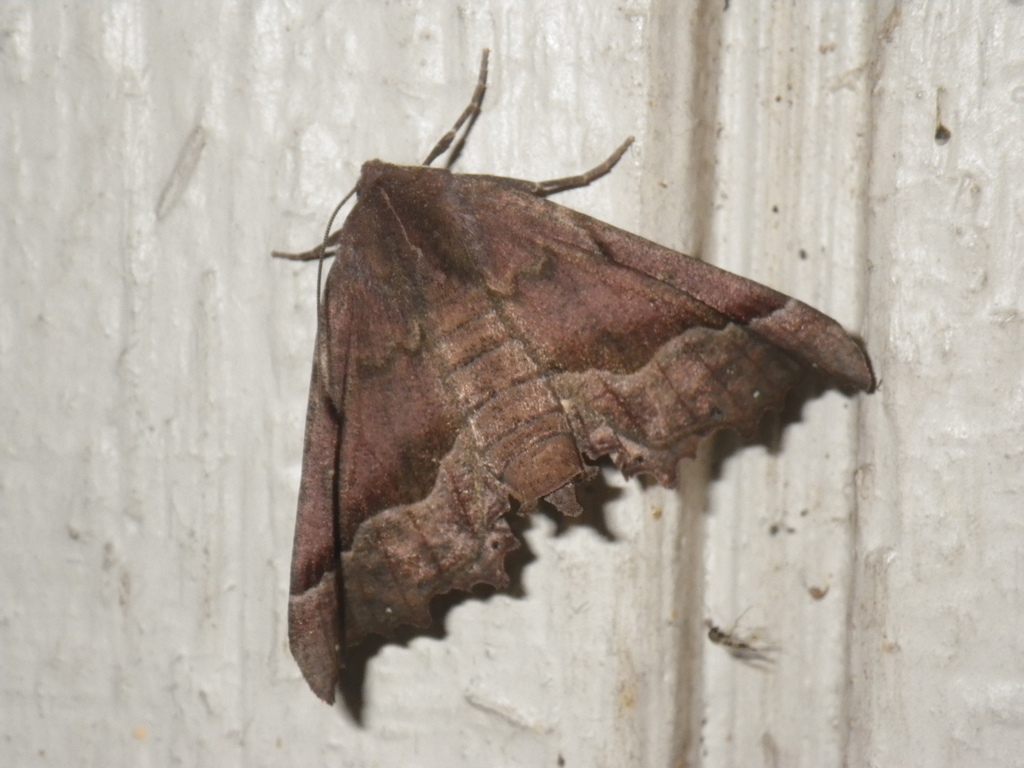
(c) Dominic, some rights reserved (CC BY) · licence
Family: Geometridae · Class: Insecta · Order: Lepidoptera
Pero occidentalis is a California animal in the Geometridae family.
Pero occidentalis is a species of geometrid moth in the family Geometridae, subfamily Ennominae. This moth belongs to a genus of inchworm moths commonly known as angle moths or peppered moths, characterized by their broad wings and typically mottled wing patterns that provide effective camouflage against tree bark and lichens. The adult moths display the typical geometrid wing pattern with forewings measuring approximately 15-20 mm in length. The wings are generally grayish-brown to brownish-gray with darker transverse lines and subtle mottling that varies among individuals. Like other Pero species, the forewings show distinct antemedial and postmedial lines, often with a discal spot present. The hindwings are typically paler than the forewings with less distinct markings. Sexual dimorphism is present, with males possessing more feathery antennae compared to the thread-like antennae of females. Pero occidentalis occurs in western North America, with documented populations in California and potentially extending into adjacent western states. The species' distribution appears to be associated with specific host plant ranges and suitable habitat conditions in montane and foothill environments. Within California, the species has been recorded from various counties, though comprehensive distribution mapping remains incomplete. The species inhabits mixed coniferous and deciduous forests, woodland edges, and areas with suitable host vegetation. Adults are typically active during late spring through early fall, with peak flight periods varying by elevation and local climate conditions. The species shows preference for areas with moderate canopy cover that support both larval host plants and adult nectar sources. Like other geometrid moths, Pero occidentalis undergoes complete metamorphosis. Larvae are typical inchworms or loopers, moving in the characteristic arching motion that gives geometrids their common name. The caterpillars feed on various deciduous trees and shrubs, though specific host plant preferences for this species require further documentation. Larvae typically feed on leaves during spring and summer months, with pupation occurring in soil or leaf litter. Adults emerge to mate and lay eggs, completing the annual cycle. The species likely overwinters as pupae, a common strategy among temperate geometrid moths. The conservation status of Pero occidentalis has not been formally assessed by federal or state agencies. Like many moth species, it faces potential threats from habitat modification, urbanization, and climate change. Forest management practices and maintenance of diverse plant communities are important for supporting populations of this and other native moth species. The species' ecological role includes serving as a pollinator for night-blooming plants and as prey for bats, spiders, and other nocturnal predators. Further research is needed to better understand population trends, specific habitat requirements, and conservation needs for this western North American geometrid moth.
Classification
Class: Insecta · Order: Lepidoptera · Family: Geometridae
Frequently asked questions
How is Pero occidentalis classified?
Pero occidentalis belongs to class Insecta, order Lepidoptera, family Geometridae.
What family does Pero occidentalis belong to?
Pero occidentalis is in the Geometridae family.
What is Pero occidentalis?
Pero occidentalis is a species of geometrid moth in the family Geometridae, subfamily Ennominae.
Is Pero occidentalis found in California?
Yes. Pero occidentalis is recorded in California in The California Species Project's catalogue.
Related species
Other California species in the same genus, family, or bioregion.
Data from The California Species Project — 14,000+ California species with verified data from CNPS, CDFW, USFWS, and more.