Pero radiosaria
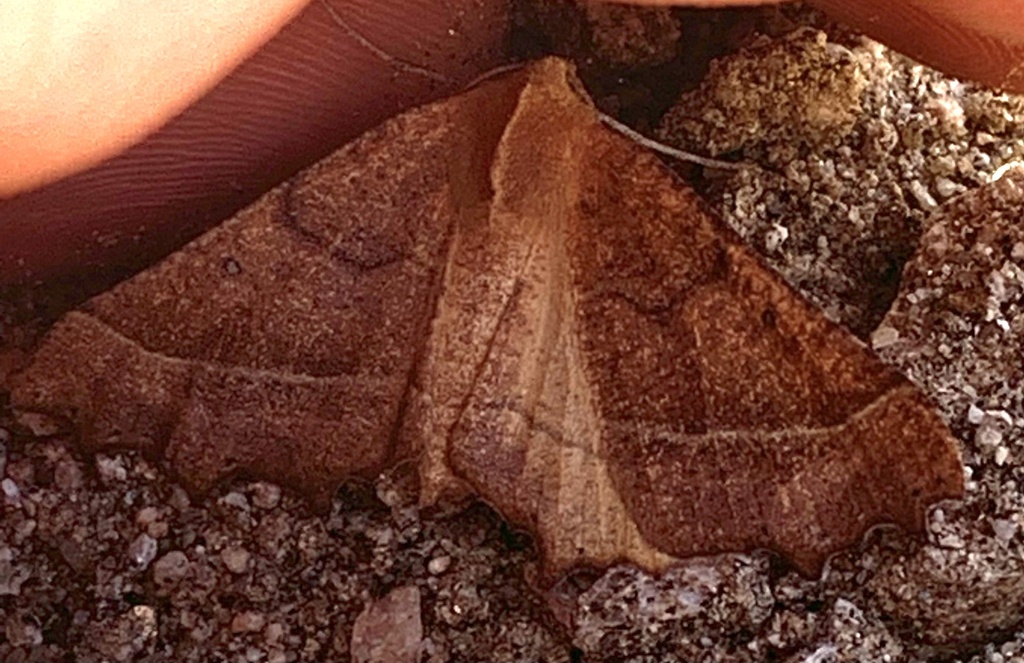
(c) Bren Zo, some rights reserved (CC BY) · licence
Family: Geometridae · Class: Insecta · Order: Lepidoptera
Pero radiosaria is a California animal in the Geometridae family.
Pero radiosaria is a geometrid moth in the family Geometridae, commonly known as geometers or inchworm moths. This species belongs to the genus Pero, which comprises medium-sized moths characterized by their distinctive wing patterns and nocturnal habits. Adult moths typically measure 25-35 mm (1.0-1.4 inches) in wingspan, with forewings displaying a mottled brown and gray coloration that provides effective camouflage against tree bark. The wings feature subtle transverse lines and small dark spots, with hindwings generally paler than the forewings. Males can be distinguished from females by their more feathery antennae and slightly smaller size. Pero radiosaria occurs across a broad geographic range extending from southern California eastward to Texas. Within California, the species is documented from coastal and inland areas of the southern region, including the Los Angeles Basin, Orange County, Riverside County, and San Bernardino County. The distribution continues through Arizona, New Mexico, and extends into Texas, indicating adaptation to arid and semi-arid environments across the southwestern United States. This moth inhabits diverse habitats within its range, including chaparral, oak woodlands, desert scrub, and riparian areas. Adults are typically found at elevations ranging from sea level to approximately 1,500 meters (4,900 feet). The species shows preference for areas with mixed vegetation that includes both deciduous and evergreen shrubs and trees. Habitat selection appears closely linked to the distribution of larval host plants, which likely include various native shrubs and trees common to southwestern ecosystems. Pero radiosaria exhibits typical geometrid behavior patterns, with adults being primarily nocturnal and attracted to artificial lights. Flight period varies by elevation and latitude but generally occurs from late spring through early fall, with peak activity during summer months. Larvae, known as inchworms or loopers due to their characteristic movement pattern, feed on foliage of host plants during their development. The caterpillars possess the typical geometrid body plan with prolegs only at the posterior end, causing them to arch their bodies when moving. Pupation occurs in soil or leaf litter, with the species likely completing one or two generations per year depending on local climate conditions. Currently, Pero radiosaria does not hold any federal or state conservation listing status. The species appears to maintain stable populations across its range, likely due to its broad habitat tolerance and diverse host plant associations. However, like many southwestern species, it may face challenges from habitat fragmentation, urban development, and climate change impacts on native plant communities. The moth's distribution across multiple states and habitat types suggests some resilience to environmental changes, though local populations in heavily developed areas of southern California may experience pressure from habitat loss. Continued monitoring of geometrid moth communities would help assess long-term population trends and conservation needs for this and related species.
Classification
Class: Insecta · Order: Lepidoptera · Family: Geometridae
Frequently asked questions
How is Pero radiosaria classified?
Pero radiosaria belongs to class Insecta, order Lepidoptera, family Geometridae.
What family does Pero radiosaria belong to?
Pero radiosaria is in the Geometridae family.
What is Pero radiosaria?
Pero radiosaria is a geometrid moth in the family Geometridae, commonly known as geometers or inchworm moths.
Is Pero radiosaria found in California?
Yes. Pero radiosaria is recorded in California in The California Species Project's catalogue.
Related species
Other California species in the same genus, family, or bioregion.
Data from The California Species Project — 14,000+ California species with verified data from CNPS, CDFW, USFWS, and more.