Perognathus alticola alticola
White-eared Pocket Mouse
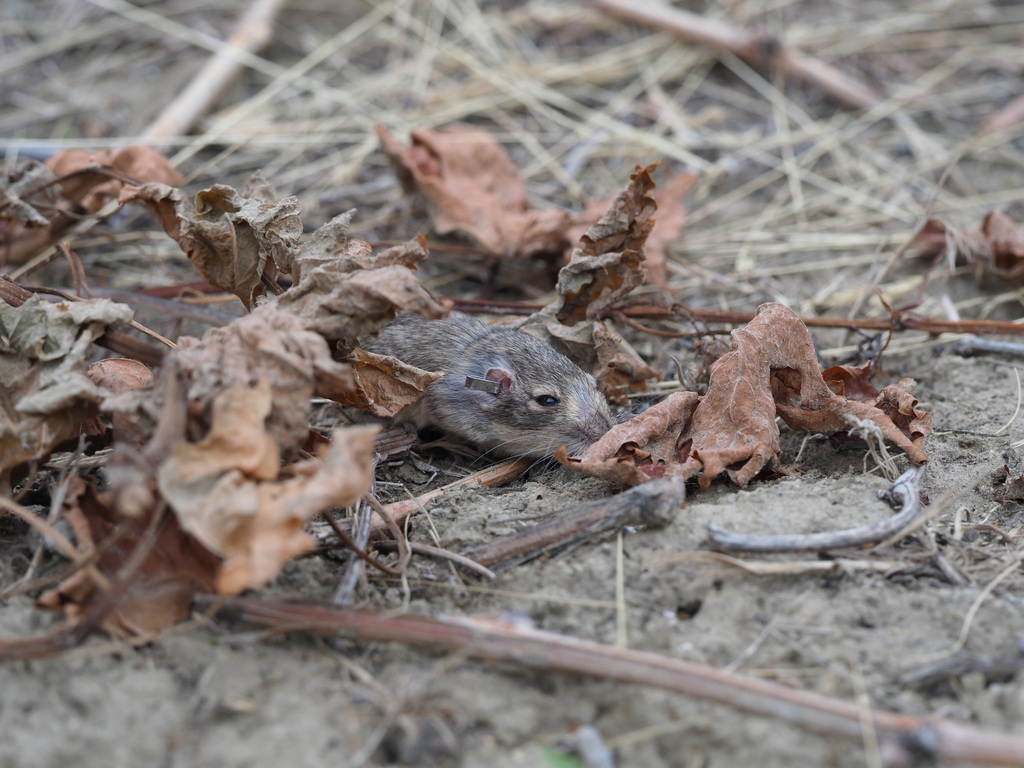
(c) Nathan Earley, some rights reserved (CC BY) · licence
Family: Heteromyidae · Class: Mammalia · Order: Rodentia
Conservation status: G2TH SH
Perognathus alticola alticola (White-eared Pocket Mouse) is a California animal in the Heteromyidae family.
The White-eared Pocket Mouse (Perognathus alticola alticola) is a small nocturnal rodent endemic to California's coastal mountains. This subspecies represents one of the most critically endangered mammals in North America, with no confirmed specimens collected since 1934 and likely extinct in the wild. Physically, White-eared Pocket Mice are characterized by their diminutive size, measuring approximately 60-70 mm (2.4-2.8 inches) in body length with tails of similar length. The species displays typical heteromyid features including enlarged hind legs adapted for saltatory locomotion, specialized cheek pouches for seed transport, and dense pelage. The distinctive white ear patches that give the subspecies its common name contrast with the brownish-gray dorsal coloration and white ventral surfaces. Historically, the White-eared Pocket Mouse was known only from a few locations in the coastal mountains of southern California. Collection records from the early 20th century document the subspecies from sites in what is now Orange and Riverside counties, primarily in the Santa Ana Mountains and adjacent ranges. The extremely limited historical range suggests this subspecies was always rare and geographically restricted. The species inhabited chaparral and coastal sage scrub communities at moderate elevations, typically between 300-1,500 meters (980-4,920 feet). Like other pocket mice, it likely preferred areas with sandy or loose soils suitable for burrow construction and abundant small-seeded plants. The coastal influence in its range would have provided relatively mild temperatures and Mediterranean climate patterns with wet winters and dry summers. White-eared Pocket Mice were presumably granivorous, specializing in collecting and caching small seeds from shrubs and forbs characteristic of their chaparral habitat. As heteromyids, they possessed physiological adaptations for water conservation, obtaining metabolic water from consumed seeds and producing highly concentrated urine. The species was likely strictly nocturnal, foraging during cooler nighttime hours and remaining in underground burrows during the day. Breeding probably occurred in late winter or early spring following the annual precipitation cycle. The conservation status of this subspecies is dire. According to NatureServe, it carries a global rank of G2TH, indicating it is imperiled and possibly extinct (GBIF 2024). No specimens have been collected since 1934, despite targeted surveys in historical habitat areas. The primary threats that likely contributed to its decline include habitat loss from urban development, agriculture, and infrastructure projects in coastal southern California. Fire suppression altering natural chaparral cycles and invasive plant species displacing native seed sources may have further compromised remaining habitat quality. The apparent extinction of the White-eared Pocket Mouse subspecies represents a significant loss of California's endemic mammalian diversity. While the species Perognathus alticola includes other subspecies that remain extant, the loss of this coastal population eliminates a unique evolutionary lineage adapted to specific environmental conditions of southern California's coastal mountains.
Classification
Class: Mammalia · Order: Rodentia · Family: Heteromyidae
Conservation status
G2TH SH
Frequently asked questions
How is Perognathus alticola alticola classified?
Perognathus alticola alticola belongs to class Mammalia, order Rodentia, family Heteromyidae.
What family does Perognathus alticola alticola belong to?
Perognathus alticola alticola is in the Heteromyidae family.
Is Perognathus alticola alticola protected or of conservation concern?
Perognathus alticola alticola carries the following status: G2TH SH.
What is Perognathus alticola alticola?
The White-eared Pocket Mouse (Perognathus alticola alticola) is a small nocturnal rodent endemic to California's coastal mountains.
Is Perognathus alticola alticola found in California?
Yes. Perognathus alticola alticola is recorded in California in The California Species Project's catalogue.
Related species
Other California species in the same genus, family, or bioregion.
Data from The California Species Project — 14,000+ California species with verified data from CNPS, CDFW, USFWS, and more.