Peromyscus boylii
Brush Mouse
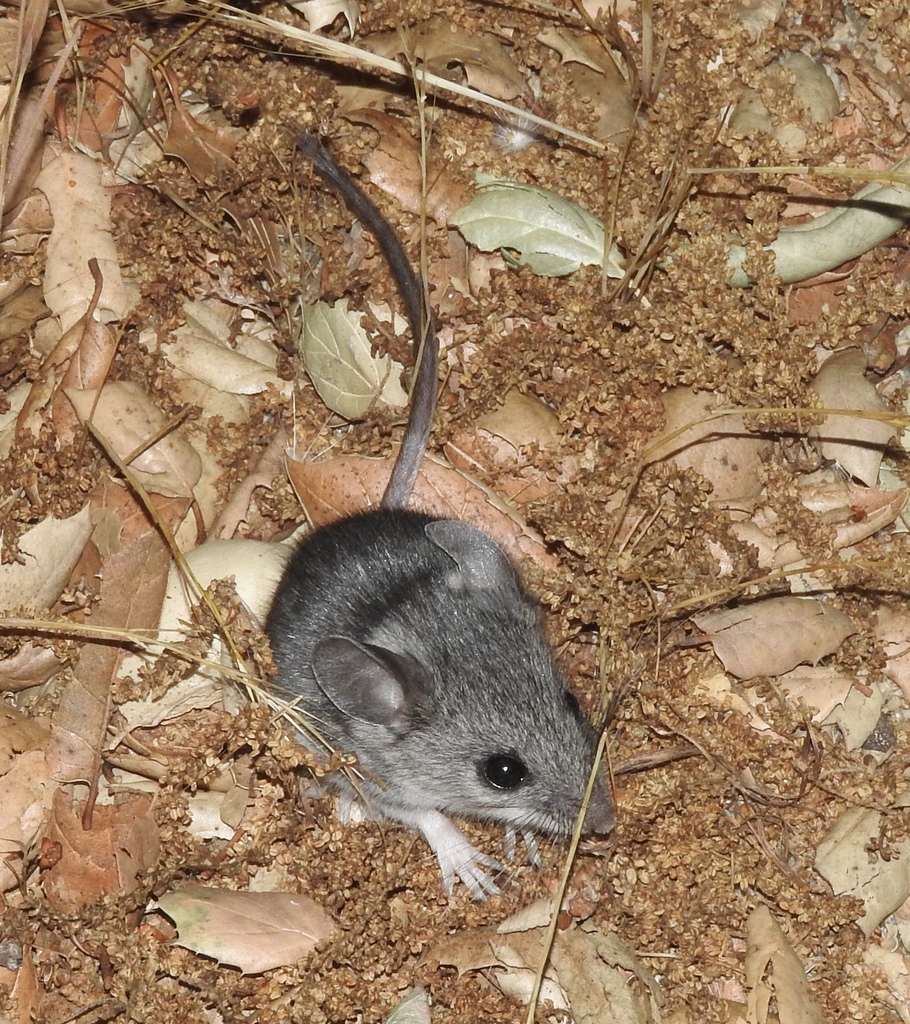
(c) nmoorhatch, some rights reserved (CC BY) · licence
Family: Cricetidae · Class: Mammalia · Order: Rodentia
Peromyscus boylii (Brush Mouse) is a California animal in the Cricetidae family.
The brush mouse (Peromyscus boylii), also known as the brush deermouse, is a medium-sized rodent endemic to western North America. Adults measure 190 to 260 mm (7.5 to 10.2 inches) in total length, with the tail comprising approximately half the body length at 90 to 130 mm (3.5 to 5.1 inches). Body weight ranges from 19 to 45 grams (0.7 to 1.6 ounces). The dorsal pelage varies from grayish-brown to reddish-brown, contrasting sharply with white underparts. The tail is distinctly bicolored, dark above and white below, with a tuft of longer hairs at the tip. Large ears and prominent dark eyes distinguish this species from other Peromyscus mice in its range. Brush mice occur from sea level to approximately 2,400 meters (7,900 feet) elevation across California, extending into Arizona, New Mexico, Texas, and northwestern Mexico. In California, populations are distributed throughout the Coast Ranges, Sierra Nevada foothills, Transverse Ranges, and Peninsular Ranges. The species is absent from the Central Valley and high-elevation Sierra Nevada. Northern populations extend through the San Francisco Bay Area counties, while southern populations reach the Mexican border in San Diego County. This species inhabits chaparral, oak woodlands, pine-oak forests, and riparian areas characterized by dense shrub cover and rocky outcrops. Brush mice show strong preference for areas with substantial woody debris, fallen logs, and rock piles that provide cover and nesting sites. They construct nests in tree cavities, rock crevices, or dense vegetation, typically 0.3 to 4 meters (1 to 13 feet) above ground. The species requires continuous shrub canopy and rarely ventures into open areas. Brush mice are primarily nocturnal and semi-arboreal, displaying exceptional climbing abilities. Diet consists of seeds, nuts, berries, and green vegetation, with acorns comprising a significant portion where oak trees are present. They also consume insects and other arthropods, particularly during breeding season. Breeding occurs from March through October, with peak activity in spring and early summer. Females produce two to four litters annually, with gestation lasting 23 to 27 days. Litter size ranges from two to five young, with an average of 3.2 offspring. Young reach sexual maturity at approximately 60 days of age. The brush mouse is not federally or state listed and maintains stable populations across most of its range. However, some local populations face pressure from habitat fragmentation due to urban development, particularly in coastal Southern California. Fire suppression practices that alter natural fire cycles can reduce habitat quality by creating overly dense vegetation lacking the structural diversity preferred by this species. Climate change may affect populations at the margins of the species' range, particularly in arid regions where increased temperatures and altered precipitation patterns could impact food availability and habitat suitability.
Classification
Class: Mammalia · Order: Rodentia · Family: Cricetidae
Frequently asked questions
How is Peromyscus boylii classified?
Peromyscus boylii belongs to class Mammalia, order Rodentia, family Cricetidae.
What family does Peromyscus boylii belong to?
Peromyscus boylii is in the Cricetidae family.
What is Peromyscus boylii?
The brush mouse (Peromyscus boylii), also known as the brush deermouse, is a medium-sized rodent endemic to western North America.
Is Peromyscus boylii found in California?
Yes. Peromyscus boylii is recorded in California in The California Species Project's catalogue.
Related species
Other California species in the same genus, family, or bioregion.
Data from The California Species Project — 14,000+ California species with verified data from CNPS, CDFW, USFWS, and more.