Peromyscus crinitus
Canyon Mouse
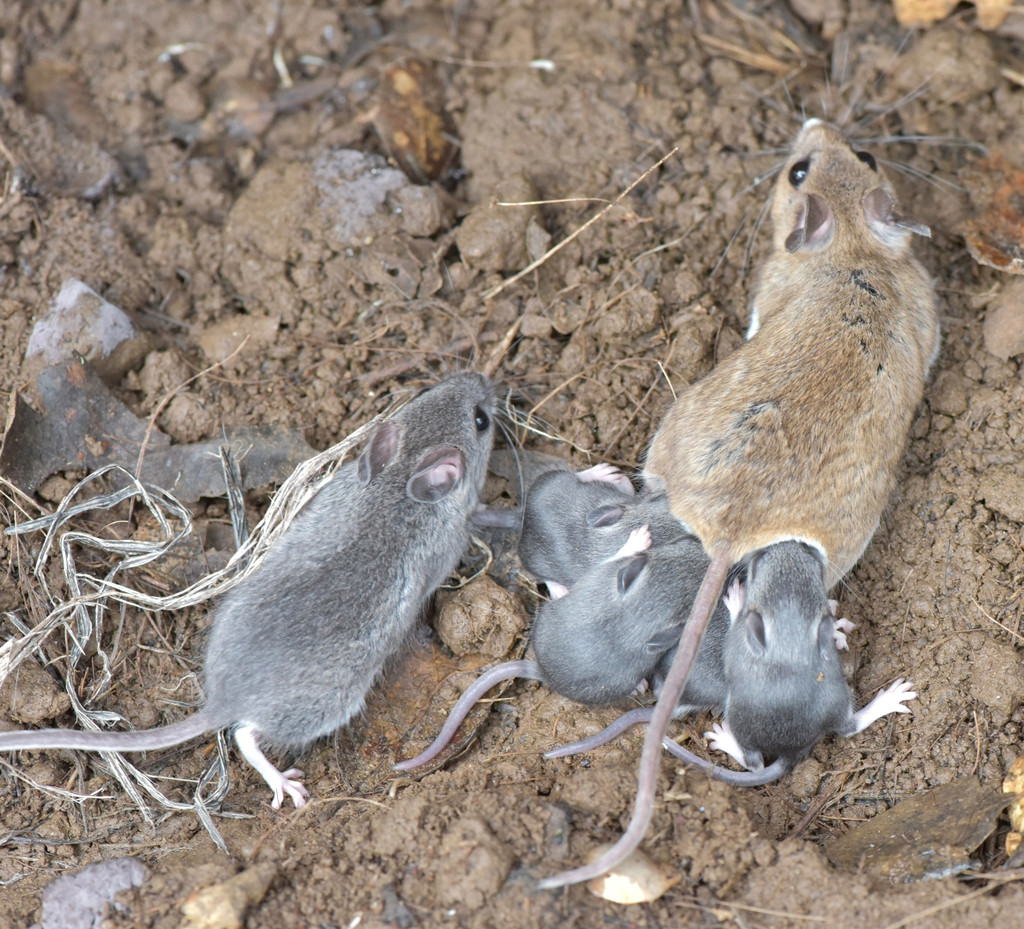
(c) Don Loarie, some rights reserved (CC BY) · licence
Family: Cricetidae · Class: Mammalia · Order: Rodentia
Peromyscus crinitus (Canyon Mouse) is a California animal in the Cricetidae family.
The canyon mouse is a small rodent endemic to rocky desert habitats of the southwestern United States, including portions of southern California. Adults measure 85 to 105 mm (3.3 to 4.1 inches) in head-body length, with tails ranging from 100 to 140 mm (3.9 to 5.5 inches), making the tail notably longer than the body. Weight typically ranges from 15 to 25 grams (0.5 to 0.9 ounces). The dorsal pelage is pale grayish-brown to buff, providing effective camouflage against rocky substrates. The ventral surface is white to cream-colored, with a sharp demarcation from the darker dorsal coloration. The ears are large and prominent, measuring 18 to 22 mm in length, and the eyes are relatively large, adaptations for nocturnal activity. The hind feet are pale with dark heel patches. In California, canyon mice occur primarily in the Mojave Desert region, including areas of San Bernardino, Riverside, and Inyo counties. The species' range extends into Nevada, Utah, Arizona, and northwestern Mexico. California populations are found in mountainous areas including the Providence Mountains, New York Mountains, Clark Mountain Range, and isolated populations in the Panamint Mountains and areas near Death Valley. The distribution is highly fragmented, with populations typically separated by expanses of unsuitable habitat. Canyon mice occupy rocky habitats including cliff faces, talus slopes, boulder fields, and canyon walls, typically at elevations ranging from 300 to 2,100 meters (1,000 to 6,900 feet). The species shows strong preference for areas with abundant rock crevices and overhangs that provide shelter and protection from predators. Vegetation in occupied habitats is typically sparse, consisting of desert shrubs such as brittlebush, desert mistletoe, and various cacti. The species requires access to both shelter sites in rocks and nearby foraging areas with adequate seed resources. Canyon mice are primarily granivorous, feeding on seeds of shrubs, forbs, and cacti, though they may also consume green vegetation and occasionally insects. The species is nocturnal and exhibits strong climbing abilities, using rock crevices and cliff faces to access foraging sites and escape predators. According to Hall (1981), breeding typically occurs from March through October, with females producing one to three litters per year. Litter size ranges from two to five young, with an average of three to four. Gestation period is approximately 23 to 27 days, based on laboratory studies by Hoffmeister (1986). Canyon mice are known for their ability to survive without free water, obtaining moisture from their food. Canyon mice are not federally listed under the Endangered Species Act, nor are they designated as a species of special concern by the California Department of Fish and Wildlife as of December 2025. However, populations face threats from habitat fragmentation, off-road vehicle use, rock climbing activities, and development in desert areas. Climate change may affect the species through altered precipitation patterns and increased temperatures. The fragmented nature of suitable habitat makes populations vulnerable to local extirpations, and limited dispersal ability between rocky outcrops may restrict recolonization of vacant habitats.
Classification
Class: Mammalia · Order: Rodentia · Family: Cricetidae
Frequently asked questions
How is Peromyscus crinitus classified?
Peromyscus crinitus belongs to class Mammalia, order Rodentia, family Cricetidae.
What family does Peromyscus crinitus belong to?
Peromyscus crinitus is in the Cricetidae family.
What is Peromyscus crinitus?
The canyon mouse is a small rodent endemic to rocky desert habitats of the southwestern United States, including portions of southern California.
Is Peromyscus crinitus found in California?
Yes. Peromyscus crinitus is recorded in California in The California Species Project's catalogue.
Related species
Other California species in the same genus, family, or bioregion.
Data from The California Species Project — 14,000+ California species with verified data from CNPS, CDFW, USFWS, and more.