Peromyscus fraterculus
Baja Mouse
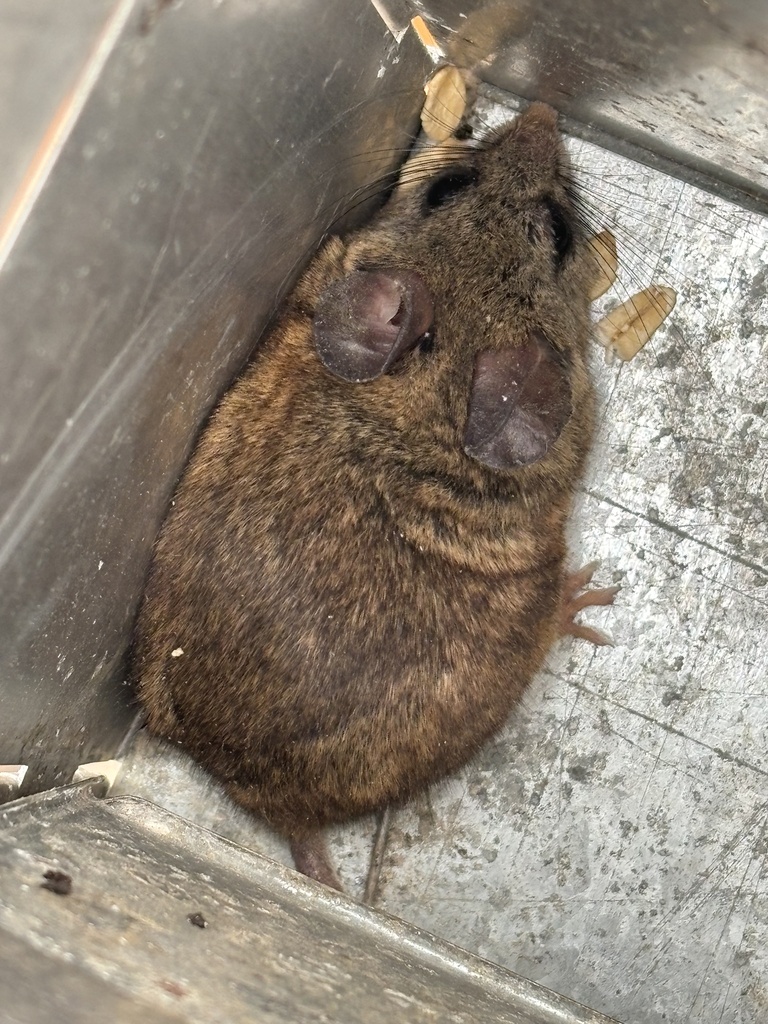
(c) Sula Vanderplank, some rights reserved (CC BY) · licence
Family: Cricetidae · Class: Mammalia · Order: Rodentia
Peromyscus fraterculus (Baja Mouse) is a California animal in the Cricetidae family.
The Baja Mouse (Peromyscus fraterculus) is a small rodent endemic to Baja California, Mexico, with its range extending into extreme southern California. Adults measure 85 to 95 mm (3.3 to 3.7 inches) in head-body length, with a tail length of 90 to 105 mm (3.5 to 4.1 inches). The dorsal pelage is grayish-brown to brownish-gray, while the ventral surface is white to pale gray. The tail is distinctly bicolored, dark above and light below, and is slightly longer than the head-body length. The ears are relatively large and prominent, measuring 15 to 18 mm (0.6 to 0.7 inches) in length. Historically, the Baja Mouse occurred along the Pacific coast of Baja California and in scattered locations in San Diego County, California. In California, the species was documented from coastal areas near the Mexican border, including locations in the Tijuana River Valley and coastal mesa habitats. However, the species has not been reliably detected in California for several decades, with the last confirmed California record dating to the 1990s. The Baja Mouse inhabits coastal sage scrub and chaparral communities, typically in areas with dense shrub cover and rocky outcroppings. In Baja California, the species occurs from sea level to approximately 300 meters (980 feet) elevation. Preferred habitat includes areas dominated by coastal sage scrub species, particularly where dense understory vegetation provides cover and foraging opportunities. The species appears to require areas with significant structural diversity, including both shrub canopy and herbaceous ground cover. Baja Mice are primarily granivorous, feeding on seeds of shrubs and herbaceous plants, supplemented with green vegetation and occasionally insects. The species is nocturnal and semifossorial, constructing burrow systems beneath shrubs and rock crevices. Breeding occurs primarily during spring and early summer, coinciding with peak seed availability. Females typically produce litters of 2 to 4 young after a gestation period of approximately 23 days. The species exhibits strong site fidelity, with individuals maintaining small home ranges centered around established burrow systems. The conservation status of the Baja Mouse in California is uncertain due to the lack of recent confirmed observations. The species faces significant threats from habitat loss due to urban development, agricultural conversion, and invasive plant species that alter native plant communities. In San Diego County, coastal development has eliminated much of the historical habitat, and remaining fragments are often degraded by non-native species dominance. Climate change may exacerbate these threats through altered precipitation patterns and increased fire frequency. While the species remains relatively stable in portions of its Baja California range, the California population may be extirpated. Comprehensive surveys are needed to determine current distribution and population status in both California and Mexico.
Classification
Class: Mammalia · Order: Rodentia · Family: Cricetidae
Frequently asked questions
How is Peromyscus fraterculus classified?
Peromyscus fraterculus belongs to class Mammalia, order Rodentia, family Cricetidae.
What family does Peromyscus fraterculus belong to?
Peromyscus fraterculus is in the Cricetidae family.
What is Peromyscus fraterculus?
The Baja Mouse (Peromyscus fraterculus) is a small rodent endemic to Baja California, Mexico, with its range extending into extreme southern California.
Is Peromyscus fraterculus found in California?
Yes. Peromyscus fraterculus is recorded in California in The California Species Project's catalogue.
Related species
Other California species in the same genus, family, or bioregion.
Data from The California Species Project — 14,000+ California species with verified data from CNPS, CDFW, USFWS, and more.