Peromyscus maniculatus
Deer Mouse
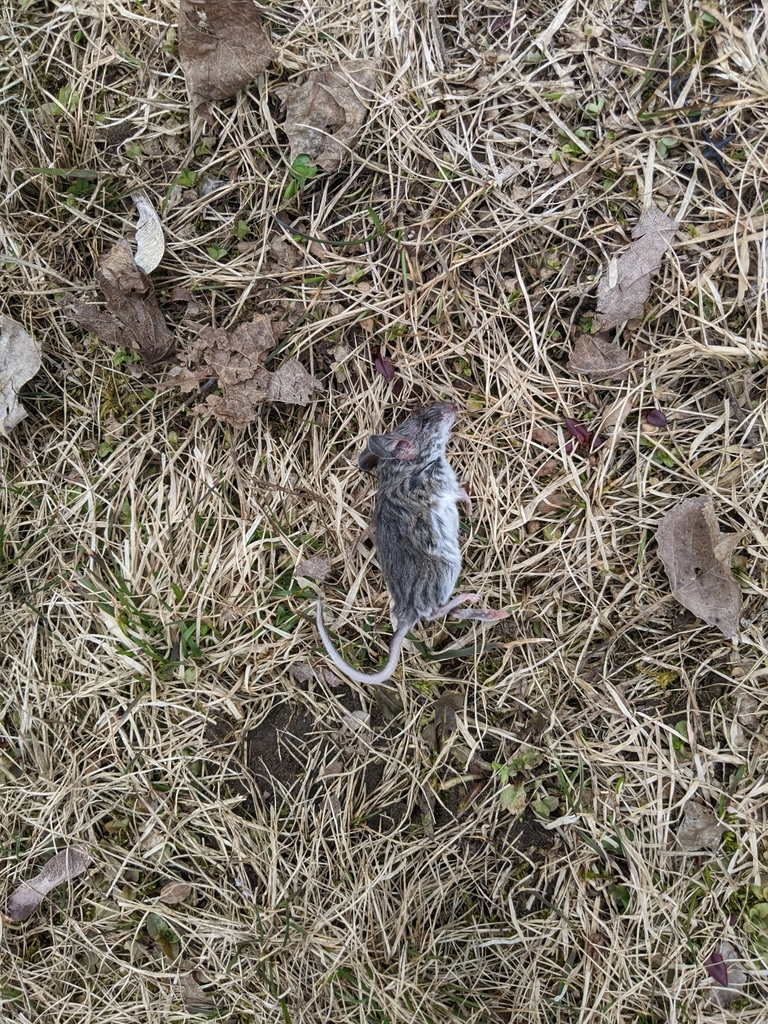
(c) Damien Mullin, some rights reserved (CC BY) · licence
Family: Cricetidae · Class: Mammalia · Order: Rodentia
Peromyscus maniculatus (Deer Mouse) is a California animal in the Cricetidae family.
The deer mouse is a small rodent measuring 85 to 130 mm (3.3 to 5.1 inches) in total length, with a tail comprising roughly half of this length. Adults typically weigh 15 to 32 grams (0.5 to 1.1 ounces). The species displays considerable color variation across its range, with dorsal fur ranging from pale gray to dark brown or reddish-brown, while the ventral surface remains consistently white or cream-colored. The tail is distinctly bicolored, dark above and white below, with a sharp demarcation between the two colors. Large, prominent ears and dark, protruding eyes are characteristic features. Peromyscus maniculatus has one of the most extensive distributions of any North American mammal, ranging from northern Canada to central Mexico. In California, deer mice occur throughout the state, from sea level to elevations exceeding 3,350 meters (11,000 feet) in the Sierra Nevada. They inhabit virtually every county and are found in both desert regions and high montane areas. This highly adaptable species occupies diverse habitats including grasslands, agricultural fields, brushlands, deciduous and coniferous forests, alpine areas, and semi-arid regions. Deer mice utilize various microhabitats such as rock crevices, fallen logs, dense vegetation, and human-made structures. They construct nests in protected locations including tree hollows, underground burrows, and buildings, lining these sites with soft materials like grass, moss, and shredded bark. Deer mice are primarily nocturnal and exhibit excellent climbing abilities, using their semi-prehensile tails for balance. Their diet consists of seeds, nuts, berries, green vegetation, and occasionally insects and small invertebrates. Food hoarding behavior is common, particularly in preparation for winter months. The species breeds throughout the year in favorable conditions, with peak reproductive activity occurring in spring and summer. Females produce litters of 3 to 5 young after a gestation period of 22 to 26 days. Young reach sexual maturity at 5 to 7 weeks of age. Population densities fluctuate cyclically, often in response to food availability and weather conditions. The deer mouse is not listed under federal or California endangered species legislation and maintains stable populations throughout its range. The species is classified as Least Concern by the International Union for Conservation of Nature due to its wide distribution, large population size, and adaptability to various environmental conditions. However, deer mice serve as reservoir hosts for hantavirus, which can cause hantavirus pulmonary syndrome in humans through inhalation of aerosolized rodent excreta. This public health concern has led to increased research and monitoring efforts in some regions. Climate change may affect local populations through habitat modifications, but the species' broad ecological tolerance and extensive range provide resilience against major population declines. Some subspecies in restricted ranges, such as those on islands, may face greater conservation challenges than mainland populations.
Classification
Class: Mammalia · Order: Rodentia · Family: Cricetidae
Frequently asked questions
How is Peromyscus maniculatus classified?
Peromyscus maniculatus belongs to class Mammalia, order Rodentia, family Cricetidae.
What family does Peromyscus maniculatus belong to?
Peromyscus maniculatus is in the Cricetidae family.
What is Peromyscus maniculatus?
The deer mouse is a small rodent measuring 85 to 130 mm (3.3 to 5.1 inches) in total length, with a tail comprising roughly half of this length.
Is Peromyscus maniculatus found in California?
Yes. Peromyscus maniculatus is recorded in California in The California Species Project's catalogue.
Related species
Other California species in the same genus, family, or bioregion.
Data from The California Species Project — 14,000+ California species with verified data from CNPS, CDFW, USFWS, and more.