Peromyscus maniculatus anacapae
Anacapa Island Deer Mouse
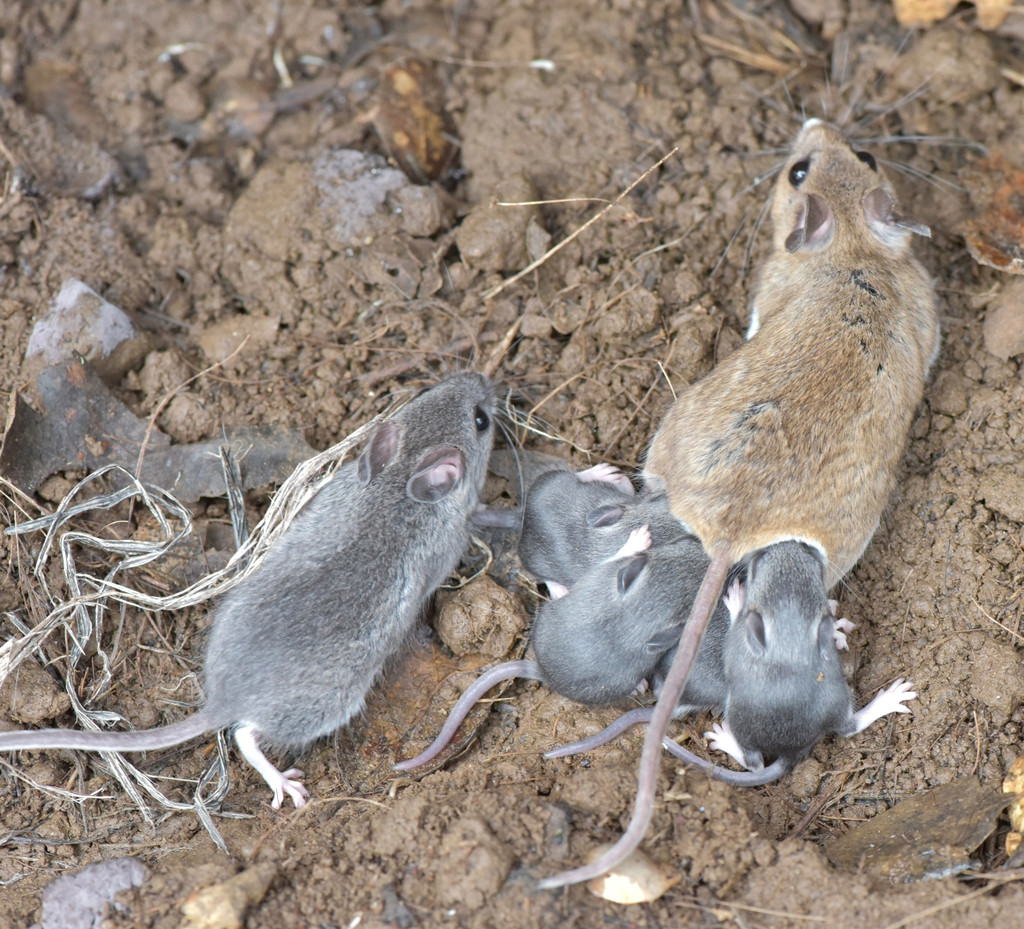
(c) Don Loarie, some rights reserved (CC BY) · licence
Family: Cricetidae · Class: Mammalia · Order: Rodentia
Conservation status: G5T1T2 S1S2
Peromyscus maniculatus anacapae (Anacapa Island Deer Mouse) is a California animal in the Cricetidae family.
The Anacapa Island deer mouse is a subspecies of the white-footed deer mouse endemic to Anacapa Island, located approximately 19 kilometers (12 miles) off the coast of southern California. This small rodent measures 75-90 mm (3.0-3.5 inches) in head-body length, with a tail length of 65-85 mm (2.6-3.3 inches). The dorsal pelage is grayish-brown to russet-brown, while the ventral surface is white to pale gray. The tail is distinctly bicolored, dark above and light below, with a well-defined line of demarcation. The subspecies is restricted exclusively to Anacapa Island, the smallest of the four northern Channel Islands within Channel Islands National Park. Anacapa Island comprises three islets covering approximately 699 acres (283 hectares) and reaches a maximum elevation of 277 meters (908 feet). The mouse's range is limited to this single island system, making it one of California's most geographically restricted mammalian subspecies. Anacapa Island deer mice inhabit diverse vegetation communities across the island's terrain, including coastal sage scrub, grasslands dominated by introduced annual grasses, and rocky areas with sparse vegetation. The species utilizes both native plant communities and areas modified by historical human activities. They construct nests in rock crevices, under dense vegetation, and in abandoned seabird burrows. The island's Mediterranean climate provides mild, wet winters and dry summers, creating seasonal variation in habitat conditions and resource availability. These mice are primarily nocturnal and exhibit omnivorous feeding habits characteristic of Peromyscus species. Their diet includes seeds from native and non-native plants, green vegetation, arthropods, and occasionally seabird eggs and chicks. According to federal documents, the endemic deer mouse population has shown interactions with nesting seabirds, particularly the Xantus's murrelet, where mice may prey on eggs (USFWS 2005). Breeding occurs throughout the year with peak activity during spring and fall months. Females typically produce 2-4 litters annually, with litter sizes ranging from 2-5 young. The Anacapa Island deer mouse currently holds no federal listing status but carries a global rank of G5T1T2 and state rank of S1S2, indicating it is critically imperiled as a subspecies. The restricted range makes the population vulnerable to catastrophic events, habitat modification, and potential competition from invasive species. Historical human activities on Anacapa Island, including livestock grazing and introduced plant species, have altered the natural vegetation communities. Current threats include potential impacts from climate change, which could affect the island's vegetation patterns and water availability. The National Park Service manages the island's habitat, and ongoing seabird restoration efforts may benefit the deer mouse population by maintaining native ecosystem processes. Population monitoring and habitat protection within Channel Islands National Park are essential for the long-term conservation of this endemic subspecies.
Classification
Class: Mammalia · Order: Rodentia · Family: Cricetidae
Conservation status
G5T1T2 S1S2
Frequently asked questions
How is Peromyscus maniculatus anacapae classified?
Peromyscus maniculatus anacapae belongs to class Mammalia, order Rodentia, family Cricetidae.
What family does Peromyscus maniculatus anacapae belong to?
Peromyscus maniculatus anacapae is in the Cricetidae family.
Is Peromyscus maniculatus anacapae protected or of conservation concern?
Peromyscus maniculatus anacapae carries the following status: G5T1T2 S1S2.
What is Peromyscus maniculatus anacapae?
The Anacapa Island deer mouse is a subspecies of the white-footed deer mouse endemic to Anacapa Island, located approximately 19 kilometers (12 miles) off the coast of southern California.
Is Peromyscus maniculatus anacapae found in California?
Yes. Peromyscus maniculatus anacapae is recorded in California in The California Species Project's catalogue.
Related species
Other California species in the same genus, family, or bioregion.
Data from The California Species Project — 14,000+ California species with verified data from CNPS, CDFW, USFWS, and more.