Peromyscus maniculatus clementis
San Clemente Deer Mouse
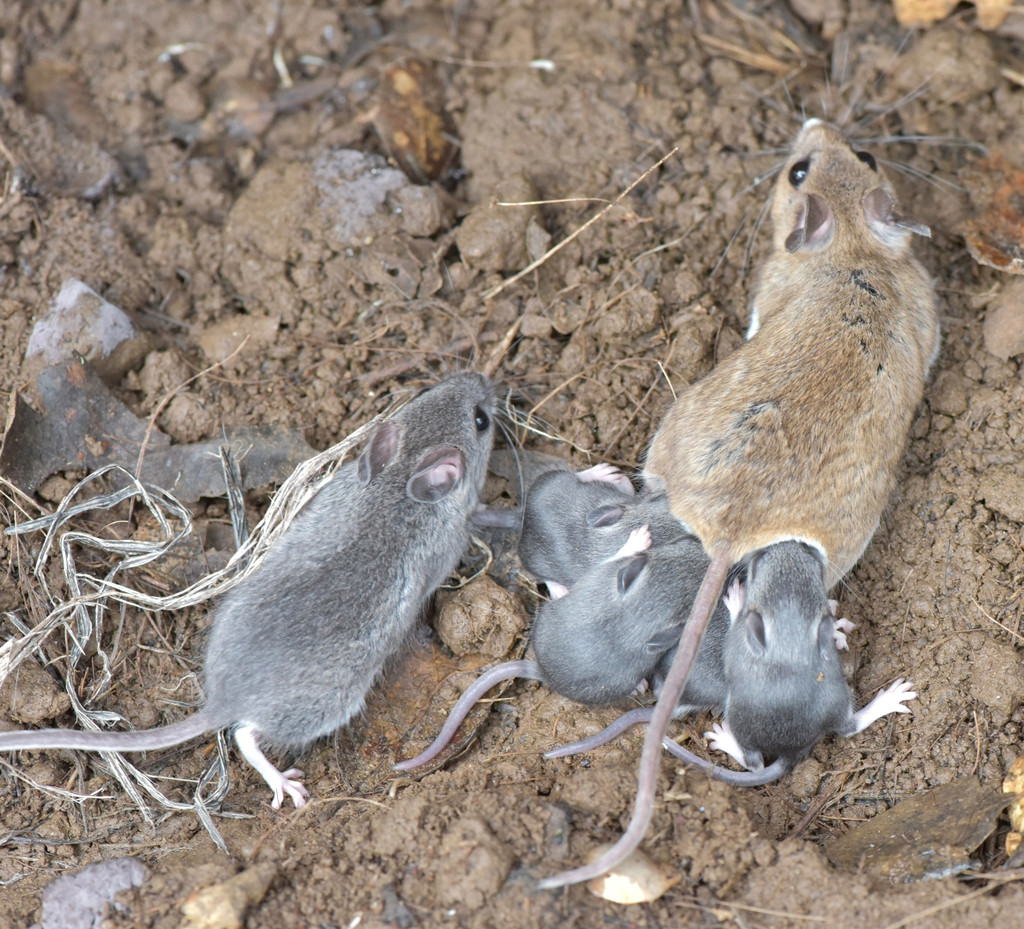
(c) Don Loarie, some rights reserved (CC BY) · licence
Family: Cricetidae · Class: Mammalia · Order: Rodentia
Conservation status: G5T1T2 S1S2
Peromyscus maniculatus clementis (San Clemente Deer Mouse) is a California animal in the Cricetidae family.
The San Clemente deer mouse is a subspecies of deer mouse endemic to San Clemente Island, located approximately 60 miles west of San Diego, California. This small rodent measures 150-210 mm (5.9-8.3 inches) in total length, including a tail of 65-105 mm (2.6-4.1 inches). The dorsal pelage is grayish-brown to rusty-brown, while the ventral surface is white to pale gray. The tail is distinctly bicolored, dark above and light below, with a slight tuft at the tip. San Clemente deer mice can be distinguished from mainland subspecies by their slightly larger size and darker coloration. The species is restricted entirely to San Clemente Island, the southernmost of California's Channel Islands. San Clemente Island covers approximately 147 square kilometers (57 square miles) and rises to 599 meters (1,965 feet) elevation. The mouse historically occupied most suitable habitats across the island but has experienced significant range contraction due to habitat degradation and introduced species. San Clemente deer mice inhabit a variety of plant communities across the island, including coastal sage scrub, grasslands, and woodland areas. They show preference for areas with dense vegetative cover, particularly shrub habitats dominated by coastal sage scrub species. The mice utilize rock crevices, dense vegetation, and burrows for nesting sites. They are found from sea level to the island's highest elevations, adapting to the Mediterranean climate characterized by mild, wet winters and warm, dry summers. These nocturnal rodents are omnivorous, feeding on seeds, green vegetation, fruits, and small invertebrates. Their diet varies seasonally based on resource availability, with seeds forming a larger proportion during dry periods and green plant material increasing after winter rains. Reproduction typically occurs from spring through fall, with females producing multiple litters per year when conditions are favorable. Gestation lasts approximately 23-24 days, and litter sizes range from 2-6 young. The species exhibits typical deer mouse behaviors including excellent climbing ability and strong territorial tendencies. The San Clemente deer mouse faces significant conservation challenges due to its restricted range and small population size, reflected in its Global/State Rank of G5T1T2 S1S2, indicating the subspecies is critically imperiled. Major threats include habitat degradation from past military activities, competition and predation from introduced species, and vulnerability to catastrophic events due to its island isolation. Feral goats, now removed from the island, caused extensive habitat damage through overgrazing. Current management efforts focus on habitat restoration, invasive species control, and population monitoring. The U.S. Navy, which administers San Clemente Island, works with wildlife agencies to implement conservation measures. Climate change poses additional long-term risks through altered precipitation patterns and increased fire frequency. The species' survival depends on continued habitat restoration efforts and protection from invasive species introductions.
Classification
Class: Mammalia · Order: Rodentia · Family: Cricetidae
Conservation status
G5T1T2 S1S2
Frequently asked questions
How is Peromyscus maniculatus clementis classified?
Peromyscus maniculatus clementis belongs to class Mammalia, order Rodentia, family Cricetidae.
What family does Peromyscus maniculatus clementis belong to?
Peromyscus maniculatus clementis is in the Cricetidae family.
Is Peromyscus maniculatus clementis protected or of conservation concern?
Peromyscus maniculatus clementis carries the following status: G5T1T2 S1S2.
What is Peromyscus maniculatus clementis?
The San Clemente deer mouse is a subspecies of deer mouse endemic to San Clemente Island, located approximately 60 miles west of San Diego, California.
Is Peromyscus maniculatus clementis found in California?
Yes. Peromyscus maniculatus clementis is recorded in California in The California Species Project's catalogue.
Related species
Other California species in the same genus, family, or bioregion.
Data from The California Species Project — 14,000+ California species with verified data from CNPS, CDFW, USFWS, and more.