Peromyscus sonoriensis
Western Deer Mouse
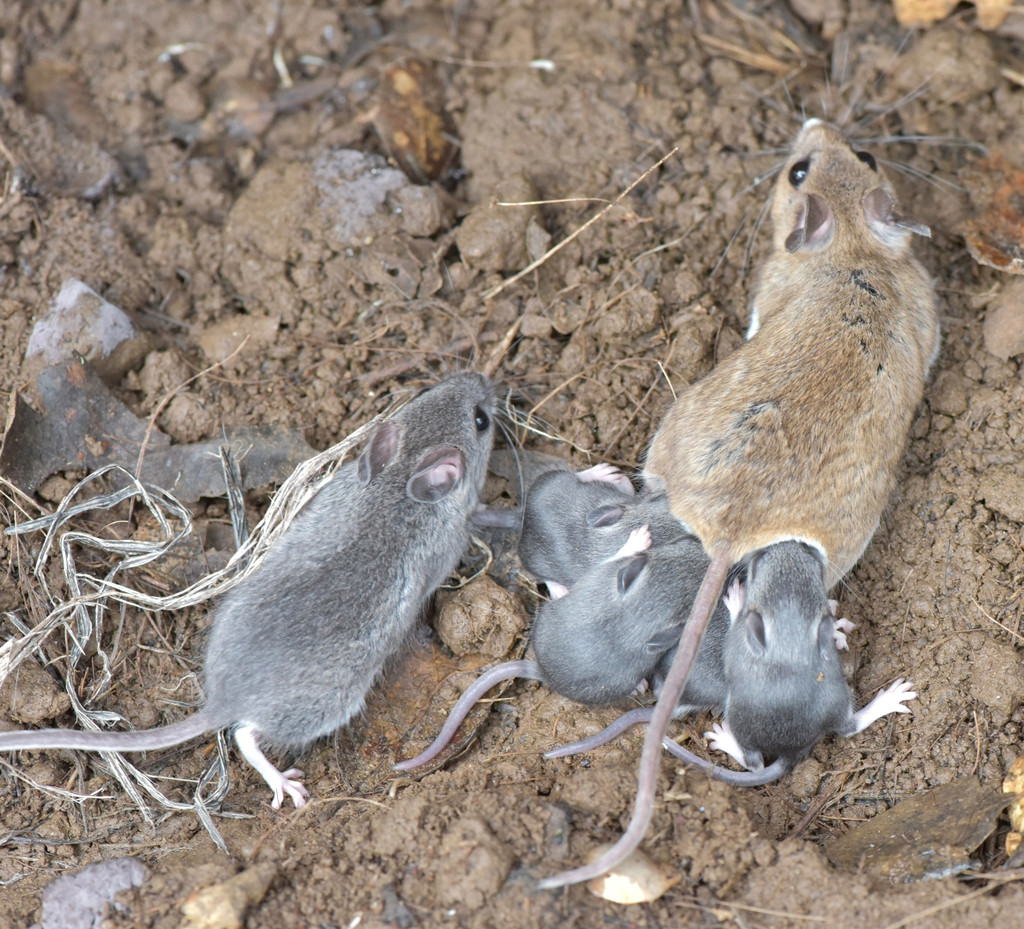
(c) Don Loarie, some rights reserved (CC BY) · licence
Family: Cricetidae · Class: Mammalia · Order: Rodentia
Peromyscus sonoriensis (Western Deer Mouse) is a California animal in the Cricetidae family.
The western deer mouse is a medium-sized rodent in the family Cricetidae, characterized by relatively large ears, prominent eyes, and a long, bi-colored tail. Adults typically measure 180-220 mm (7.1-8.7 inches) in total length, with the tail comprising approximately half of this measurement. Body mass ranges from 15-35 grams (0.5-1.2 ounces). The dorsal pelage is generally grayish-brown to reddish-brown, while the ventral surface is white or cream-colored. The tail displays distinct bi-coloration with dark upper surfaces and white undersides. Peromyscus sonoriensis occurs throughout much of the southwestern United States and northwestern Mexico. In California, the species is found primarily in the desert regions of the southeastern portion of the state, including the Mojave and Sonoran deserts. The range extends eastward through Arizona, New Mexico, and into western Texas, with populations also documented in Nevada, Utah, and Colorado. In Mexico, the species occurs in Sonora, Chihuahua, and northern Sinaloa. Western deer mice occupy diverse arid and semi-arid habitats, typically at elevations ranging from sea level to approximately 2,100 meters (6,900 feet). Primary habitat types include desert scrub communities dominated by creosote bush, sagebrush, pinyon-juniper woodlands, and chaparral. The species demonstrates considerable habitat flexibility, utilizing rocky outcrops, canyon walls, and areas with dense shrub cover. They often establish territories near permanent or seasonal water sources and show preference for areas with adequate cover from aerial predators. This nocturnal species exhibits typical cricetid behavior patterns, with peak activity occurring during darkness. Western deer mice are omnivorous, consuming seeds, fruits, green vegetation, and arthropods. Diet composition varies seasonally, with greater reliance on green plant material during spring and increased seed consumption in autumn and winter. The species demonstrates food-hoarding behavior, caching seeds and other non-perishable items in underground burrows or rock crevices. Breeding occurs primarily from spring through early autumn, with females producing 2-4 litters annually. Gestation lasts approximately 21-24 days, and litter sizes typically range from 2-6 young. Recent research has documented physiological responses to habitat disturbance in western deer mice. Studies conducted by the U.S. Fish and Wildlife Service found that individuals from heavily human-disturbed habitats exhibited lower white blood cell counts and elevated glucocorticoid levels in hair samples compared to those from less disturbed areas, suggesting chronic stress responses to environmental degradation. While Peromyscus sonoriensis is not federally listed as threatened or endangered, habitat modification and urban development represent ongoing concerns throughout portions of its range. The species' adaptability to various habitat conditions has helped maintain stable populations across most of its distribution, though localized declines may occur in areas experiencing intensive development or habitat fragmentation.
Classification
Class: Mammalia · Order: Rodentia · Family: Cricetidae
Frequently asked questions
How is Peromyscus sonoriensis classified?
Peromyscus sonoriensis belongs to class Mammalia, order Rodentia, family Cricetidae.
What family does Peromyscus sonoriensis belong to?
Peromyscus sonoriensis is in the Cricetidae family.
What is Peromyscus sonoriensis?
The western deer mouse is a medium-sized rodent in the family Cricetidae, characterized by relatively large ears, prominent eyes, and a long, bi-colored tail.
Is Peromyscus sonoriensis found in California?
Yes. Peromyscus sonoriensis is recorded in California in The California Species Project's catalogue.
Related species
Other California species in the same genus, family, or bioregion.
Data from The California Species Project — 14,000+ California species with verified data from CNPS, CDFW, USFWS, and more.