Petrophila jaliscalis
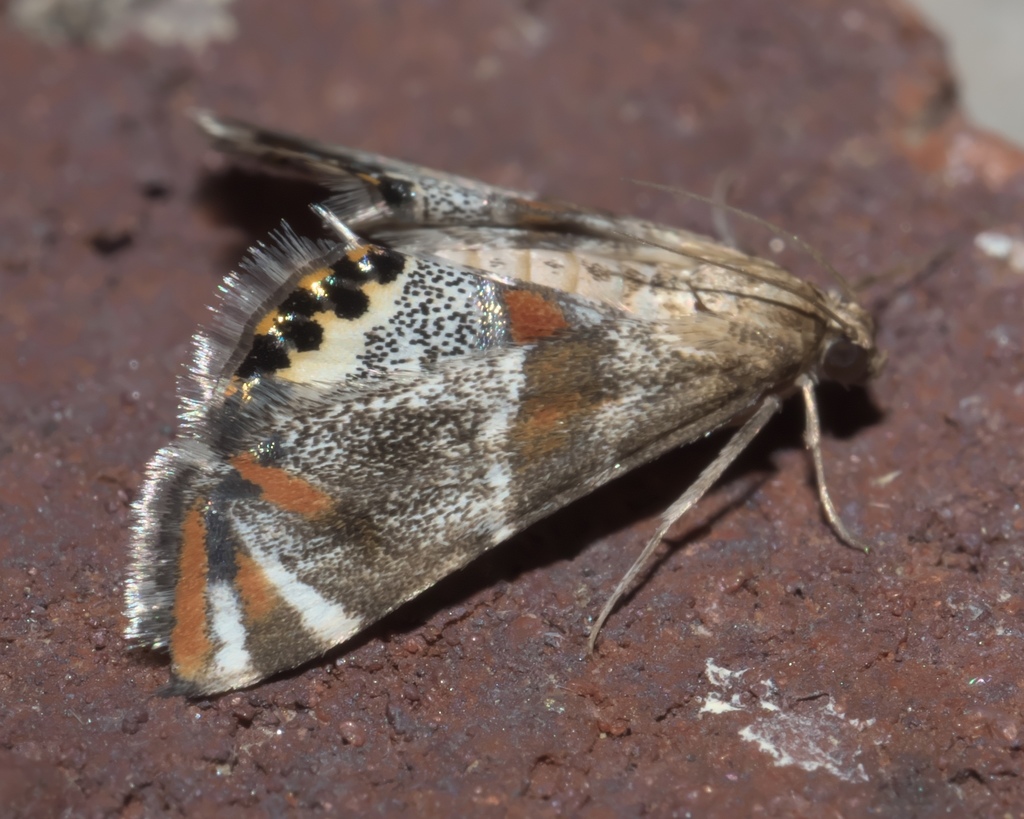
(c) Robert Webster, some rights reserved (CC BY-SA) · licence
Family: Crambidae · Class: Insecta · Order: Lepidoptera
Petrophila jaliscalis is a California animal in the Crambidae family.
Petrophila jaliscalis is a small aquatic moth in the family Crambidae, subfamily Acentropinae. This species belongs to a specialized group of moths whose larvae are adapted for aquatic life. Adults typically measure 15-20 mm in wingspan, with forewings displaying muted brown and gray coloration patterns that provide camouflage against rocky substrates. The wings show subtle banding and markings characteristic of the Petrophila genus. Males can be distinguished from females by their more prominent antennae and slightly smaller size. The range and distribution of Petrophila jaliscalis remains poorly documented in the scientific literature. The species name suggests potential origins or occurrence in the Jalisco region of Mexico, though confirmation of its current distribution requires further taxonomic research. No verified records of this species occurring in California have been located in current databases or recent entomological surveys. Like other members of the genus Petrophila, this species likely inhabits areas near flowing water systems where larvae can develop in aquatic environments. Typical habitat for related species includes rocky streams, seepages, and areas with consistent moisture where algae and aquatic vegetation grow. Adults are typically found near these water sources during emergence periods. The life cycle follows the pattern typical of aquatic Crambidae moths. Larvae are presumed to be semi-aquatic, likely feeding on algae, moss, or organic matter in wet environments. The caterpillars construct portable cases or silk shelters that allow them to survive underwater for extended periods. Adult moths are generally active during twilight hours and are attracted to lights near water sources. Mating and egg-laying occur near suitable larval habitat, with females depositing eggs on or near water surfaces. The conservation status of Petrophila jaliscalis cannot be accurately assessed due to limited taxonomic and distributional data. The species does not appear on federal or California state endangered species lists, and no recent population assessments have been conducted. This data gap represents a significant challenge for conservation planning, as many small moths in the family Crambidae remain understudied despite potential vulnerability to habitat modification and climate change. The taxonomic validity and current status of Petrophila jaliscalis requires verification through modern systematic research. Some historical species names in this genus may represent synonyms of other taxa or require nomenclatural revision. Without confirmed specimens and recent field studies, the species' occurrence, habitat requirements, and conservation needs remain uncertain. This highlights the broader challenge of documenting and protecting lesser-known invertebrate species that may face threats before their basic biology is understood.
Classification
Class: Insecta · Order: Lepidoptera · Family: Crambidae
Frequently asked questions
How is Petrophila jaliscalis classified?
Petrophila jaliscalis belongs to class Insecta, order Lepidoptera, family Crambidae.
What family does Petrophila jaliscalis belong to?
Petrophila jaliscalis is in the Crambidae family.
What is Petrophila jaliscalis?
Petrophila jaliscalis is a small aquatic moth in the family Crambidae, subfamily Acentropinae.
Is Petrophila jaliscalis found in California?
Yes. Petrophila jaliscalis is recorded in California in The California Species Project's catalogue.
Related species
Other California species in the same genus, family, or bioregion.
Data from The California Species Project — 14,000+ California species with verified data from CNPS, CDFW, USFWS, and more.