Phaeoura mexicanaria
Pine Looper
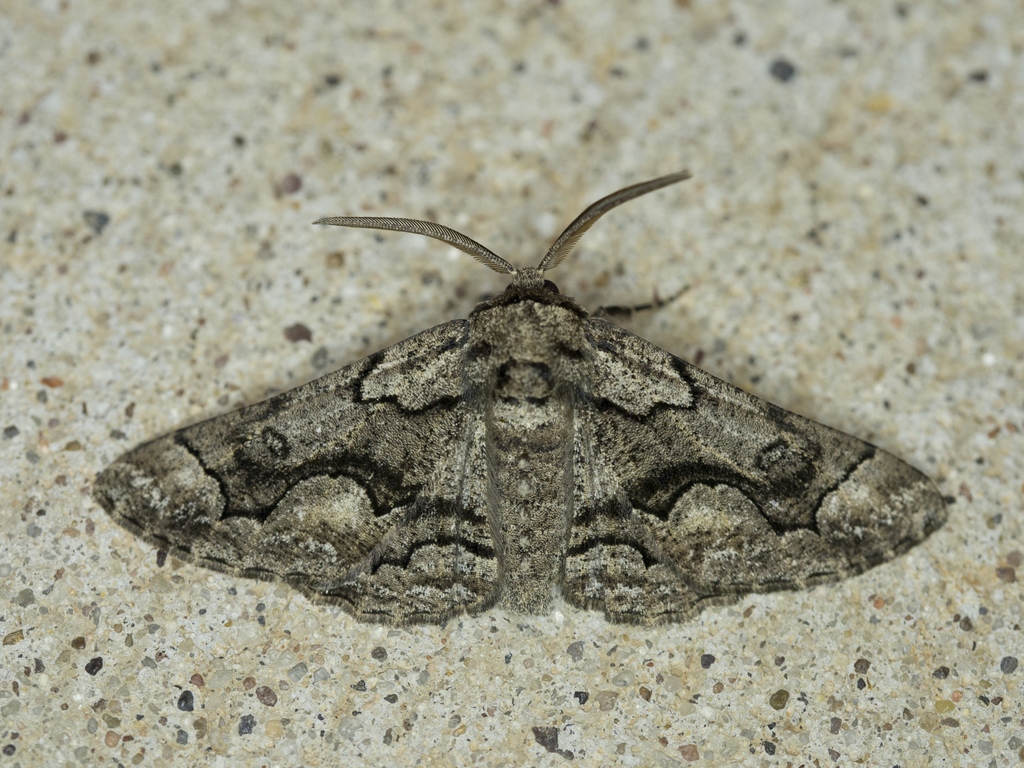
no rights reserved · CC0
Family: Geometridae · Class: Insecta · Order: Lepidoptera
Phaeoura mexicanaria (Pine Looper) is a California animal in the Geometridae family.
Phaeoura mexicanaria, commonly known as the Pine Looper, is a geometrid moth in the family Geometridae. Adult moths typically measure 25 to 35 mm in wingspan, with forewings displaying muted gray-brown coloration marked by darker transverse lines. The hindwings are lighter, often pale gray to whitish. Males can be distinguished from females by their more feathered antennae and slightly smaller size. Like other geometrid moths, Pine Loopers hold their wings horizontally when at rest, creating a triangular silhouette. The Pine Looper occurs across western North America, with populations documented from British Columbia south through California and into Mexico. Within California, the species is found primarily in mountainous regions where suitable host plants occur, including the Sierra Nevada, Cascade Range, and coastal mountain ranges. The distribution appears to follow the natural range of pine forests throughout the state. This species inhabits coniferous forests, particularly those dominated by pine species. Pine Loopers are typically found at elevations ranging from 1,000 to 3,000 meters, where pine forests are well-established. Adults are attracted to areas with mature pine stands that provide suitable oviposition sites. The species shows a preference for forest edges and openings where host plants receive adequate sunlight. As the common name suggests, Pine Looper larvae are specialized feeders on pine needles. The caterpillars exhibit the characteristic looping locomotion typical of geometrid larvae, arching their bodies as they move along branches. Larvae are typically green to brown, providing camouflage against pine needles and bark. The species is univoltine in most locations, with adults emerging during summer months, typically from June through August. Females deposit eggs on pine needles, and larvae develop through several instars before pupating in the soil or leaf litter beneath host trees. Overwintering occurs in the pupal stage. Adult Pine Loopers are nocturnal, with peak activity occurring during evening and nighttime hours. Males are attracted to artificial lights and can be collected at light traps. Mating typically occurs soon after adult emergence, with females beginning egg-laying within days of copulation. The species serves as prey for various forest-dwelling predators, including birds, spiders, and other arthropods. The Pine Looper does not currently hold any special conservation status at federal or state levels. However, like many forest-dependent species, populations may be influenced by forest management practices, wildfire patterns, and climate change effects on montane pine ecosystems. Periodic population fluctuations are typical for many geometrid moths, with numbers varying based on environmental conditions and host plant availability. The species' relatively broad distribution across western pine forests suggests stable population status, though comprehensive population monitoring data are limited.
Classification
Class: Insecta · Order: Lepidoptera · Family: Geometridae
Frequently asked questions
How is Phaeoura mexicanaria classified?
Phaeoura mexicanaria belongs to class Insecta, order Lepidoptera, family Geometridae.
What family does Phaeoura mexicanaria belong to?
Phaeoura mexicanaria is in the Geometridae family.
What is Phaeoura mexicanaria?
Phaeoura mexicanaria, commonly known as the Pine Looper, is a geometrid moth in the family Geometridae.
Is Phaeoura mexicanaria found in California?
Yes. Phaeoura mexicanaria is recorded in California in The California Species Project's catalogue.
Related species
Other California species in the same genus, family, or bioregion.
Data from The California Species Project — 14,000+ California species with verified data from CNPS, CDFW, USFWS, and more.