Phalacrocorax urile
Red-faced Cormorant
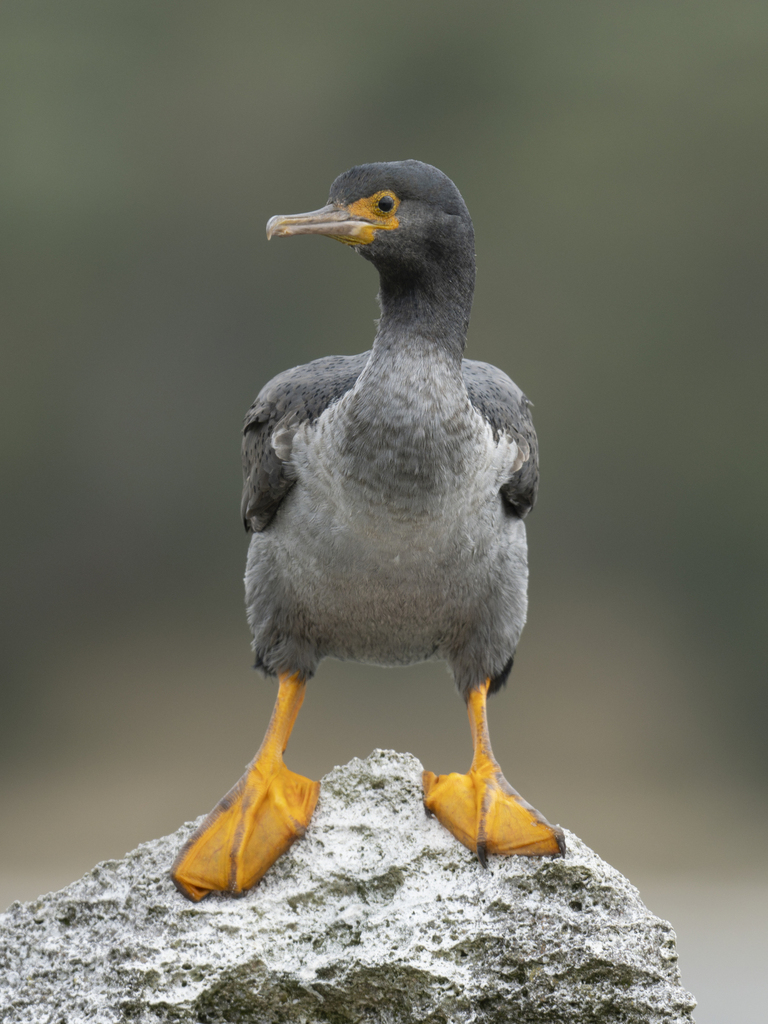
(c) Saryu Mae 前 朝琉, some rights reserved (CC BY) · licence
Family: Phalacrocoracidae · Class: Aves · Order: Suliformes
Phalacrocorax urile (Red-faced Cormorant) is a California animal in the Phalacrocoracidae family.
The Red-faced Cormorant is a marine diving bird endemic to the northern Pacific Ocean. Adults measure approximately 70 to 80 cm (28 to 31 inches) in length with a wingspan of 116 to 123 cm (46 to 48 inches). During breeding season, the species displays distinctive bright red facial skin extending from the base of the bill to around the eye, contrasting with its dark, iridescent plumage that appears greenish-black with a metallic sheen. The bill is dark and relatively straight, and breeding adults develop white patches on the flanks and thighs. Non-breeding individuals show duller facial coloration and lack the white patches. This species is often confused with the closely related Pelagic Cormorant, though Red-faced Cormorants are slightly larger and lack the Pelagic Cormorant's prominent white hip patches during breeding season. The Red-faced Cormorant has the most restricted range of North American cormorants, breeding in a narrow latitudinal band from the northern Sea of Japan, through the Kuril Islands, across the Aleutian Islands, Pribilof Islands, and extending into the southeastern Gulf of Alaska (Birds of the World). In North American waters, the species occurs throughout the Aleutian archipelago and Pribilof Islands, with some populations reaching coastal Alaska. The global population is considered stable with a NatureServe ranking of G5 (NatureServe). This exclusively marine species inhabits rocky coastlines, cliff faces, and offshore waters of the subarctic and boreal zones. Red-faced Cormorants prefer steep, inaccessible cliff sites for nesting, often selecting ledges and crevices on sea-facing rock faces. The species ventures onto land only to breed or roost, remaining within a few meters of the ocean's edge. It frequents both inshore coastal waters and areas farther offshore, particularly around continental shelf regions where prey is abundant. Red-faced Cormorants are pursuit divers that feed primarily on benthic fish and invertebrates. They capture prey through underwater swimming, using their webbed feet for propulsion while pursuing bottom-dwelling organisms. The species exhibits less gregarious behavior compared to other cormorants, often nesting in small colonies or as isolated pairs rather than large aggregations. Breeding typically occurs from May through August, with pairs constructing nests of seaweed, grass, and other marine vegetation on narrow cliff ledges. Females lay 2 to 4 pale blue eggs, with both parents sharing incubation duties for approximately 28 to 31 days. The Red-faced Cormorant is designated as a Bird of Conservation Concern by the U.S. Fish and Wildlife Service as of 2021, reflecting concerns about population monitoring and potential threats in its remote range. The species faces challenges from climate change effects on marine prey availability, potential oil spill impacts in shipping routes, and human disturbance at breeding colonies. Its shy nature and occupation of remote, inaccessible nesting sites have limited comprehensive population studies, making it one of the least understood seabirds of the North Pacific region. The species is protected under the Migratory Bird Treaty Act between the United States and Russia.
Classification
Class: Aves · Order: Suliformes · Family: Phalacrocoracidae
Frequently asked questions
How is Phalacrocorax urile classified?
Phalacrocorax urile belongs to class Aves, order Suliformes, family Phalacrocoracidae.
What family does Phalacrocorax urile belong to?
Phalacrocorax urile is in the Phalacrocoracidae family.
What is Phalacrocorax urile?
The Red-faced Cormorant is a marine diving bird endemic to the northern Pacific Ocean.
Is Phalacrocorax urile found in California?
Yes. Phalacrocorax urile is recorded in California in The California Species Project's catalogue.
Related species
Other California species in the same genus, family, or bioregion.
Data from The California Species Project — 14,000+ California species with verified data from CNPS, CDFW, USFWS, and more.