Phalangium opilio
European Harvestman
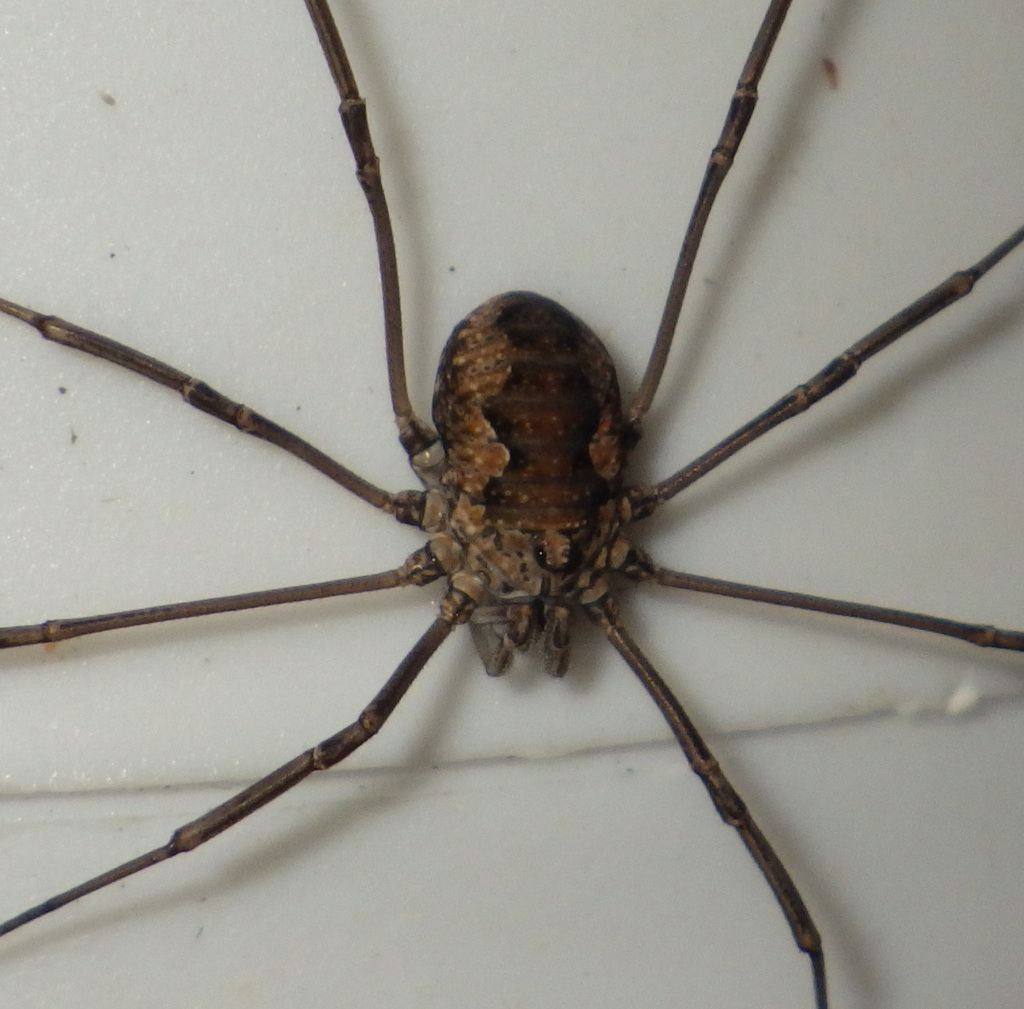
no rights reserved · CC0
Family: Phalangiidae · Class: Arachnida · Order: Opiliones
Phalangium opilio (European Harvestman) is a California animal in the Phalangiidae family.
The European harvestman is a medium-sized arachnid measuring 4-9 millimeters in body length, with extremely long, thin legs that can span up to 160 millimeters. The oval-shaped body, called the opisthosoma, is typically gray to brown with darker mottling and a distinctive darker saddle-shaped marking on the dorsal surface. Unlike spiders, harvestmen have a fused body region without a distinct waist, and their legs detach easily when grasped by predators. Males are generally smaller than females and possess distinctive enlarged chelicerae (mouthparts) used during mating. Native to Europe, this species was accidentally introduced to North America and has become widely established across the continent, including throughout California. In California, populations occur from sea level to moderate elevations in both urban and natural environments. The species has spread throughout the state's diverse regions, from coastal areas to inland valleys and foothills. European harvestmen inhabit diverse habitats including gardens, parks, agricultural areas, woodlands, and grasslands. They are commonly found under rocks, logs, leaf litter, and other debris during daylight hours. The species shows particular affinity for areas with adequate moisture and abundant prey. They can tolerate a wide range of environmental conditions, contributing to their successful establishment as an introduced species. As nocturnal predators, European harvestmen emerge at night to hunt small arthropods including mites, aphids, flies, and other soft-bodied invertebrates. They use their long legs to probe crevices and capture prey with their chelicerae. Unlike spiders, they do not produce silk or venom, relying instead on their mobility and opportunistic feeding behavior. Mating occurs during late summer and fall, with females depositing eggs in soil crevices or under protective cover. The species overwinters as eggs, with juveniles emerging the following spring and molting several times before reaching maturity. Phalangium opilio is not listed under state or federal endangered species legislation, as it is a non-native species that has successfully colonized new habitats. As an introduced species, it may compete with native harvestmen and other arthropod predators, though specific ecological impacts have not been extensively studied. The species' adaptability and broad habitat tolerance have enabled it to maintain stable populations throughout its introduced range. According to habitat planning documents, introduced harvestmen like P. opilio may sometimes target beneficial insects, potentially affecting native arthropod communities (Xerces Society 2018). However, they also contribute to pest control by consuming various arthropod prey species in agricultural and urban environments.
Classification
Class: Arachnida · Order: Opiliones · Family: Phalangiidae
Frequently asked questions
How is Phalangium opilio classified?
Phalangium opilio belongs to class Arachnida, order Opiliones, family Phalangiidae.
What family does Phalangium opilio belong to?
Phalangium opilio is in the Phalangiidae family.
What is Phalangium opilio?
The European harvestman is a medium-sized arachnid measuring 4-9 millimeters in body length, with extremely long, thin legs that can span up to 160 millimeters.
Is Phalangium opilio found in California?
Yes. Phalangium opilio is recorded in California in The California Species Project's catalogue.
More California species
This species has no close relatives in our California data — here are other species to explore.
Data from The California Species Project — 14,000+ California species with verified data from CNPS, CDFW, USFWS, and more.