Phalaropus lobatus
Red-necked Phalarope
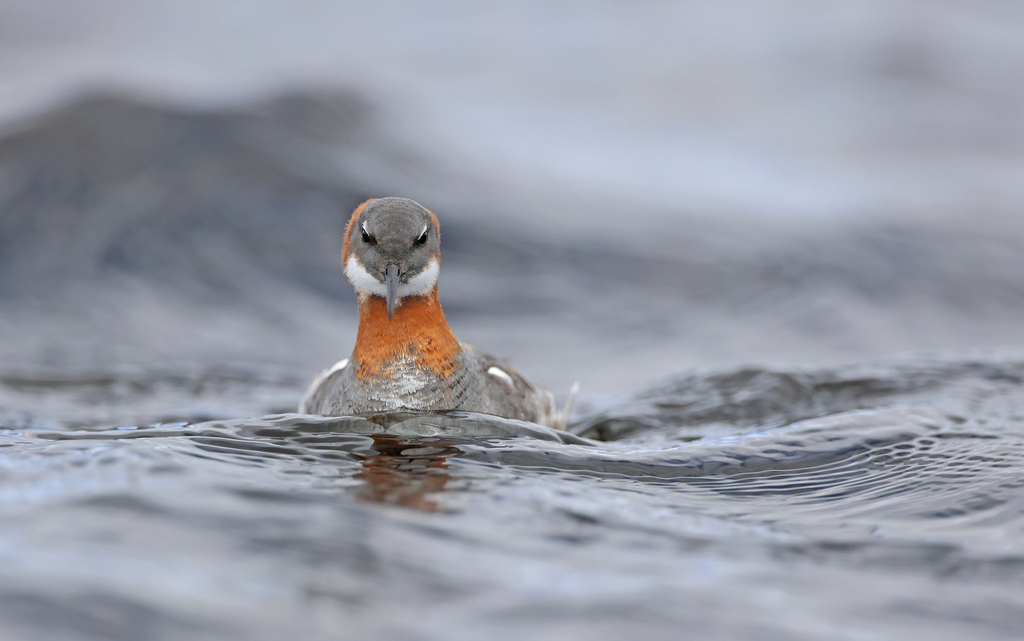
(c) Christoph Moning, some rights reserved (CC BY) · licence
Family: Scolopacidae · Class: Aves · Order: Charadriiformes
Phalaropus lobatus (Red-necked Phalarope) is a California animal in the Scolopacidae family.
The Red-necked Phalarope is a small, distinctive shorebird measuring 18-19 cm (7-7.5 inches) in length with a wingspan of 30-34 cm (12-13 inches). During breeding season, females display more vibrant plumage than males, with a bright rufous-red neck patch, dark gray head and back, and white underparts with dark streaking on the breast. Males exhibit duller coloration with a less pronounced neck patch. In winter, both sexes show gray upperparts and white underparts with a distinctive dark ear patch. The species has a thin, needle-like bill and lobed toes adapted for swimming. The Red-necked Phalarope breeds across the Arctic and subarctic regions of North America, Europe, and Asia. In North America, the breeding range extends from Alaska across northern Canada. During migration and winter, the species occurs along both Pacific and Atlantic coasts. In California, Red-necked Phalaropes are regular migrants and winter visitors, occurring primarily along the coast and at inland lakes and reservoirs. They are most commonly observed during spring migration from April to May and fall migration from July to October. During breeding season, Red-necked Phalaropes inhabit tundra ponds, marshes, and wet meadows in Arctic and subarctic regions. Outside the breeding season, they are highly pelagic, spending most of their time on open ocean waters where they feed in areas of upwelling and high productivity. In California, they utilize coastal waters, bays, estuaries, and occasionally inland lakes during migration and winter. The species shows specialized adaptation to marine environments, being one of the few shorebirds that regularly feeds while swimming. Red-necked Phalaropes exhibit reversed sexual roles, with females being more aggressive and colorful than males. Females compete for males and may mate with multiple partners, while males assume primary responsibility for incubation and chick care. Nesting occurs from May to July, with females laying 3-4 olive-colored eggs with dark markings in a shallow depression lined with grass and moss. Incubation lasts 18-20 days. The species feeds primarily on small crustaceans, marine worms, insects, and plankton. Their feeding behavior is distinctive, involving spinning movements on the water surface to create small whirlpools that bring prey items to the surface. The Red-necked Phalarope is not federally listed and maintains stable global populations, though like many Arctic-breeding species, it faces potential challenges from climate change affecting breeding habitat. The species is classified as Least Concern by the International Union for Conservation of Nature. Population estimates suggest approximately 4 million individuals worldwide. In California, the species remains a regular migrant and winter visitor with no significant conservation concerns. Climate change may affect the timing of migration and availability of marine food sources, but current populations appear stable throughout the species' range.
Classification
Class: Aves · Order: Charadriiformes · Family: Scolopacidae
Frequently asked questions
How is Phalaropus lobatus classified?
Phalaropus lobatus belongs to class Aves, order Charadriiformes, family Scolopacidae.
What family does Phalaropus lobatus belong to?
Phalaropus lobatus is in the Scolopacidae family.
What is Phalaropus lobatus?
The Red-necked Phalarope is a small, distinctive shorebird measuring 18-19 cm (7-7.5 inches) in length with a wingspan of 30-34 cm (12-13 inches).
Is Phalaropus lobatus found in California?
Yes. Phalaropus lobatus is recorded in California in The California Species Project's catalogue.
Related species
Other California species in the same genus, family, or bioregion.
Data from The California Species Project — 14,000+ California species with verified data from CNPS, CDFW, USFWS, and more.