Phaneroptera nana
Mediterranean Katydid
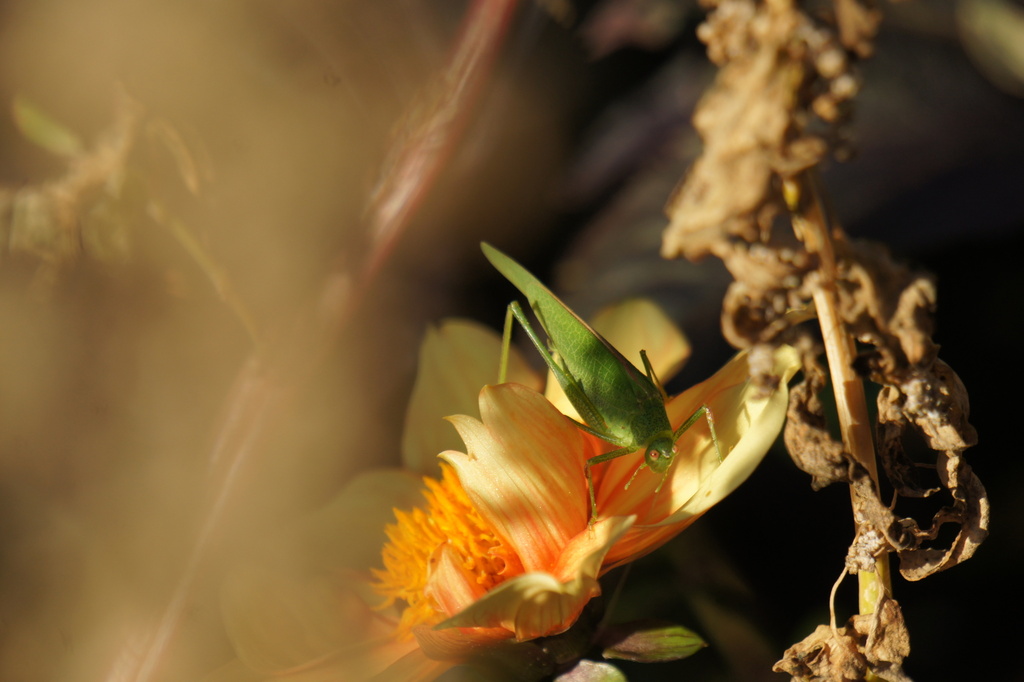
(c) Alex Press, some rights reserved (CC BY) · licence
Family: Tettigoniidae · Class: Insecta · Order: Orthoptera
Phaneroptera nana (Mediterranean Katydid) is a California animal in the Tettigoniidae family.
The Mediterranean Katydid is a small orthopteran insect in the family Tettigoniidae, subfamily Phaneropterinae. Adults typically measure 12-16 mm (0.47-0.63 inches) in body length, with females slightly larger than males. The species displays a bright green coloration that provides camouflage among vegetation, with translucent to pale green wings. Males possess distinctive cerci (tail appendages) that curve inward, while females have a straight, sword-like ovipositor used for egg-laying. The antennae are long and thread-like, often exceeding body length. Phaneroptera nana is not native to North America but has established populations in several regions. The species is documented in California, where it has been recorded in various counties (BugGuide). As an introduced species, its current distribution in California may be expanding, though comprehensive range mapping remains incomplete. The Mediterranean Katydid originates from southern Europe and the Mediterranean region, as suggested by its common name. This katydid inhabits diverse vegetation types, showing particular affinity for shrublands, gardens, and areas with dense herbaceous growth. The species occurs from sea level to moderate elevations, adapting to both natural and human-modified habitats. Mediterranean Katydids are commonly found on broad-leaved plants and shrubs, where they feed and seek shelter. Urban and suburban environments with ornamental plantings appear to provide suitable habitat. Mediterranean Katydids are primarily herbivorous, feeding on leaves, flowers, and soft plant tissues. Males produce sounds through stridulation, rubbing specialized wing structures together to create calls used in mate attraction and territorial communication. The species is most active during evening and nighttime hours. Reproduction typically involves females inserting eggs into plant stems or soil using their ovipositor. Development proceeds through several nymphal stages before reaching sexual maturity. As a non-native species in California, Phaneroptera nana does not have formal conservation status or protection under state or federal legislation. The species is not listed under the Endangered Species Act and does not appear on California Department of Fish and Wildlife sensitive species lists. However, like other introduced orthopterans, its establishment and potential spread may have ecological implications for native insect communities. Monitoring of non-native katydid populations is generally limited, and comprehensive data on population trends, density, or ecological impacts in California ecosystems is lacking. The species' adaptation to human-modified habitats suggests it may continue to expand its range in suitable California environments, particularly in areas with Mediterranean-type climates that resemble its native range.
Classification
Class: Insecta · Order: Orthoptera · Family: Tettigoniidae
Frequently asked questions
How is Phaneroptera nana classified?
Phaneroptera nana belongs to class Insecta, order Orthoptera, family Tettigoniidae.
What family does Phaneroptera nana belong to?
Phaneroptera nana is in the Tettigoniidae family.
What is Phaneroptera nana?
The Mediterranean Katydid is a small orthopteran insect in the family Tettigoniidae, subfamily Phaneropterinae.
Is Phaneroptera nana found in California?
Yes. Phaneroptera nana is recorded in California in The California Species Project's catalogue.
Related species
Other California species in the same genus, family, or bioregion.
Data from The California Species Project — 14,000+ California species with verified data from CNPS, CDFW, USFWS, and more.