Phaneta delphinus
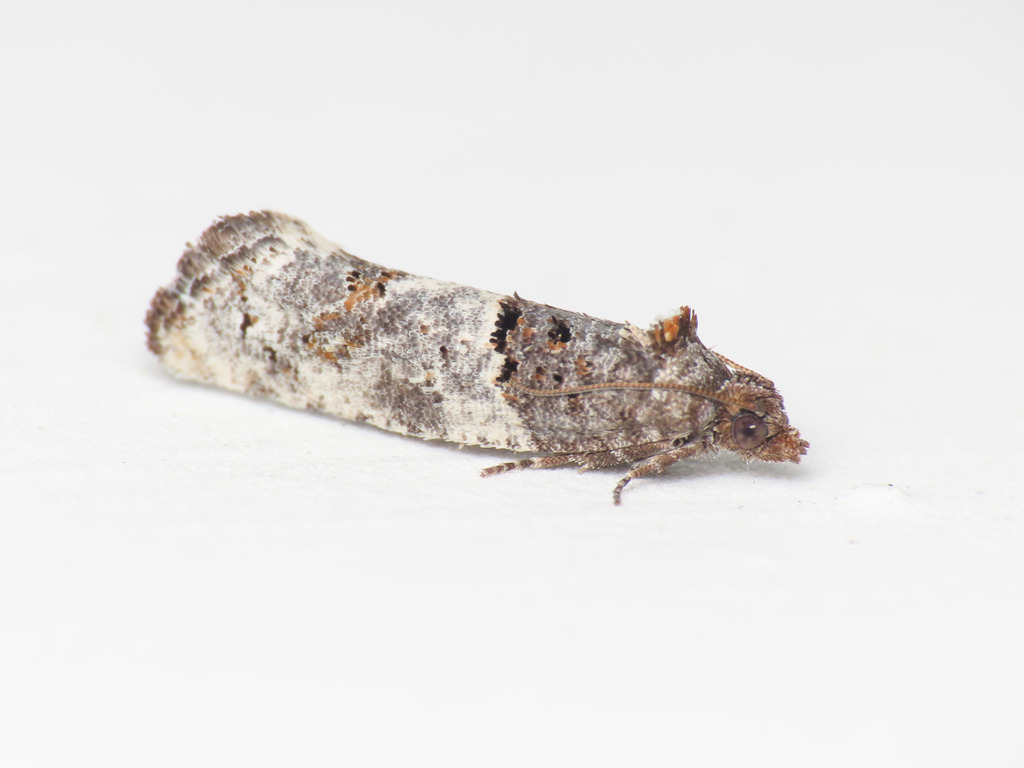
(c) Emanuele Santarelli, some rights reserved (CC BY-SA) · licence
Family: Tortricidae · Class: Insecta · Order: Lepidoptera
Phaneta delphinus is a California animal in the Tortricidae family.
Phaneta delphinus is a small moth in the family Tortricidae, commonly known as tortrix moths or leafroller moths. This species represents one of numerous microlepidoptera found in California's diverse ecosystems. As a member of the genus Phaneta, this moth likely exhibits the typical characteristics of tortricid moths, including forewings that are broader than the hindwings and a distinctive wing posture when at rest. Adult Phaneta delphinus moths typically measure 8 to 12 mm in forewing length, consistent with other species in the genus. The forewings generally display cryptic coloration patterns that provide camouflage when the moth is resting on bark or vegetation. Like other tortricids, the species likely exhibits sexual dimorphism, with males possessing more feathery antennae adapted for detecting female pheromones. The hindwings are typically lighter in coloration and may be nearly transparent in some individuals. The range and distribution of Phaneta delphinus in California remains poorly documented in the scientific literature. Many tortricid species have restricted ranges due to their specific host plant requirements and habitat preferences. Without verified occurrence records, the precise distribution of this species within the state cannot be definitively described. The species may occur in montane or coastal environments where suitable host plants are present. Habitat requirements for Phaneta delphinus are not well-documented in available sources. Most Phaneta species are associated with specific plant communities and require particular host plants for larval development. The species likely inhabits areas where its host plants occur, potentially including woodland, chaparral, or grassland environments. Elevation preferences and microhabitat requirements remain unknown without additional field studies and taxonomic research. The life history and ecology of Phaneta delphinus follows the typical tortricid pattern of complete metamorphosis. Larvae are likely internal feeders, developing within rolled leaves, stems, or other plant tissues of their host species. The larval stage is probably the most destructive phase, as caterpillars feed on plant material and may create characteristic feeding damage. Adults are likely active during specific seasons, with flight periods coinciding with host plant phenology and favorable environmental conditions. Mating behavior probably involves pheromone communication, with females releasing chemical signals to attract males. The conservation status of Phaneta delphinus is not established through formal assessment by state or federal agencies. The species lacks federal or state listing status, and no Global or State ranks have been assigned. This absence of conservation ranking may reflect limited taxonomic knowledge, restricted distribution, or insufficient survey effort rather than actual conservation security. Many microlepidoptera species remain poorly studied, and their conservation needs are often unknown. Without population data, trend information, or threat assessments, the species' conservation requirements cannot be adequately evaluated. Future research focusing on distribution mapping, host plant associations, and population monitoring would be necessary to assess any conservation concerns for this species.
Classification
Class: Insecta · Order: Lepidoptera · Family: Tortricidae
Frequently asked questions
How is Phaneta delphinus classified?
Phaneta delphinus belongs to class Insecta, order Lepidoptera, family Tortricidae.
What family does Phaneta delphinus belong to?
Phaneta delphinus is in the Tortricidae family.
What is Phaneta delphinus?
Phaneta delphinus is a small moth in the family Tortricidae, commonly known as tortrix moths or leafroller moths.
Is Phaneta delphinus found in California?
Yes. Phaneta delphinus is recorded in California in The California Species Project's catalogue.
Related species
Other California species in the same genus, family, or bioregion.
Data from The California Species Project — 14,000+ California species with verified data from CNPS, CDFW, USFWS, and more.