Phaneta mormonensis
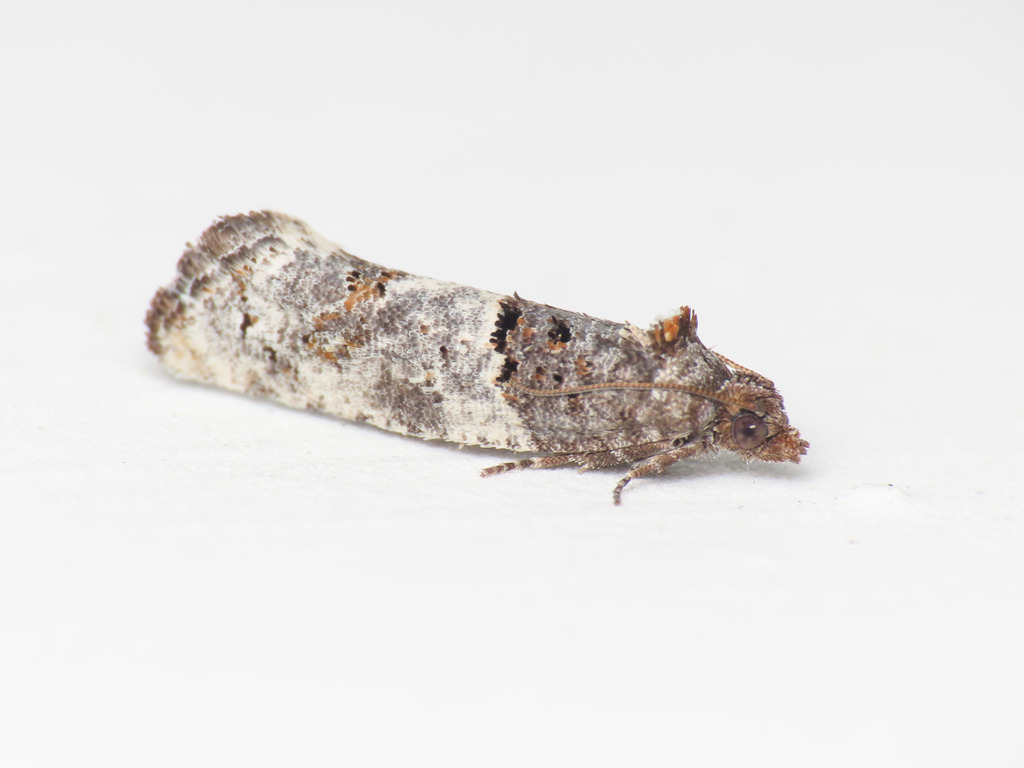
(c) Emanuele Santarelli, some rights reserved (CC BY-SA) · licence
Family: Tortricidae · Class: Insecta · Order: Lepidoptera
Phaneta mormonensis is a California animal in the Tortricidae family.
Phaneta mormonensis is a small moth in the family Tortricidae, commonly known as leafroller moths. As a member of this diverse family, adults typically measure 8-12 mm in wingspan, with forewings displaying mottled brown and gray patterns characteristic of many tortricid species. The forewings often exhibit subtle banding or reticulated patterns that provide camouflage when at rest on bark or vegetation. Like other Phaneta species, the hindwings are typically paler, ranging from light gray to nearly white with minimal markings. The species' distribution appears to be centered in western North America, with the specific epithet "mormonensis" suggesting potential associations with the Great Basin region historically inhabited by Mormon settlers. However, detailed range information for this species remains limited in current literature. The moth likely occurs in arid to semi-arid habitats typical of the intermountain west. Habitat preferences for P. mormonensis are not well-documented in available sources, but based on related Phaneta species, this moth likely inhabits areas with its larval host plants. Many tortricid moths in this genus are associated with herbaceous plants or shrubs in open habitats, including sagebrush communities, grasslands, or woodland edges. Elevation ranges and specific microhabitat requirements have not been thoroughly studied for this species. The life history and ecology of P. mormonensis follows the typical tortricid pattern, with larvae likely feeding as leaf rollers or tiers, creating shelters by folding or binding leaves together with silk. Adult flight periods are unknown but likely correspond with host plant phenology and favorable weather conditions. Like most tortricids, this species probably has one generation per year in temperate climates, with larvae overwintering and pupating in spring before adult emergence. Adults are likely nocturnal and attracted to artificial lights. Larval host plants for P. mormonensis have not been definitively documented in current literature. Many Phaneta species utilize a range of herbaceous plants, including members of the families Asteraceae, Rosaceae, or other flowering plants common in western habitats. Identification of specific host plant relationships would require targeted field studies and rearing experiments. The conservation status of Phaneta mormonensis is not currently assessed by major conservation organizations. The species lacks federal or state listing status and has not been evaluated by the International Union for Conservation of Nature. Population trends and threats are unknown due to limited research on this species. Like many small moths, potential threats could include habitat loss from development, agricultural conversion, or climate change impacts on host plant distributions. The species may benefit from broader habitat conservation efforts targeting native plant communities in western North America. Further taxonomic and ecological research is needed to clarify the distribution, life history, and conservation needs of this poorly-known moth species.
Classification
Class: Insecta · Order: Lepidoptera · Family: Tortricidae
Frequently asked questions
How is Phaneta mormonensis classified?
Phaneta mormonensis belongs to class Insecta, order Lepidoptera, family Tortricidae.
What family does Phaneta mormonensis belong to?
Phaneta mormonensis is in the Tortricidae family.
What is Phaneta mormonensis?
Phaneta mormonensis is a small moth in the family Tortricidae, commonly known as leafroller moths.
Is Phaneta mormonensis found in California?
Yes. Phaneta mormonensis is recorded in California in The California Species Project's catalogue.
Related species
Other California species in the same genus, family, or bioregion.
Data from The California Species Project — 14,000+ California species with verified data from CNPS, CDFW, USFWS, and more.